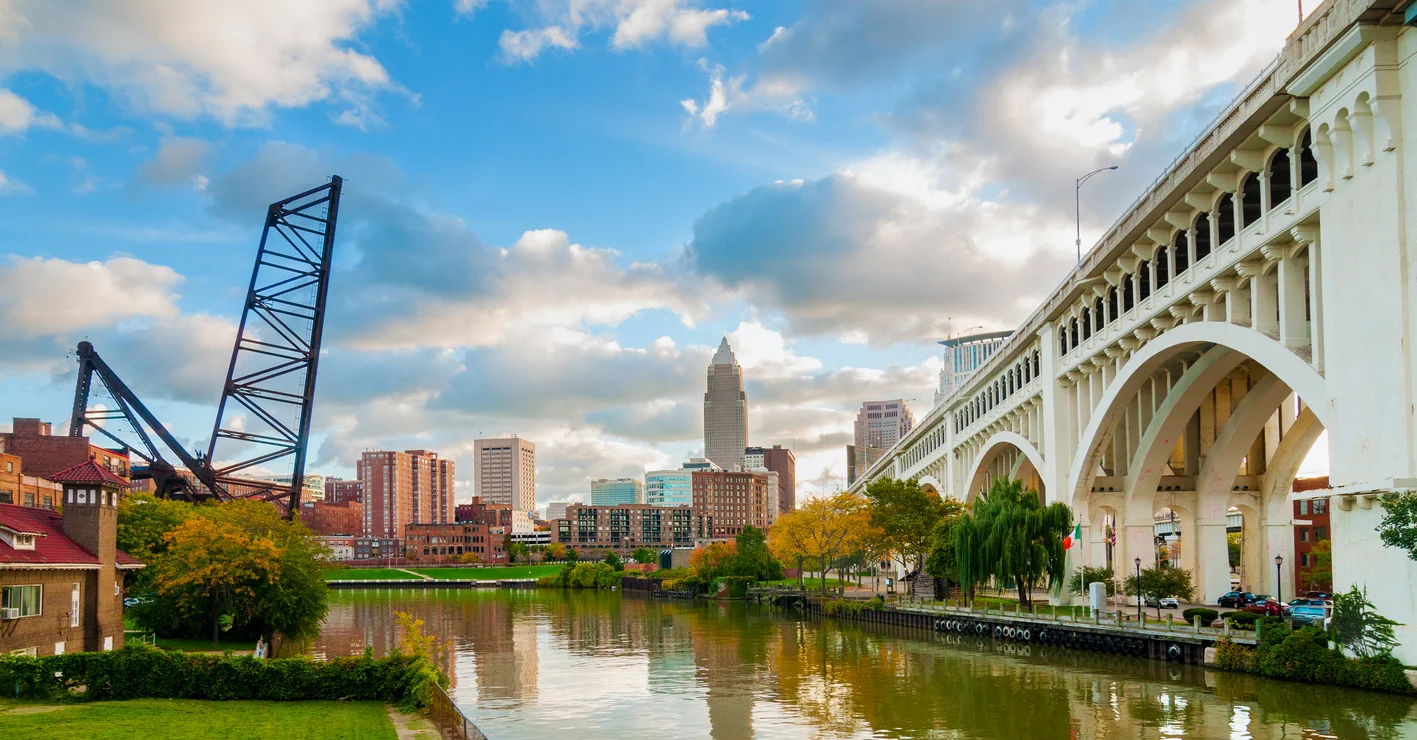
Land Bank Bill Is Voted out of Senate Committee

Land Bank Bill Is Voted out of Senate Committee House Bill 313 cleared another hurdle yesterday after it passed out of the Senate Ways and Means Committee by a unanimous vote.  A Senate floor vote is expected as early as next week, and we encourage supporters to contact their local State Senators to urge them to vote for passage.   The bill passed the House in December.

The bill would authorize additional counties in Ohio to create land banks, which is currently only available to Cuyahoga County.  Thanks to an amendment accepted in Senate committee, the original population limit was lowered to 60,000 and would grant 41 counties in all the authority to form a county-wide land bank.

Please check out a recent opinion editorial by  Lucas County Treasurer Wade Kapszukiewicz about the need for this legislation.

Also the Akron Beacon Journal recently editorialized on foreclosure tools and mentioned the need for passage of this legislation.

And lastly the Dispatch did a story where both Gene and Dawn from Greater Ohio were quoted along with Franklin County Treasurer Ed Leonard.

Coverage of the Restoring Prosperity to Ohio Report

We are extremely proud of the release of our recent report Restoring Prosperity: Transforming Ohio’s Communities for the Next Economy.  Media coverage has remained strong throughout the state this week, and we wanted to share a small sample of some recent clips with you. Editorials

Akron Beacon Journal: Return to prosperity

Lorain News: 'Restoring Prosperity' ideas for Ohio need careful consideration

Articles

Toledo Blade: Make tough decisions now for better future, Ohio urged

Columbus Dispatch: Study has 39 steps to renew Ohio

Dayton Daily News: Report puts cities at center of Ohio's new economy

Video

This is a clip of Lavea Brachman, Co-Director of Greater Ohio Policy Center, speaking at the event.

Local Government Reform Commission in Canton

The Ohio Commission on Local Government Reform and Collaboration will hold a public hearing in Canton on Friday, February 26, 2010, at 10:30 am.  This will be the last of five public hearings that will be held throughout Ohio seeking public input. The meeting will be held on the campus of Malone University off of Cleveland Avenue in Canton in the Chapel at the Johnson Center.  Ample parking is available around the Johnson Center. To obtain directions, please click here. The Malone University campus map can be viewed here.

Testimony and input is requested in three main areas:

1.) Recommendations that will encourage and incentivize local governments to collaborate;

2.) Identification of local and state tax structure changes which would encourage collaboration or improve service effectiveness; and

3.) Identification of current/alternative service delivery models.

If you are in the Canton area and are concerned with the issue of local government efficiency we strongly encourage you to attend to ensure that your voice is heard. If you cannot attend this meeting, you might also consider preparing written testimony.

Greater Ohio and its partner the Brooking Institution have identified governance reform as an important issue to be considered as we work to restore prosperity to Ohio. Governance reform falls within our larger agenda that is charged with increasing Ohio’s economic competitiveness and quality of life by focusing on the four drivers of prosperity in the 21st century economy: innovation; human capital; infrastructure; and quality of place. Again, we ask you to voice your opinion if you feel, as we at Greater Ohio do, that regional collaboration and efficient governance structures are critical to building a more competitive and prosperous Ohio.

For more information on the Commission and its purpose please visit: http://www.ohioreformandcollaboration.org/

Restoring Prosperity

Greater Ohio Policy Center, in partnership with the Brookings Institution Metropolitan Program, today proudly released our widely anticipated Restoring Prosperity: Transforming Ohio's Communities for the Next Economy with an event at the Statehouse Atrium attended by community, political and business leaders throughout the state.  Please check out our Restoring Prosperity Initiatives page to learn more about this exciting, action packed report and sign up to become a Greater Ohio Supporter to be kept up-to-date as we work together to move this agenda forward.

CSU Hosts "A Crack in the Pavement" Film Showing

A Crack in the Pavement, Fix it First?Co-sponsored by the Northeast Ohio First Suburbs Consortium

Thursday, February 11, 2010 4:00 - 6:00 p.m. Cleveland State University Maxine Goodman Levin College of Urban Affairs Glickman-Miller Hall, Atrium 1717 Euclid Ave. Cleveland, OH 44115

Ohio's First Suburbs play a leading role in "The New Metropolis," a groundbreaking two-part documentary on the rise, fall and revitalization of America's first suburbs, produced by award-winning filmmaker Andrea Torrice.  Plan to join us for the Cleveland premier of Episode One, "A Crack in the Pavement, Rebuilding America's First Suburbs." Narrated by actor Peter Coyote, this episode follows the story of two Cincinnati area public officials and their efforts to keep their towns stable and healthy despite difficult times to repair and improve infrastructure and lure businesses.

The film will be introduced by Andrea Torrice and will be followed by a panel discussion.

Moderator Tom Bier, Executive in Residence, Maxine Goodman Levin College of Urban Affairs, Cleveland State University Panelists Bill Cervenik, Mayor, City of Euclid Michael K. Lyons, Mayor, The Village of Richfield Joanna Pinkerton, Transportation System Development Office, Ohio Department of Transportation Mandy Bishop, Deputy Director, Transportation System Development Division, Ohio Department of Transportation Joyce Braverman, Director, Planning Department, City of Shaker Heights William A. Sanderson, Vice President of Joint Ventures, Forest City Land Group

Free and open to the public. Registration requested at Forum or call (216) 523-7330

Collaboration in Marion County

Last Friday, January 29, the Ohio Commission on Local Government Reform and Collaboration met at the Worthington Board of Education to hold their monthly meeting. Greater Ohio asked Pam Hall from Marion to testify.  Pam Hall’s excellent testimony detailed her experience working to consolidate the County and City Health Departments of Marion County. Mrs. Hall, President of the Marion Area Chamber of Commerce, outlined the challenges and barriers that supporters of the merger faced despite the demonstrated political will and cost saving data ($254,000) that supported the reform measure.   The status quo was in full force against her. Pam helped lead a strong grassroots effort that was able to create local buy in and overcome these challenges. The merger of the City and County Health Department was placed on the ballot and passed in November, 2008 with the hope that the reform would save tax dollars and provide a better customer experience.

Pam’s story is a good reminder of both the difficulties associated with challenging the status quo and the transformative nature that political will and determination can have even in the face of adversity.

$400 Million for 3C Rail in Ohio!

Greater Ohio Policy Center was pleased to attend yesterday's press conference where it was announced that Ohio would receive $400 million in federal stimulus funds to be used to fund the 3C Corridor “Quick Start” passenger rail system between Cleveland, Columbus, Dayton and Cincinnati.  Greater Ohio applauds the state for taking the steps necessary to capitalize on this unique opportunity offered by the American Recovery and Reinvestment Act to jump-start development of convenient and affordable rail service between core cities within our great state. This announcement marks real progress and marks a milestone in the effort to bring our state’s transportation system up to a world-class level.

Twitter Picks

Planetizen is reference that Greater Ohio uses to keep abreast of the latest developments in urban planning, design, and development from across the globe.  Recently Planetizen listed their picks for the Top Twitter Feeds on Urban Planning.  For those of you interested in urban planning and involved in the twitosphere, check out their recommendations. And if you want to stay up to date with all of Greater Ohio’s latest developments, follow Greater Ohio’s twitter feed @GreaterOhio.  You can also stay in the loop by following Associate Director Dawn Larzelere’s twitter feed @GO_DawnL.  And the newest addition to Greater Ohio's twitterers includes Co-Director Gene Krebs @GO_GeneK.  Check them out!

And if you’re on facebook, become a fan of Greater Ohio Policy Center’s facebook page too!

The Core Vitality Imperative

The Core Vitality Imperative Post by The Urbanophile

You can’t be a suburb of nowhere.” – Bill Hudnut

What does a healthy urban core mean to a region? Maybe the difference between success and failure. On the jump, a look at urban core and regional job growth for selected cities*, ranked by percentage job growth in the core county from 2001 to 2009.

Notice a pattern? Clearly, for these cities at least, core county performance is an excellent proxy for overall regional performance. I’m not making a statistical claim here, but the data for these cities is suggestive. I think it also foots with our common sense view. How many thriving metro areas have a core city/county that is going down the tubes? I can’t name one.

The Dynamics of Growth and Decline

It might be easy to dismiss cities like Cleveland and Detroit by simply calling them dysfunctional. But that misses the point. Of course they’re dysfunctional. All struggling cities and organizations are dysfunctional, or they probably wouldn’t be in that state. What’s more, rather than just dysfunction causing failure, which is sometimes true, it’s also true that failure causes dysfunction. As a city (or company or other organization) starts into decline, it fails to attract customers, top talent leaves, and operational and financial issues creep up. In this regard the civic dysfunction noted in places like California is as much as product of decline as its cause.

Continue …

Brighter Future for Mass Transit

Greater Ohio Policy Center was pleased with the recent announcement by the U.S. Department of Transportation that as part of its new proposed guidelines for funding mass transit projects, the DOT will place a higher priority on livability issues, such as how mass transit can promote economic development and make a community a better place to live.  In the past, the main criteria has focused mainly on the project’s overall cost and commute time saved. This announcement fits into the federal Sustainable Communities initiative, which has worked to better coordinate federal transportation and housing investments and identify strategies to give American families more choices for affordable housing near employment opportunities and more transportation options, to lower transportation costs, shorten travel times, and improve the environment.

Greater Ohio is pleased by this new direction at the federal level and is optimistic that it is a start to looking at funding decisions in a more holistic matter.