
Today The Columbus Dispatch ran Greater Ohio's Letter to the Editor, which congratulated Central Ohioans on the governance reforms underway in the region and discussed the goals of our new Regional Governance Initiative. As we note in the Letter, governance reform can help a region realize its shared identity. We believe this recognition encourages regions to grow smartly as the individual cost of new infrastructure or government is assessed in light of the cost or benefit to the entire region, not just the individual community. You can find the full text of the article here. Let us know what you think by leaving a comment on our blog or Facebook page. And be sure to keep an eye on our blog as the Regional Governance Initiative gets underway this fall.
Columbus Dispatch Discusses Governmental Collaboration
By Lavea Brachman

An editorial in The Columbus Dispatch last week highlighted cost-saving initiatives underway in Franklin County, which we applaud as exciting initial steps toward greater operating efficiencies. Collaborative efforts, such as combining paper supply orders, foregoing separate postage meters, and setting up a multi-agency county employee health insurance pool, serve as important governance reform models for other local governments to follow throughout the state. Ultimately, we hope to see other local governments following Franklin County’s lead.
However, we believe that these measures set the stage for more dramatic reforms involving greater governmental integration down the road – such as regional governance, which might include city-county mergers or other joint governing, and regional revenue-sharing. We hope promotion of such reforms will be a priority for the Governor, his administration and the General Assembly. As Ohio continues to face severe budget cuts, incremental cost-saving measures such as those taken by Franklin County leaders, while necessary are not sufficient. True governance reform of this type allows counties to get ahead of future budget cuts and leverage the state’s rich multiplicity of urban and metropolitan regions, thus transforming Ohio into a 21st century economy. With seven of the nation’s top 100 major metros – and metro regions being critical economic drivers -- Ohio can reap the benefits of being a “metro” state with the necessary policy tools to act regionally and promote vital land use and infrastructure redevelopment. Greater Ohio is launching a “regional governance initiative” to press these policies forward, in partnership with local and regional leaders. Over the next several months, the Regional Governance Initiative will utilize research, outreach, legislative advocacy and education, to undertake an unprecedented statewide effort to promote and institutionalize regionalism, regional economic development and related new governance structures in Ohio.
Guest Post: Abogo Looks at Cleveland Gas Prices
Greater Ohio's partners are doing interesting things, and here is a recent write up from one of them. Guest Post by Sahana Rao, Abogo Team, Center for Neighborhood Technology (CNT). Abogo is a tool that helps you see how transportation affects the affordability and sustainability of places you live, might want to live, or are just curious about. Named using a combination of the words “abode” and “go,” Abogo is powered by the Center for Neighborhood Technology’s Housing + Transportation Affordability Index, which uses census information to show how housing and transportation costs change by area. Our Gas Slider helps you see how gas prices influence those transportation costs, so that you can get an even clearer picture of the cost of getting around a certain area right now and what that cost may be in the future. We’ve been using the Gas Slider to analyze transportation costs in various cities across the nation; for more on how you can use Abogo resources in your own hometown, visit our How it Works section or read our Do-It-Yourself blog post.

Cleveland
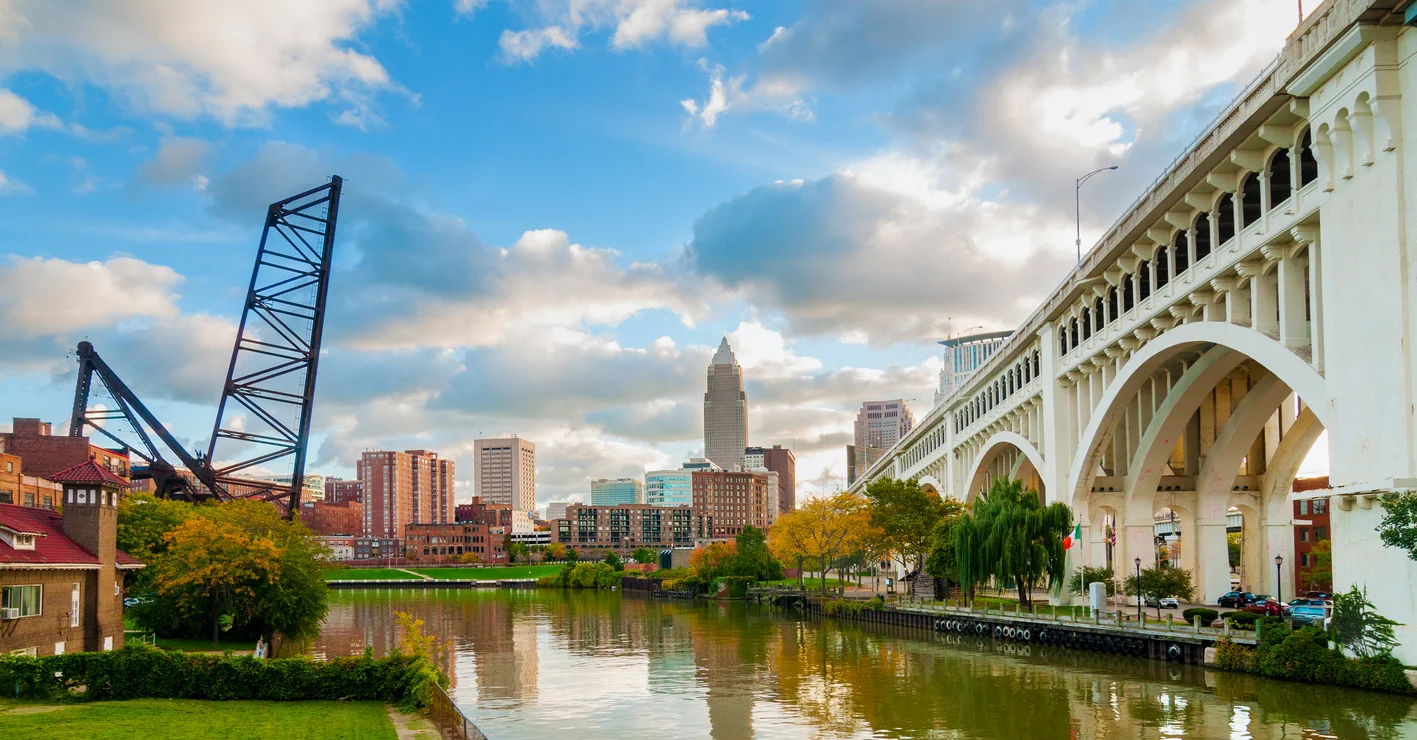
Cleveland, bounded to the north by Lake Erie (and the Rock and Roll Hall of Fame), is hailed as the “Comeback City” for its adaptability in the face of adversity. With an EIA-estimated average gas price of $3.62/gallon, how industriously do Clevelanders have to work to control their transportation costs?
Our first neighborhood is Conneaut, OH, just over an hour’s journey from Cleveland. Conneaut also lies adjacent to Lake Erie and, accordingly, boasts entertainments such as beaches, boating, and steelhead fishing.

Conneaut House
How much do Conneaut residents have to shell out for transportation?

Conneaut Abogo Pic 1
The average family living in Conneaut would pay $976 a month for transportation, which is 19% more than they would have paid in 2000. It looks like Conneaut has been more shielded from the effects of rising gas prices than most suburbs we’ve encountered, which could be due to the area’s walkable nature and the county transit system. However, since Conneaut is still relatively car-dependent, the monthly cost remains fairly high.
Does the same hold true for our next neighborhood? Buckeye-Shaker is a neighborhood on Cleveland’s East Side, a marriage between historic Buckeye and lively Shaker Square.

Buckeye Shaker
Let’s take a look at transportation costs for Buckeye-Shaker residents:

Shaker Square Abogo Pic 1
The average Buckeye-Shaker family would have to allot only $698 per month for transportation; however, that’s still 19% more than what they would have set aside for the same purpose in 2000. This just goes to show that, as much as walkability and transit connectivity help to alleviate the strain, no place is immune to gas price shock.
Fear not! You can lessen the blow of escalating gas prices by practicing alternative solutions and cost-saving tips for transportation. We’ve listed some helpful guidelines here:
Turn to transit: The Greater Cleveland Regional Transit Authority (RTA, for short) provides bus, rail, and trolley service for (you guessed it!) the greater Cleveland area. The RTA also oversees the HealthLine, which offers rapid bus service on Euclid Avenue from Downtown to East Cleveland. Prove to yourself that transit makes a difference by calculating how much money you can save with RTA at Join The Ride. For those traveling out of Cuyahoga County, connections are available to several adjoining county transit systems.
Don’t bypass discounts: RTA runs a Commuter Advantage programs that assists employers in taking advantage of the Mass Transit Tax Benefit. If your employer is signed up, you will be able to pay for transit with pre-tax dollars, so make sure your employer is aware of the benefit! For more on the employer and employee savings afforded by this benefit, click here. There is also a universal U-pass for students; check if your school is a participating member of the program. Cleveland RTA may also offer discounts to those who are attending certain major events within the city.
Trade steering wheels for handlebars or sneakers when possible: According to NOACA, the number of Cuyahoga County bikers in 2010 was 50% greater than it had been four years earlier. It’s no wonder that biking is fast rising in popularity; after all, a bike gets infinity miles to the gallon! Clevelanders might even have access to a bike-share program in the near future. Get more information on biking in Cleveland at Cleveland Bikes and Ohio City Bicycle Co-op. You don’t consume gasoline (we hope), so we won’t assign an MPG value to your feet. We will, however, tell you that walking is just as efficient as biking in several parts of Cleveland. If you can’t bike or walk, consider using a car-share service like CityWheels.
If you are interested in learning more about how alternative transit options can help Cleveland become more economical and environmentally sustainable, we recommend CNT’s Broadening Urban Investment to Leverage Transit (BUILT) in Cleveland report.
Are gas prices affecting how you get around Cleveland? Let us know!
Founded in 1978, CNT is a Chicago-based think-and-do tank that works nationally to advance urban sustainability by researching, inventing and testing strategies that use resources more efficiently and equitably. Its programs focus on climate, energy, natural resources, transportation, and community development. Visit www.cnt.org for more information.
On Our Radar
We at Greater Ohio Policy Center monitor the news daily to learn more about the smart growth initiatives and news happening in our state and beyond that affect Ohio. Below are articles that caught our attention over the past two weeks, and we thought they might interest you as well. Furthermore, we’re pleased to report that the 2012-13 budget included a $45 million allocation for a first-of-its-kind initiative called the Innovation Fund and Program, which Greater Ohio had a significant role in creating. The fund is an important initial step in promoting strategic and thoughtful government restructuring in Ohio. For more information, read Greater Ohio's letter announcing this important project.
Governance Reform
Decades ago, they split apart. Now, Moreland Hills, Orange, Pepper Pike and Woodmere are considering merging in the most significant step toward regionalism Cuyahoga County has ever seen.
The Columbus Dispatch – 6-24-11 By Mary Beth Lane
Governance Reform
Decades ago, they split apart. Now, Moreland Hills, Orange, Pepper Pike and Woodmere are considering merging in the most significant step toward regionalism Cuyahoga County has ever seen.
The Plain Dealer – 6-22-11 By Laura Johnston
Housing
When the housing bubble burst, homeowners on the financial margin couldn’t keep up with their mortgage payments. Both lenders and homeowners alike were shellacked by the double whammy of lower home prices and high unemployment. Foreclosures skyrocketed.
Governing – 6-11 By John O’Leary
Transportation
While American cities are synchronizing green lights to improve traffic flow and offering apps to help drivers find parking, many European cities are doing the opposite: creating environments openly hostile to cars. The methods vary, but the mission is clear — to make car use expensive and just plain miserable enough to tilt drivers toward more environmentally friendly modes of transportation.
The New York Times – 6-26-11 By Elisabeth Rosenthal
Transportation
Want to get the most job-creation bang for your infrastructure buck? Focus on meeting the needs of cyclists and pedestrians.
StreetsBlogNetwork – 6-21-11 By Angie Schmitt
Transportation
By most accounts, transportation infrastructure in the United States is in serious disrepair. As roads and bridges across the country continue to age and deteriorate, governments at all levels are struggling to pay for maintenance and upkeep -- not to mention investments in much-needed upgrades and new projects.
Governing – 6-11 By Russell Nichols, Ryan Holeywell
Transportation
A poll released last week shatters the conventional wisdom that Americans are divided about climate change and its potential cures.
Transportation for America – 6-21-11 By Sean Barry
Land Bank
The attorney for Trumbull County’s new land bank, Assistant Prosecutor Jeff Adler, has filed foreclosures on 49 properties so far and expects them to be ready for purchase by September.
The Youngstown Vindicator – 6-22-11 By Ed Runyan
Sprawl
The near-term future of real estate development isn’t downtown or in the far-flung suburbs. It’s in between.
The Wall Street Journal – 6-16-11 By Kris Hudson
Shrinking Cities
In January of this year, Newsweek published its list of “America’s Dying Cities.” The story declared that these were cities “with bleak futures ahead.” Not surprisingly, the list contained many cities that have struggled in past decade, losing both population and industry.
The Infrastructurist – 6-13-11 By Peter Kageyama
Economy
Gov. Mitch Daniels sits in his grand cave of a Renaissance Revival office and reviews Indiana’s economic fortunes, his self-effacing manner not entirely disguising satisfaction. The state’s pension funds are relatively healthy, the unemployment rate is dropping slowly and per capita income is ticking up, slowly.
The New York Times – 6-23-11 By Michael Powell, Monica Davey
OSU Architecture Students Tackle Ohio Economy
Greater Ohio recently collaborated with a class of Architecture students at Ohio State (we wrote about this in our May newsletter). The students examined the evolution of Ohio’s economy and considered how restructuring the economy to be more export-driven would impact Ohio’s built environment. A few weeks ago, the students presented their final work to Greater Ohio and several faculty members. Below are a few of our favorite examples of their work. The following image depicts the evolution of Toledo’s manufacturing base from light bulbs to solar panels over the last 130 years and illustrates how modern economies often have their roots in our industrial past.

As shown in the following image, the students also recommend that in looking toward the future, we should not completely turn our backs on the past. They identified the enormous potential that the vestiges of the industrial economy offer and suggest that old warehouses, for example, could be used as resources in our transition to modern economy. We like the idea that what are often perceived as eyesores could, with some tweaking, become the venue for a return to economic prosperity.

There are still a lot of remaining questions about what a transition to a new economy means for places in Ohio, but we enjoyed tackling this interesting and important question with the OSU students and look forward to continued collaboration.
Moving towards Regionalism: Greater Ohio visits the Dayton region
Earlier this month Greater Ohio went to Montgomery County to participate in a day-long program: Developing the Miami Valley Region Together. Sitting on the “The Current and Future State of Regionalism” panel, Greater Ohio discussed the recent history of Ohio’s governance and taxation structures and how these systems have given rise to fragmented and—at times—duplicative, costly governments. As we pointed out in the discussion, excessive government layers often encourage urban sprawl, by seemingly making the edges of the metro cheaper. Looking at a region—like the Dayton metro—as a whole, however, shows that sprawling infrastructure and governments weaken the overall economic power of the core and its suburbs. Regional approaches, such as sharing service responsibilities between jurisdictions (such as using one parks and rec supervisor for two villages instead of each hiring their own), or even consolidations (as might happen among the city, county, and township fire departments) can reduce costs, maintain the same level of service, and encourage jurisdictions to more thoughtfully consider the addition of any new government layer on the edge of the region.

Greater Ohio was pleased to be invited to this public forum, as all of the day’s discussions sought to explain the different ways government cooperation can work, and what the benefits and disadvantages are to moving to more regionalistic structures. As we recommended in our April Budget Analysis, budget cuts at the state and local levels must be accompanied by legislation and administrative policies that help smooth the belt-tightening transition by enabling and making permissive regional solutions. The discussion underway in Montgomery County signals to us that local leaders have a real desire for governance reforms that will help them build strong metros in the future.
Greater Ohio, Buckeye Institute, Center for Community Solutions Call for Tax Reform
A recent collaboration between Greater Ohio and two other high-profile research organizations, the Buckeye Institute and Center for Community Solutions, reaffirmed the old adage about “strength in numbers.” By joining forces to help spread our message about the critical need for tax reform in the state, we attracted the attention of numerous state and national media. They reported on our efforts, which included sending a proposal to and meeting with state administrative and legislative leaders. We called on them to create a bipartisan State and Local Tax Study Commission to analyze the current tax structure and initiate efforts to make much-needed state and local taxation reform in Ohio a reality.
Our group message – and a recommendation of Greater Ohio for some time – is that without change, the prospects for positioning Ohio for regrowth in the future are greatly diminished.
Coverage included articles and editorials in The Columbus Dispatch, The Cincinnati Enquirer, The Dayton Daily News, The Akron Beacon Journal, The Toledo Blade, and USA Today.
To read what the press had to say about our recent initiative, click on any of the links below:
The Columbus Dispatch - Editorial
The Akron Beacon Journal - Editorial
My Month with Greater Ohio Policy Center
By Gina Volpe, Greater Ohio Intern. When I walked into a brick office building off Main Street on a sunny Tuesday, I had no idea what to expect. I waited outside only to be greeted by a man about two times my size, as I introduced myself while he opened the door. After learning the history of the mattress factory Greater Ohio is housed in, I walked into the world that is Greater Ohio.

From the very first day, I was immersed into public policy. As an outsider looking in, it was a little difficult (and still is) to keep up with a conversation filled with acronyms like TID and CDAT. I had to Google “anchor institution” a few times in order to fully understand what it is. Slowly, but surely, I began to realize some of the major issues our state is facing, whether it be land use, transportation, or the budget crisis. I learned the processes of our government and how both branches of our legislation coincide to produce intricate bills that affect our lives in thousands of ways.

What surprised me the most was how the rest of society not living within a block of the statehouse is oblivious to how much effort and time goes into changing even the smallest portion of the law. And what is even more surprising is how the media barely covers what is actually happening. It’s almost like the statehouse is inside a snow globe, and as hard as you shake it, you will never be able to grab the information on the other side of the glass. Unless you’re fully enveloped in the culture of the statehouse, it’s hard to be acquainted with everything that is going on.

My question is "Why?". Why is there not more coverage on the state budget in the media? Why don’t citizens know the name of their district representative? Why was I, an almost graduate of high school, overwhelmed as I just scratched the surface of our entangled and complicated government? I feel like there are so many topics to discuss, but there is so much more to discover. I can’t thank Greater Ohio enough for showing me the innerworkings of our government, and I wish more people would have the opportunity to not just see the effects of our government, but to witness the causes of change and why they are important. Who knew an old mattress factory could teach me all that?
Horse and Buggy Tax Structure Holding Ohio Back
Do you shop where you live? It turns out that most Ohioans do a fair amount of shopping away from their home county. A recent study completed by Greater Ohio, shows that 70 percent of counties did not capture the amount of sales tax revenue that that would be expected if the residents of the county did all their shopping in that same county.
Why does this matter? It demonstrates that shopping patterns are regional, but our county-based sales tax structure is not. This system rewards a minority of counties while hamstringing the majority, which creates unbalanced service provision and tax rates across the region, contributes to sprawl by incenting the development of new retail centers on greenfields, and priorities individual counties over capitalizing on regional strengths.
Take the Columbus area as an example. The graph below shows how sales tax revenue capture changed in Franklin and Delaware counties with the introduction of Polaris.

A closer look at the broader region shows that despite the increase in spending in Delaware County between 1992 and 2009, the total change in spending for the region changed only slightly from $129 to $138 per capita, especially relative to increases in household income for the region during that time.

This arrangement creates a situation where counties with big, new malls thrive while most other places struggle. All the while, however, the amount of retail spending within the broader region itself remains virtually the same. In other words, this dynamic of shopping destinations moving around the region does not increase the state’s prosperity. Instead it just redistributes spending from one place to another and leaves places without major retail destinations without many options other than to raise taxes or cut services.
To modernize the taxation system to reflect the regional way we live and shop today, Greater Ohio is currently advocating for:
- Legislation that makes regional revenue pooling permissive
- Legislation that makes permissive mergers, consolidation, shared services, and alternative governance structures and eliminates legal and constitutional barriers to new structures of government.
- Creation of a Governance Reform Commission to oversee and provide technical assistance to Ohio’s local governments as they adapt to the 21st century
The complete study can be found here.
Sharing Services and Governance Reform in Ohio
By Gene Krebs. Senate Bill 125 would allow all local governments to share services through a Council of Government. This is a good idea, but should be viewed as only a start to deal with our larger problems. Sharing services requires willpower at the local level, which is like my diet; it works until I see chocolate cake. I am testifying in support of SB 125 today.
We no longer live where we shop, live where we work, or work where we shop, but our whole system of governance and taxation is predicated on you conducting all your economic activity within five miles of where you live. Our local governments expect you to conduct a mixed balance of your activities within their governmental entity. However, this is no longer the reality in which we live; we live in a regional economy and our governance structures need to adjust to this change.
Ohio ranks 33rd highest in state tax obligation and 6th highest in local tax obligation. SB 125 could result in lower local taxes. Furthermore, Ohio has 41.3 local governments per county, and the national average is only 27.9. Becoming average would be an improvement. Our excessive amount of local governments drives up our cost of doing business. Sharing services would reduce these costs.
The only silos Ohio should have are located on our farms, yet unfortunately every governmental entity has their own funding silo, often from a different economic activity, and often with a local ballot funding mechanism. This leads to ballot exhaustion for the citizens and a fracturing of tax transparency and accountability. This separation of economic activity from our domicile is why school funding does not work in much of Ohio, for example.
For more information on this topic, please see our Sales Tax Analysis. I urge you to examine it closely.