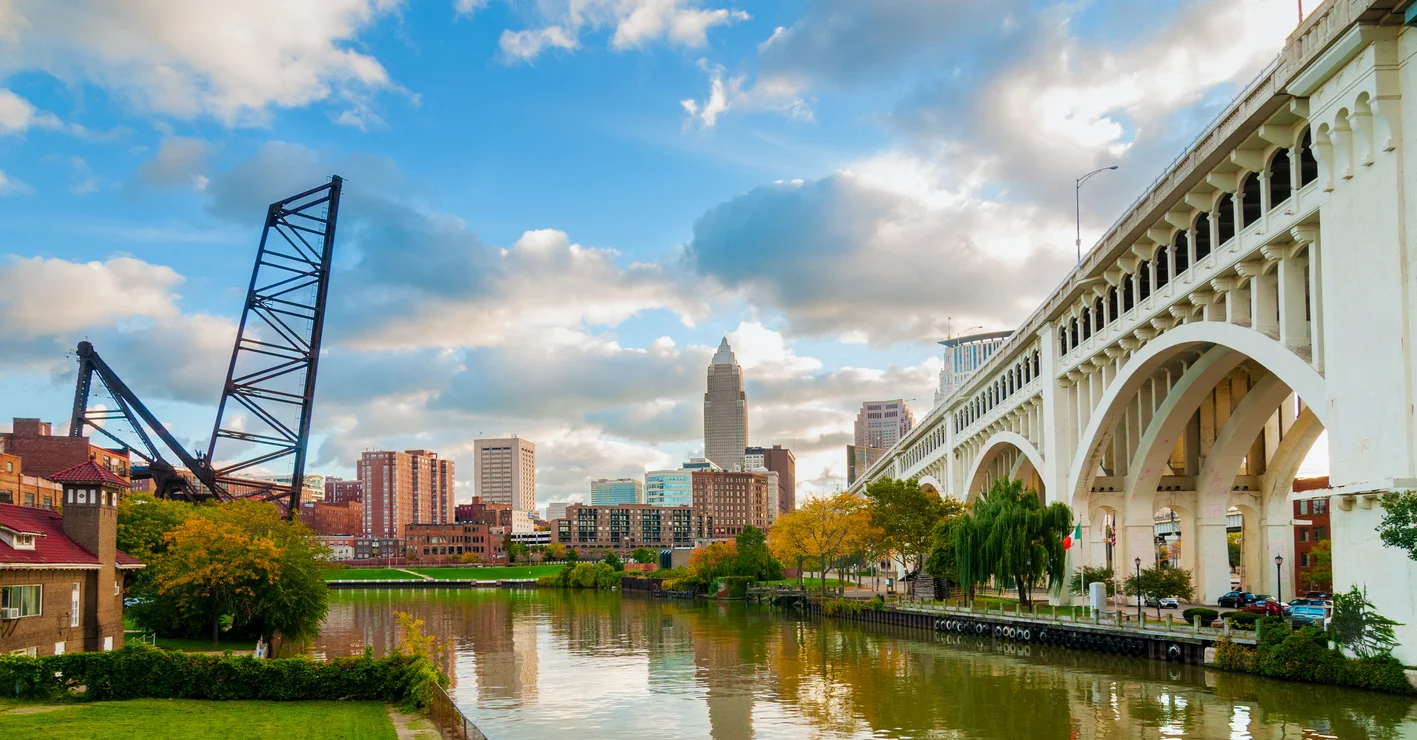
Kasich Signs Bill with Clean Ohio Funding

On Monday, Governor Kasich signed House Bill 487—also known as the Mid-Biennial Review Bill [MBR]—including a $42 million allocation for the Clean Ohio Fund. Greater Ohio would like to thank the General Assembly and Gov. Kasich for supporting the Clean Ohio Fund, which contributes to the quality of life and economic development of many Ohio communities.

The MBR, subtitled the Management Efficiency Plan (MEP), is a new effort by Gov. Kasich and the Ohio General Assembly to evaluate and refine Ohio’s $55.7 billion budget at the midpoint of the two-year budget cycle, as opposed to solely at its conclusion. The stated purpose of the MEP is to “streamline operations, reduce costs and improve delivery of services for Ohio taxpayers.” The Governor used his line-item veto authority multiple times, but he kept appropriations for Clean Ohio Fund intact.

The Clean Ohio Fund is a state fund authorized by Ohio taxpayers in 2000, and again in 2008, to support brownfield revitalization, farmland preservation, green space conservation, and recreational trails. The allocated $42 million will be shared between Clean Ohio’s Green Space Conservation and Farmland Preservation programs. Communities can apply for the Clean Ohio funding, which requires a private match of 25-50 percent, and then applicants are scored and peer reviewed in a competitive process so that only the most qualified projects are ultimately funded. Private organizations and local communities become the owners of the projects and they are responsible for ongoing maintenance and improvement costs. Since the upfront cost of land is often prohibitive, the Clean Ohio Fund allows communities to protect land that they might not have been able to otherwise. Funding for Clean Ohio Fund’s Brownfield Revitalization Program has been retained (likely at $42 million).  However the specific design of the Brownfield Revitalization Program is still under discussion at JobsOhio, which will be administrating brownfield revitalization.

Ohio voters overwhelmingly support all programs in the Clean Ohio Fund (70 percent/30 percent in 2008 in all 88 counties) because they contribute to economic and community development. Clean Ohio helps support economic development and job creation by making our communities more attractive to businesses and individuals looking for a high quality of life. We are grateful to the Governor and General Assembly for approving this program.

Greater Ohio scores a good win with HB 436, just signed by Governor Kasich

By Gene Krebs HB 436 creates a one stop site for economic development professionals to use to find the attributes of various physical locations around Ohio, and develops the criteria.  Greater Ohio was able to suggest an amendment to the bill that encourages ODOD to include quality of life and community issues, which now elevates those issues as a development criteria, which now places them on equal footing as interstate interchanges.

The bill allows the site to take into account certain quality of life indicators.  This is a good thing. 

Greater Ohio is grateful to Representatives Grossman and Anielski for allowing the amendment, and to the Governor for signing the bill.

ULI Columbus Presents: Columbus 2050

ULI Columbus and their partners present Columbus 2050, a strategic vision on how we will LIVE, WORK and PLAY in Central Ohio by the year 2050.

Columbus 2050 Description

Over the past 40 years, the population of Central Ohio has grown by 707,000 people, adding 235,900 between 2000 and 2010 alone. If the region grows at even half the rate of the past ten years, 604,000 will be added to the area by 2050. Absorbing a population that equates to the entire city of Boston will take some planning.

In furtherance of its mission to promote the responsible use of land, ULI Columbus, in partnership with the City of Columbus, Franklin County, the Mid-Ohio Regional Planning Commission and The Ohio State University Knowlton School of Architecture, Department of City and Regional Planning, has developed a strategic vision that explores where and how we will Live, Work and Play in Central Ohio in the year 2050. This strategic vision is focused around eight themes: Metro Metrics; The City Wild; Water, Power, Light; Getting Around; Whole Buildings; Full Spectrum Housing; Plan it. Build It; and Click, Learn, Go, Get.

To download the full Columbus 2050 report, click here.

The Importance of Walkable Neighborhoods

By John Gardocki, GO Intern

In a New York Times article by Chris Leinberger, President of LOCUS,   convenient, walkable places are in demand.  Different cities throughout the U.S. are reaping benefits from making their cities walkable, friendly environments. Leinberger provides many examples of the demand for walkable cities including Columbus, OH, Denver, CO, and Seattle, WA.  Leinberger stresses the integration of developers and investors to work towards walkable communities.

Leinberger uses a tool he calls the walkability ladder, a step by step analysis rating least walkable to most walkable.  This tool can be used to evaluate the strength of the city. As a neighborhood moves up each step of the five-step walkability ladder, the average household income of those who live there increases some $10,000.  Leinberger’s article finds that on average, each step up the walkability ladder adds $9 per square foot to annual office rents, $7 per square foot to retail rents, more than $300 per month to apartment rents and nearly $82 per square foot to home values.

In a study by Brookings Institution, completed by Mariela Alfonzo and Leinberger about the effect walkability has on commercial and residential real estate, many walkable communities are seeing postive changes to property values.  Brookings found:

  1. More walkable places perform better economically
  2. Walkable places benefit from being near other walkable places
  3. Residents of more walkable places have lower transportation costs and higher transit access, but also higher housing costs
  4. Residents of places with poor walkability are generally less affluent and have lower educational attainment than places with good walkability

Walkable communities are especially important to the younger generation.  According to Brookings, young families want the advantages of walkable urban life, but also high-quality suburban schools.  This trend is about the revitalization of center cities and the urbanization of suburbs. Brookings reports that in Columbus, the highest housing values recorded by Zillow in 1996 were in the suburb of Worthington, where prices were 135 percent higher than in the struggling neighborhood of Short North, adjacent to the city’s center.  Today, Short North housing values are 30 percent higher than those of Worthington, and downtown Columbus has the highest housing values in the metropolitan area.  The Short North and downtown have become more walkable with the revitalization of the area by the artistic and LBGT movements.  The Short North Arts District lists many of the galleries, retail, and dining along High Street which makes up the Short North

Grandview Heights is a great example of a suburban enclave that is taking urbanization to heart.   Grandview is already a walkable city with access to bike paths and the COTA system.  The Mayor of Grandview talks about future plans to make the community even greater in this Columbus Underground article.  A major goal of this city is the development of mixed-use which requires walkability to be a high priority.  Making housing affordable is also a challenge the Mayor wants to address because some families are being pushed out of this neighborhood.

To articulate the effect walkability has played in this study, Ohio cities should take a new perspective at improving the sense of walkability in their communities.  Cities working together with business associations like the Short North Arts District can help improve the way residents and visitors interact with the city form.

Bike to Work Day May 18th

Don’t forget that Friday, May 18th, is National Bike to Work Day! According to the 2010 Census, over half a million people in the United States ride their bikes to work.  In Ohio, 3.8% of workers in Akron, Cincinnati, Cleveland, Columbus, Dayton and Toledo ride their two-wheelers to their jobs.

In Ohio, multi-modal streets (meaning streets that can handle a range of traffic besides just cars) and dedicated, non-motorized, bike paths are two important ways bicyclists can safely travel to work.  These safety amenities are important elements to making our metros attractive places to work, play, and live in.  As quality of life factors, bike lanes and multi-modal streets make it easier to exercise, but they also reduce car traffic, which in turn reduces the “wear-and-tear” on our roads that costs taxpayers so much.

Columbus, Ohio makes one “best biking cities” list and we know that Dayton, Cleveland and Cincinnati are focusing on improving their biking ecosystems.  With many of Ohio’s railroad lines now decommissioned, dozens of rail lines are being converted to trails with the advocacy efforts of “Rails to Trails.” Rails to Trails has dozens of trail maps for Ohio—see if there is one near you!

Check out this link for the different ways you can participate in National Bike to Work Day.  Hope to see you out there!

The Global Cities Initiative

Our long-time partner, the Brookings Institution’s Metropolitan Policy Program, in joint partnership with JP Morgan Chase, is sponsoring “Going Global: Boosting the Economic Future of Ohio”- a Global Cities Initiative Forum, to be held in Columbus on May 9th.  Hosted by The Ohio State University, this unparalleled event will feature former Chicago Mayor Richard Daley; the Honorable Peter Ammon, Ambassador of Germany to the United States; an interview of Jamie Dimon, Chairman and CEO of JP Morgan Chase by David Gregory, host of NBC’s Meet the Press; and representation by Ohio business leaders and policymakers.

Going Global: Boosting the Economic Future of Ohio

Bruce Katz: In the aftermath of the great recession we must pursue a different growth model; the next economy will be metropolitan in form and function; metros are driving innovation in practice, policy and global trade links.

Bruce Katz delivered the featured speech from Columbus, Ohio, at "Going Global: Boosting Ohio's Economic Future," the second in a series of domestic and international forums being convened this year by the Global Cities Initiative. The forum, hosted by the Metropolitan Policy program at Brookings and JPMorgan Chase on May 9, explored how metropolitan-led economic growth—including global trade and investment—are important for job creation, and how Ohio can leverage its position in the global market. For more about this event, click here.

Sustainable Communities Funding Passes Senate Appropriations Committee

Thank you GO supporters who contacted Senator Brown’s office and asked him to support funding for the Partnership for Sustainable Communities in the FY 2013 Federal Budget.  As a member of the Senate Appropriation Committee’s Senator Brown voted YES on the proposal to allocate $50 million to the U.S. Department of Housing and Urban Development’s Sustainable Communities Initiative.  The Bill passed the Appropriations Committee and will soon to the Senate floor. We have sent a letter to Senator Brown thanking him for his committee to healthy, sustainable communities and encourage you to do the same.

New High Density Development In Columbus

By John Gardocki, Greater Ohio Intern The tide is turning in the Columbus metro area from low density to high density development and redevelopment.  Over the past few months developers have been announcing projects to bring mixed-use to fruition for our residents.  The concept of mixed-use development has gained popularity with American people in the past decade and is the symbol of America’s great “Main Street” downtown.  For more detailed discussion on Main Streets visit Ohio Main Streets or APA Great Streets.

High density is not only being utilized in the downtown, it is being used in the suburbs and locating around universities.  It seems that many cities are taking note of the successes developers and communities are having because they are utilizing mixed-use development. 

Downtown Development/Redevelopments:

  • LeVeque Tower Apartment- The building will renovate existing office space and add a new boutique hotel into the mix, creating a new mixed-use vibrancy to the building along with renovating floors for new apartments.  The importance of renovating this building is enormous, it is the iconic symbol of Columbus and people will want to flock to it once they see what is being done to the interior and exterior. 
  • Columbus Commons Apartments- 300 unit apartment project that will contain 23,000 square feet of new retail space located next to Columbus Commons Park.  This development is one of a kind because it is located next to an urban park and will include amenities for its residents when they are leased.  Aspirations of retail include restaurants/cafes, service retail, and a small urban grocery.  Having access to a food supply is a hot topic in Columbus right now, with the planned redevelopment of Hills Market by Columbus State.

Short North Development:

  • The Fireproof Building- Total of 58 rental units with a five story addition.  The development will also contain a total of 15,000 square feet of retail space with a mix of restaurant, retail and office tenants.  With the recent addition of high rise development in the Short North, it is going back to its once former glory of being a sustainable place for the young and the old. 

Grandview Heights Development:

  • Edwards Communities at Third Avenue- 205 new apartments located next door to a new Giant Eagle and the Grandview Yard development.  This development will bring even more family style living to an up and coming suburban neighborhood that has excellent walkable amenities and access to alternate transportation.

Lane Avenue Development:

  • Lane Avenue Apartments: New five-story building across the street from The Ohio State University.  These apartments will be targeted at students in their layout and price point and will include a covered parking garage within the structure.  The importance of adding these affordable housing to students right next to the university will be one of the first of its kind in quite a while to improve students living conditions in off-campus housing.  While this development does not have mixed-use in the plan, it is a start to the lack of new housing available on Lane Avenue, most of the housing has been on High Street.

Many more projects are taking place around Columbus that will bring a whole new community vibe.  It will be interesting to see what effect these developments have on other communities considering moving to higher density development.

Help Protect Sustainable Communities Funding!

The U.S. Department of Housing and Urban Development’s Sustainable Communities Initiative has helped communities in Ohio create jobs, become more economically viable and create housing and transportation options. Now HUD needs our help protecting the Sustainable Communities Initiative. The Senate is currently drafting a budget for fiscal year 2013, and among their decisions will be how to fund HUD’s Sustainable Communities Initiative. Your voice can help make sure this agency continues to help individuals and communities in the coming year.

Senator Brown sits on the Senate Appropriations Committee, which will make this important decision by Tuesday, April 17. By speaking out today, you can help the Senator and the Committee to understand how their funding decisions will impact your neighborhood, your town or even the country.

Speak out!

Use the text below on Senator Brown’s contact page: http://www.brown.senate.gov/contact

Message Topic:

Housing

Email Body:

Please support funding for HUD’s Sustainable Communities Initiative in FY 2013

Dear Senator,

I’m writing to urge you to support the Sustainable Communities Initiative at the U.S. Department of Housing and Urban Development in the FY 2013 appropriations process. Specifically, I encourage you to restore funding for the Sustainable Communities Initiative.

I strongly support the Sustainable Communities Initiative and its work as part of the federal Partnership for Sustainable Communities. The Partnership helps communities in Brown develop in ways that lead to long-term prosperity, and as our state emerges from the economic recession, these investments are more important than ever.

HUD’s Sustainable Communities Initiative incentivizes towns and cities to develop comprehensive housing and transportation plans. These plans support economically competitive development, give people transportation options and helps communities better leverage federal and private sector investments.

Again, I strongly support the Sustainable Communities Initiative and ask you to support continued funding in FY2013.

Sincerely, [[First_Name]] [[Last_Name]] [[Street_Address]] [[Street_Address2]] [[City]], [[State]] [[Zip]]

Dublin Bridge Street Corridor Plan brings potential to Columbus Metro Area

By John Gardocki, Greater Ohio Intern The Dublin Bridge Street Corridor Plan is unique to the Columbus Metro region because it calls for such an expansive plan covering over 800 acres of land.  Dublin has issued vision principles and plans for each district that will encompass the plan for smart growth.

 Vision Principles:

1.) Enhance economic vitality

2.) Integrate the new center into community life

3.) Embrace Dublin’s natural setting and celebrate a commitment to environmental sustainability

4.) Expand the range of choices available to Dublin and the region

5.) Create places that embody Dublin’s commitment to community

 Dublin identified eight districts for implementation that will include mixed-use development, greenways, improved transportation and connectivity, and strong connections to existing neighborhoods.  Three districts stand out in the vision that will enable these priorities to be achieved.

The importance of the Historic Dublin District is to be a guiding point for the rest of the project.  Currently, the Historic Dublin area is acting as a model for the plan with a large amount of walkability and development already in place.  Most Dublin residents see it as being the core, so if the core falters then the rest of the project most likely will cease to exist or grow.  Redevelopment is the key to this district to become a livable, walkable community area that Dublin residents will be proud of. 

Riverside District utilizes the connection of the Scioto River.  The plan calls for a park initiative to strengthen the greenways of Dublin and its transportation opportunities as a walkable and sustainable community.  Residential buildings will be located on the river to access the new park land, while new office development will be located behind for easy access to work.  The importance of this is to make residents daily commute be as little as possible; while having access to recreation and retail at the same time.

The Sawmill District is set to alter the suburban mantra that is low-density.  The goal of this district is to provide high density housing, office, recreational, and entertainment for Dublin residents to enjoy.  Concentrations of these activities will be an important connective aspect of the district.  A landmark is currently in the plan to act as a gateway between Dublin and Columbus.  Branding is important for a community because it brings a sense of pride.

 The Columbus metro area will see large benefits from this project.  Development could bring employment to the area as well as new products.  Smart growth initiatives will also start to become more prevalent in Central Ohio with Dublin leading the way.  Continued growth of Columbus’ population will enhance the building potential of other local communities and of the amenities Downtown could offer to its residents.  Linkage between Columbus and Dublin could be put on the list of to-do projects, possibly utilizing public transit opportunities that are currently not available for the Columbus area. 

To check out the plan with more detail visit: 

http://dublin.oh.us/bridgestreet/pdf/VisionReport.pdf