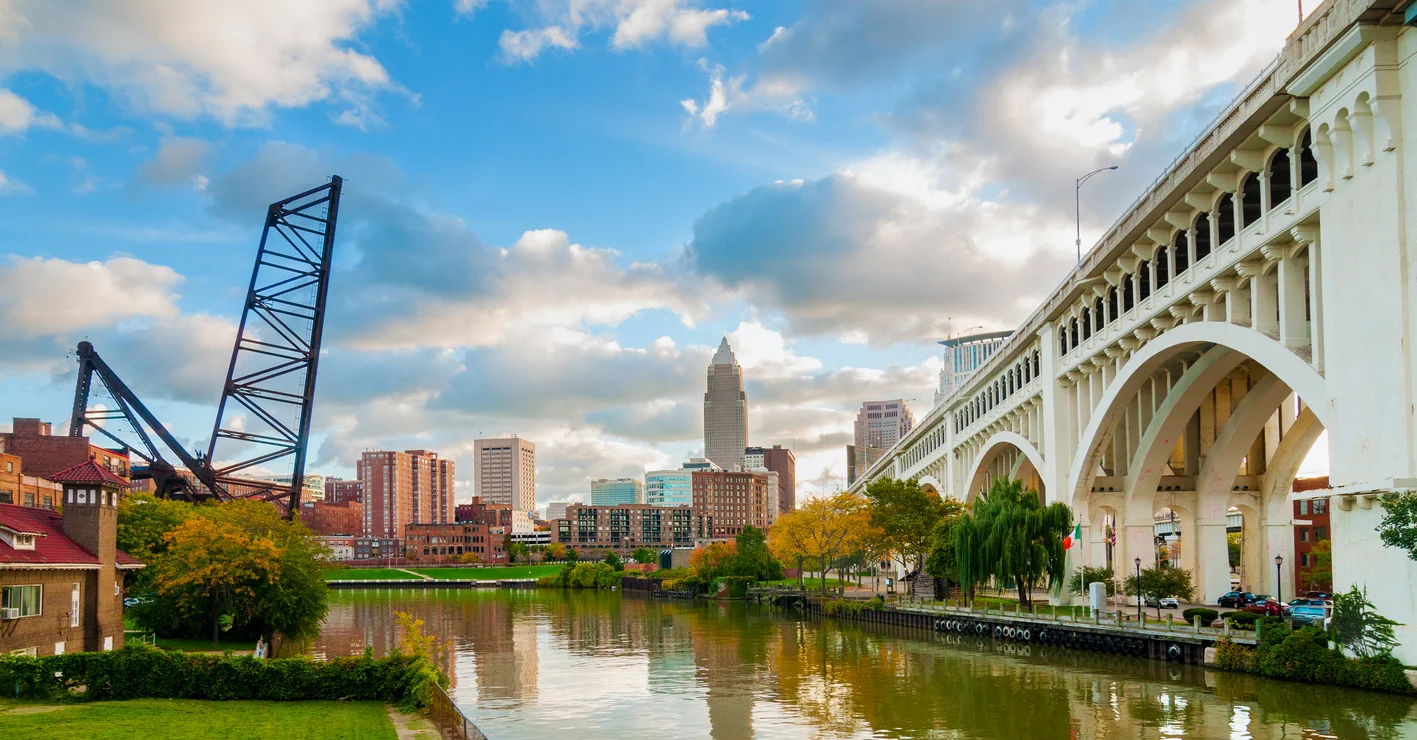
Revitalize Legacy Cities by Building on Assets

GOPC Executive Director co-authors Regenerating America’s Legacy Cities a Policy Brief for Lincoln Institute for Land Policy Lavea Brachman, executive director of GOPC and Alan Mallach, senior fellow at the Center for Community Progress and nonresident senior fellow at the Brookings Institution, argue for “strategic incrementalism” to revitalize cities like Youngstown, Cleveland, Baltimore and Flint in Regenerating America’s Legacy Cities.  This report has been released by the Lincoln Institute for Land Policy, a leading educational and research resource for key issues concerning land policy, including the use, regulation, and taxation of land.

In an analysis of 18 cities facing manufacturing decline and population loss, Mallach and Brachman advocate for step-by-step “strategic incrementalism” to promote economic development, rather than the silver-bullet approach of signature architecture, sports facilities, or other megaprojects.  Their analysis suggests that these legacy cities can build new economic engines and draw new populations by leveraging longstanding assets such as downtown employment bases, stable neighborhoods, multimodal transportation networks, colleges and universities, local businesses, medical centers, historic buildings and areas, and arts, cultural, and entertainment facilities.

Brachman and Mallach considered eighteen cities, including six in Ohio: Akron, Canton, Cincinnati, Cleveland, Dayton and Youngstown.  The Brief also analyzed Baltimore, Camden, N.J., Newark, Philadelphia, Birmingham, Buffalo, Detroit, Flint, Milwaukee, Pittsburgh, St. Louis, and Syracuse.

They identify the key elements of revitalization as:

  • Rebuilding the central core
  • Sustaining viable neighborhoods
  • Repurposing vacant land for new activities
  • Re-establishing the central economic role of the city
  • Using economic growth to increase community and resident well-being
  • Building stronger local governance and partnerships
  • Building stronger ties between legacy cities and their regions

In addition to urging a rethinking of state and federal policy as it relates to legacy cities, the authors recommend that cities seeking to rebuild and reinvent themselves should not think in terms of one large, high-impact solution – such as a sport stadium or convention center – but rather foster change through smaller steps in a variety of areas.

To read the report or for more information, please visit the Lincoln Institute for Land Policy.

New Legislation Shaped by GOPC Introduced on Senate Floor


Yesterday was an exciting day for the Greater Ohio Policy Center.  GOPC—in partnership with Ohio CDC Association, Heritage Ohio, Ohio Capital Corporation for Housing and Habitat for Humanity-Ohio—has been working with legislators for almost a year to develop a state program that will provide tax credits to for-profit corporations that invest in place-based catalytic neighborhood projects.

That proposed program, the Neighborhood Infrastructure Assistance Program (NIAP), was introduced on the Ohio Senate floor yesterday as Senate Bill 149 (SB 149).  Sponsored by Senator Bill Beagle, and co-sponsored by Sen. Cliff Hite and Sen. Gayle Manning, this bill help leverage private dollars for community projects critical for the attractiveness and economic competitiveness of the state.

If passed, the NIAP tax credits could be used for corporate and business donations to project such as:

  • Renovating an historic theater
  • Streetscaping a central business district
  • Developing affordable housing for families
  • Building a community center

For more information about this program and to add your name to the growing list of private, public and nonprofit supporters list, please visit this link.


City-County Agreement Could Spark Downtown Cleveland

Above is a design concept by James Corner Field Operations for Cleveland's potentially new Public Square.

Cuyahoga County Executive Ed FitzGerald and Cleveland Mayor Frank Jackson have made a historic agreement to reinvest in downtown’s infrastructure.  The Plain Dealer is reporting that the total money available is  $93 million because the new Medical Mart is expected to finish under budget and ahead of schedule.

As reported by Steven Litt, “FitzGerald wants to avoid spreading that sum around the county like peanut butter on a thin layer of small efforts”.  Instead he wants to focus the money on the downtown that will expand the region's reach for tourism, job growth, and infrastructure.

He will leverage the money to get a total amount of $300-350 million to spend on the new area created by the bus-rapid transit HealthLine on Euclid Avenue to the downtown casino and convention center.

Proposals include:

  • 650 room convention hotel
  • Envision a downtown mall/Public Square
  • Pedestrian bridge over the lakefront railroad lines
  • 740 space parking garage
  • Trigger residential/office/retail development
  • Better bike/pedestrian connections

“The partnership signals a new civic awareness that in addition to building excellent attractions, Cleveland needs to acquire a beautiful public realm that encourages visitors and residents alike to enjoy the city on foot or on a bike,” according to Steven Litt.

Cleveland and Cuyahoga County are taking significant steps toward realizing smarter growth throughout the region.  New development along a growing corridor could lead to job creation for the region's unemployed as well as boost the overall economy of Cleveland.

June 18: GOPC and Federal Reserve Bank of Cleveland Host Third Small Communities Workshop

The Three C's: Comprehensive Community Code Enforcement On June 18, “The three c’s: comprehensive community code enforcement” will discuss how to develop and implement code enforcement strategies based on strategic community development and neighborhood priorities; the importance of collecting liens; using nuisance abatement powers more aggressively; engaging residents and nonprofits as the eyes and the ears of the community; and evaluating changes to state and local law/modernizing codes to better fit the community’s current condition.

Please click here to register.

http://greaterohio.org/outreach/small-community-workshops

Smart Growth America Releases Report on Economic Benefits of Smart Growth

Smart Growth America recently released a new report titled “Building Better Budgets: A National Examination of the Fiscal Benefits of Smart Growth Development,” which discusses the economic benefits of smart growth as opposed to traditional development patterns.  According to SGA, it is the first to determine a national average for how much communities can expect to save through the use of smart growth strategies.

The report analyzes 17 case study areas, comparing development scenarios within each. The first scenario, “smart growth development,” is characterized by more efficient use of land; a mixture of homes, businesses and services located close together; and better connections between streets and neighborhoods. The second scenario, “conventional suburban development,” is characterized by less efficient use of land with homes, schools and businesses separated and areas designed primarily for driving.

Their findings include the following:

  1. Smart growth development costs one-third less for upfront infrastructure.
  2. Smart growth development saves an average of 10 percent of the costs for ongoing delivery of services.
  3. Smart growth development generates 10 times more tax revenue per acre than conventional suburban development

Ohio has seen an increase in the adoption of smart growth policies, including most recently in Piqua. GOPC continues to address the need for more smart growth policies throughout the state.

Google Earth Timelapse Shows Sprawl Since 1984

From 1984 to 2012, the Central Ohio region has changed in population and in land development, as shown in the satellite images above. To view land use changes in any part of the world from 1984 to 2012, click here and scroll down to the embedded Google Earth map, in which you can zoom and scroll to find your area of interest.

The City of Columbus has grown from 564,866 in 1980 to 809,798 persons in 2012. Land development has expanded out from the city center over that period as well, as can be seen in the satellite image timelapse. In the last decade, however, it appears as though more development has occurred within the inner city ring, which is a promising trend for smart growth.

Google is working with its public and private partners to continue releasing these images to the public in the future.  According to Google, this is the most comprehensive photography ever created of the planet.  Timelapse videos of this sort could be used as a tool to see the outcomes of sprawl, climate change, and natural disasters over time--hopefully contributing to public awareness about the need for smart land use decisions.

"A Terrifying, Fascinating Timelapse of 30 Years of Human Impact on Earth" - The Atlantic Cities

Lavea Brachman Contributes to Infrastructure Discussion

Today at 10am, Executive Director Lavea Brachman was featured on WOSU's All Sides with Ann Fisher in a discussion about the state of Ohio's infrastructure. Lavea was joined by Patrick Natale, Executive Director of American Society of Civil Engineers, Robert Lawler, Director of Transportation of the  Mid-Ohio Regional Planning Commission, and Barry LePatner, construction lawyer and author of Too Big to Fall: America’s Failing Infrastructure and the Way Forward.

Click here to listen to the podcast:

Infrastructure: Are we making the grade?

"The recent collapse of the I-5 bridge in northwest Washington State shined a spotlight on the country’s aging infrastructure. Since the recession, funding for bridges and tunnels has dropped steeply, and fixing them would cost an estimated $20 billion. This hour, we’ll discuss the balance of safety and spending, and how long our functionally obsolete structures will stand."

GOPC Reports Quantify Benefits of Shared Services and Governmental Collaboration

Hancock County Map

Greater Ohio Policy Center today released three research briefs highlighting the numerous benefits government collaboration can bring to local jurisdictions and the Ohio Department Transportation (ODOT).  Developed with financial support from the State of Ohio, these objective reports examine potential statewide cost savings through:

  • facility and equipment sharing between local governments and county engineers,
  • facility integration in counties with a large number of garages owned by ODOT and the county engineer, and
  • modifications to ODOT’s service delivery and fleet management at the county level.

GOPC’s reports estimate that taxpayers statewide could save over $99 million over the next ten years by replicating local shared purchasing programs currently underway or by implementing commonsense reforms to the way service delivery is administered by ODOT and local governments.  GOPC developed these reports in coordination with the Center for Community Solutions as part of a larger research package on shared services opportunities in Ohio.

GOPC is a longtime advocate of right-sizing local government in order to encourage regional decision-making that considers economic development and land use in ways that best benefit Ohio’s metro regions.  These reports outline how our communities can maximize resources and improve the quality of our government services.

Click here to download GOPC’s three reports.


Residents Sing for Grand Rapids

By John Gardocki, GOPC Intern

The YouTube video "The Grand Rapids LipDub" inspired me to visit Grand Rapids.  I wanted to see what residents of Grand Rapids see in their shrinking city.  Citizens of so called “declining cities” often see the potential and character of their cities below the layer of vacancy and abandonment.

The first thing I noticed driving into the city is that it arrives out of nowhere; it literally is enclosed behind a wall of flora. The Grand Rapids region is committed to keeping nature as part of the city. The city is separated into four sections and has a unique topography that makes the downtown visible from the riverfront walkway.  Most of the major centers of activity are located along the river, including the Grand Rapids Public Museum, the Gerald Ford Presidential Library, the Public Market, and the Davos Auditorium.  The charm of Grand Rapids takes form in its architecture and historical neighborhoods.  Overall, I was impressed with the city and would like to come back see more.

Grand Rapids is poised to become a destination city if it continues to enhance its quality of life and garner resident support.  The video above gives a glimpse into the unique gifts of Grand Rapids.  Challenge yourself to think of the great assets of your city.  Eventually others in the community will see the potential for their places, just as Grand Rapid’s residents did.

GOPC Undergraduate Writing Intern Reflects on Vacant Properties Policies

Ryan Conlon recently graduated from the John Glenn School of Public Affairs at the Ohio State University.  Ryan spent his spring 2013 semester as an intern at GOPC to fulfill his "Writing for Nonprofits" course.  Possible Policies for Mitigating Vacant and Abandoned Properties in Ohio

By Ryan Conlon

As a part of my requirement to graduate from The John Glenn School of Public Affairs, I was assigned to write a policy recommendation on some sort of market failure.   During my time at Greater Ohio I have been learning about the vacant property issue in Ohio’s urban cores and became interested in understanding who should assume responsibility for a property when it becomes vacant.  Many homes that are going through the foreclosure process are neglected because neither the creditor nor the borrower have the necessary incentives to pay for maintenance.   My policy analysis proposes fixes for this market failure. 

I used three criteria to analyze three policy alternatives and make recommendations: effectiveness, efficiency, and political feasibility.

Creditor Responsibility Law.  Based on the New Jersey law, a similar law in Ohio would make the creditor initiating foreclosure responsible for maintenance during the foreclosure process.   In order for this policy to be successful, the cost of maintenance needs to be cheaper than the cost of paying for code violation fines.

  • As an example, in the Columbus neighborhood of North Linden it costs an average of $2,517 a year to maintain property up to Ohio housing code standards
  • Properties that have any code violations may be fined up to $3,000 and each day a code is violated, a separate penalty can be incurred, under Ohio Housing Code 4509.99 (A),

This policy would be effective because it will be cheaper for the financial institutions to pay $2,517 a year than to pay $3,000 or more for every code violation.  Despite these cost savings, crediting institutions would still incur high costs under this law, making it unlike that such a statute would be passed.  

Required Mediation.  The Franklin County Mediation Project (FCMP) is an optional program that gives creditor and borrower the opportunity to meet with an impartial mediator and try to renegotiate a deal to keep the owner from being foreclosed upon.  I investigated the potential costs of making mediation mandatory and found that

  • the cost per mediation for FCMP is $154
  • FCMP had a 50.5% “success” rate
  • If every foreclosure filing were mediated it would cost the state $19.5 million for 2013

21st Century Homesteader Program.  With this proposed program, a local government or land bank will acquire foreclosed property and allow a “homesteader” to live in the property for 18 months. During that 18-month period, the homesteader will only have to pay for maintenance and rehabbing projects.  After 18 months, the homesteader may choose to purchase the property from the government or land bank for two thirds the price of what the government purchased it for. 

  • Homeowner saves $7,624.84 by participating in Homesteader Program instead of buying home at sheriff’s sale
  • Net Present Value calculation shows government’s break-even point of buying a property and homesteading it comes at year 12.

 Recommendations

After analyzing all three alternatives and measuring their effectiveness, efficiency, and political feasibility; I recommend the state of Ohio begin a homesteading program.  The Cuyahoga Land Bank’s Owner Occupier Advantage Program is very similar to the homesteading program.  Governments and other land banks should strongly consider adopting a program similar to the homesteader program or Cuyahoga’s Owner Occupier Advantage Program.  These programs get responsible homeowners living in previously foreclosed or vacant property, which will reduce neighborhood blight in communities in need of revitalization.