New Greater Ohio White Paper Released

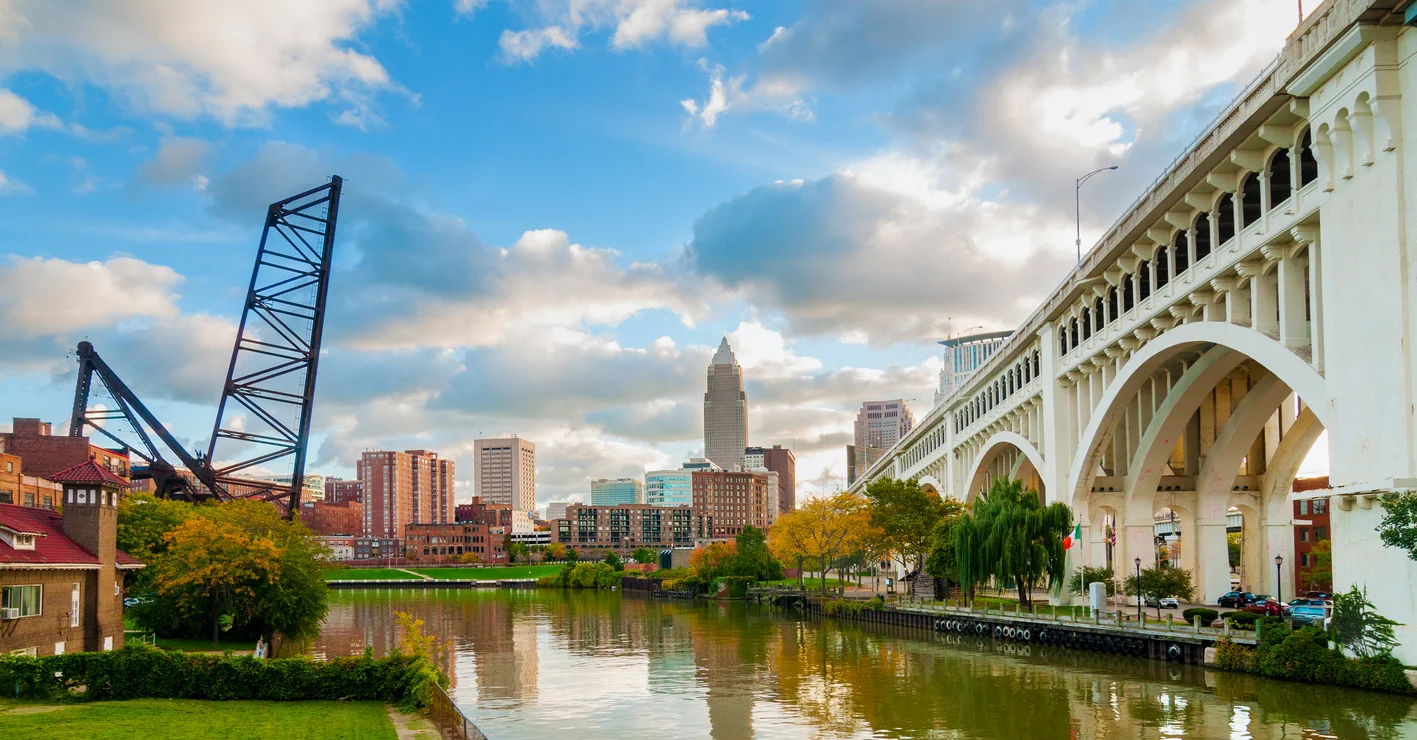
Columbus, Cleveland, Cincinnati, Toledo, Akron, Dayton, Canton and Youngstown have been the drivers of Ohio's economy for most of the 20th century. Today, however, these "Big Eight" cities are experiencing sustained, long-term population loss, turning them into Ohio’s “shrinking cities” and prompting city and state officials to ask: How will they reshape and reinvent themselves? Ohio’s Cities At A Turning Point: Finding the Way Forward attempts to answer just that question.  The white paper released today by the Greater Ohio Policy Center and the Brookings Institution’s Metropolitan Policy Program lists 10 policy recommendations to guide leaders as the cities undergo a physical transformation.  Lavea Brachman, co-director for Greater Ohio and a non-resident senior fellow for the Brookings Institution, co-authored the paper along with Alan Mallach, non-resident senior fellow for the Brookings Institution.

According to the white paper, the following seven premises must frame any vision for recreating the physical footprint of Ohio’s largest cities:

  • These cities contain significant assets for future rebuilding.
  • These cities will not regain their peak population.
  • These cities have a surplus of housing.
  • These cities have far more vacant land than can be absorbed by redevelopment.
  • Impoverishment threatens the viability of these cities more than population loss.
  • Local resources are severely limited.
  • The fate of cities and their metropolitan areas are inextricably inter-connected.

Specific recommendations from Ohio’s Cities At A Turning Point include the call for joint regional planning and economical development; targeted, strategic investment of resources; prioritization of state funding to cities adopting proactive plans that address their population loss and need for land reconfiguration; and local government consolidation where appropriate.

We are proud to release this white paper, whose research also helped inform the Restoring Prosperity: Transforming Ohio’s Communities for the Next Economy Report released in February.

The State of Metropolitan America

Yesterday, the Brookings Institution’s Metropolitan Policy Program released a new report entitled, The State of Metropolitan America. The report tracks the social and demographic trends of nation’s metropolitan areas that have taken place during the first decade of the new millennium using data collected from the Census Bureau and the American Community Survey.

Over the last several years, Brookings’ Metropolitan Policy Program has been a close partner of Greater Ohio and a co-authored our Restoring Prosperity report; Brookings’ latest effort provides valuable data that supplements the figures found in Restoring Prosperity and is a useful resource for anyone interesting in learning more about the metropolitan areas leading Ohio and the nation into the next economy.

For more information see the report: http://www.brookings.edu/reports/2010/0509_metro_america.aspx

Community Design Supports Good Health

A new report from the Centers for Disease Control and Prevention (CDC) illustrates the importance of considering public-health factors, such as physical activity, respiratory and mental health, water quality, social equity, healthy aging, and social capital, when creating the built environment.  The report is the latest product of CDC’s Healthy Community Design Initiative, aimed at combating soaring rates of asthma, diabetes, and obesity by improving the way communities are designed. Greater Ohio Policy Center applauds these efforts.  As a place- based organization that emphasizes the importance of vibrant, walkable, bikable quality places, Greater Ohio agrees that the built environment is the cornerstone of healthy communities.  In our Restoring Prosperity to Ohio report, we list several recommendations to strengthen our quality places and build on our assets.  Not only do these quality places drive economic development, but they also impact the health of their inhabitants as well.

For more information on the report and CDC’s Healthy Community Initiative, contact Charles Green at 770-488-0626 or clg8@cdc.gov. You can also subscribe to the Healthy Community Design News Listserv.

MORPC Announces New Complete Streets Policy

Greater Ohio Policy Center congratulates the Mid-Ohio Regional Planning Commission who last week approved a Complete Streets Policy requiring that every roadway project that receives MORPC-attributable federal funding provide accommodations for motorists, bicyclists, pedestrians, transit users, and other users of all ages and abilities on the same road.  With this announcement, MORPC becomes the largest MPO in the country to adopt this comprehensive complete streets approach to its projects. MORPC’s announcement follows up on a national movement by the National Complete Streets Coalition, which urges transportation agencies to change their orientation toward building primarily for cars but rather urges transportation planners and engineers to consistently design and operate the entire roadway with all users in mind - including bicyclists, public transportation vehicles and riders, and pedestrians of all ages and abilities.

Greater Ohio urges other MPOs across Ohio to look at MORPC’s innovative policy and consider adopting comprehensive Complete Streets policies to ensure the transportation needs of all Ohioans are being met.

Moving Ahead 2010

Greater Ohio Policy Center has been pleased to be involved in planning the upcoming Ohio State University/Clean Fuels Ohio Moving Ahead 2010 Conference on May 2 – 4, 2010, which will bring together transportation and energy leaders from industry, research, government, non-profit organizations and education to continue the conversations and build momentum that will foster the actions we need for our transportation future. Whether you are interested in electronic vehicle technology or developing sustainable communities there are sessions and national experts to challenge and educate you.  Speakers include representatives from Smart Growth America, the Center for Neighborhood Technology and the Urban Land Institute as well as representatives from charging companies like AeroVironment, Better Place, and Plug Smart, and energy companies such as ITC, Duke, and AEP.  Ford, Nissan, Toyota, Bright Automotive and other auto companies will also be on hand to talk about their plans to plug in America’s drivers.

Because of our involvement, we are able to offer you a special 50% discount to attend the conference, which will bring the price of registration down to $100.  To receive the discount, visit the Moving Ahead 2010 registration page.  Once you chose an option on the next page, it will show the shopping cart at the top and the regular registration fee. Simply enter the code TOP50 (all caps) in the “Discount Code” box and click on “Update Cart.”  Your registration fee will update at that point, and you can proceed with the rest of the registration process.

Greater Ohio, as part of our recently report Restoring Prosperity: Transforming Ohio’s Communities for the Next Economy, recommended a host of state policy changes around developing more comprehensive transportation options and planning to ensure that both people and goods are moved efficiently while recognizing its impacts on the global challenge of climate change. We look forward to addressing these issues as well as learning from national experts as part of this conference.

The Banks of Cincinnati, Best New Urban Park

Check out this piece from The Infrastructurist entitled The Best New Urban Parks in the U.S., which lists six of the United States' newest and most exciting urban parks.  In the piece, Cincinnati's The Banks was listed as the best up and coming urban park, and like The Infrastructurist and Cincinnati community leaders, Greater Ohio Policy Center is excited about The Banks' potential to revitalize Cincinnati's riverfront from its old industrial past to a new beginning that capitalizes on this true community asset. The Banks is an $800 million mixed-use development on the Ohio River in downtwon Cincinnati that once completed will become a true "live-work-play" riverfront neighborhood.  The project includes the new construction of roughly 2.8 million square feet of mixed use space, including one million square feet of office space, 1,800 housing units, 200 hotel rooms, 300,000 square feet of retail and a 45-acres park.  The first phase of the project, which includes the development's first apartments and storefronts, the public park and an underground parking garage, is expected to be completed in the Spring of 2011.

Greater Ohio applauds Cincinnati and other Ohio communities, from Toledo to Marietta and Youngstown to Dayton, that are redeveloping their waterways to provide quality of life enhancements that will draw people and ultimately jobs back to these communities.  In fact, in our recently released Restoring Prosperity: Transforming Ohio Communities for the Next Economy, we call for the state to create a "Walkable Waterfront Initiative" to support local efforts, such as the Banks, to revitalize urban riverways and lakefronts.  This initiative could build on existing Ohio programs such as the Clean Ohio Fund and the Job Ready Sites Program targeting these funds in a deliberate place-based manner that is aligned with local efforts.  To learn more about this recommendation check out our report.

April 15, 2010

The Third Annual River Summit will be held at the College Park Center, University of Dayton. The Great Miami River Summit is the launching of a regional endeavor to link cities, farmland, communities, and individuals with one another to develop a regional strategy to make the most of our unique asset, the Great Miami River. Join interested citizens as well as mayors, city managers, business and agricultural leaders at this Summit to discuss sustainable economic development growth in and around the Great Miami River.  Our own Gene Krebs will be participating in the day's agenda.

For more information please visit: http://riversummit.udayton.edu/

41 Counties Able to Create Land Banks

Legislation provides important tool to address urban decay created by foreclosure crisis Ohio's local leaders will soon have a powerful tool to use in addressing the foreclosure and vacant property crisis plaguing our communities, thanks to the recent passage of Substitute House Bill 313 by the Ohio Senate. The bill, which is awaiting Gov. Strickland’s signature and was approved by the Ohio House late last year, would provide 41 additional counties with populations of more than 60,000 people the opportunity to form and operate countywide nonprofit land banks.

Ohio has experienced record numbers of foreclosures in the past few years, only compounded by the recent Great Recession – 89,053 in 2009 up from 85,773, the previous year, and the 14th annual increase, according to state data – a number that is not likely to decline soon. The result is urban decay and high numbers of vacant properties too large for the private sector to accommodate in cities throughout the state, conditions for which the land bank mechanism is intended to provide urgent, long-term relief.

The land banks would work to return vacant and abandoned properties to productive use, thus stabilizing and ultimately restoring neighborhoods, according to the Greater Ohio Policy Center in Columbus, which was instrumental in passage of the legislation. Primary bill sponsors were former Representative Peter Ujvagi (D-Toledo) and Representative Roland Winburn (D-Dayton). While the land bank can receive funding from a variety of sources, the primary source of funds will be penalties and interest on delinquent real property taxes.

“We are excited to have been involved in bringing this important legislation to this point,” said Dawn Larzelere, associate director of Greater Ohio, a research organization focused on smart growth and land use. “We hope counties will research this proven tool to address decay in their communities and that they will follow the lead of other communities that have used land banks as a powerful solution to address the growing vacant property problem.”

Greater Ohio was helped in its efforts by a network of supporters throughout Ohio. Two were Montgomery County treasurer Carolyn Rice and Lucas County treasurer Wade Kapszukiewicz, who worked with Greater Ohio to push House Bill 313 through the legislative process, and are excited about the prospects the land bank bill provides for their local community.

“I am thrilled that the Ohio Legislature has overwhelmingly voted to expand land banking authority so that communities like ours have another tool available to revitalize neighborhoods,’’ Rice said. “Land banking initiatives will enable our cities and suburbs to implement local solutions for finding new, productive uses for abandoned and deteriorating properties. I believe land banking can certainly help us tackle the problem of vacant foreclosed houses.”

Echoed Kapszukiewicz: “This program will allow our community to take control of its own destiny, instead of being held hostage by land speculators or Wall Street banks. It will be an important weapon in the battle to stabilize and restore our neighborhoods, and it allows us to fight urban blight without having to raise taxes.”

Montgomery and Lucas counties are exploring whether to follow the lead of Cuyahoga County, which formed a countywide land bank in April 2009 after the Ohio General Assembly approved enabling legislation in December 2008. Since opening its doors in June 2009, the Cuyahoga County Land Reutilization Corp. has acquired or is in the process of acquiring more than 170 vacant properties, including both structures and lots, in hopes of returning them to productive reuse and stabilizing surrounding properties.

Passage of expanded land bank authority was identified as a key recommendation in Greater Ohio and the Brooking Institution’s recently released Restoring Prosperity: Transforming Ohio’s Communities for the Next Economy, co-authored by Greater Ohio co-director Lavea Brachman. According to the report, the land bank statute can help stabilize neighborhoods and provide a comprehensive planning tool for cities whose physical footprint no longer matches their population size.

“One of the beauties of this legislation is that it is all about local control. All the state is doing is granting local communities the permission to explore this option and see if it is right for them,” said Gene Krebs, Greater Ohio co-director.

After the bill’s passage, Treasurer Rice said she will work with community leaders in her county to evaluate next steps. “I would like to thank our local legislators and Greater Ohio for all their work to pass this important legislation, and I look forward to working with our community leaders on this new opportunity,” she said.