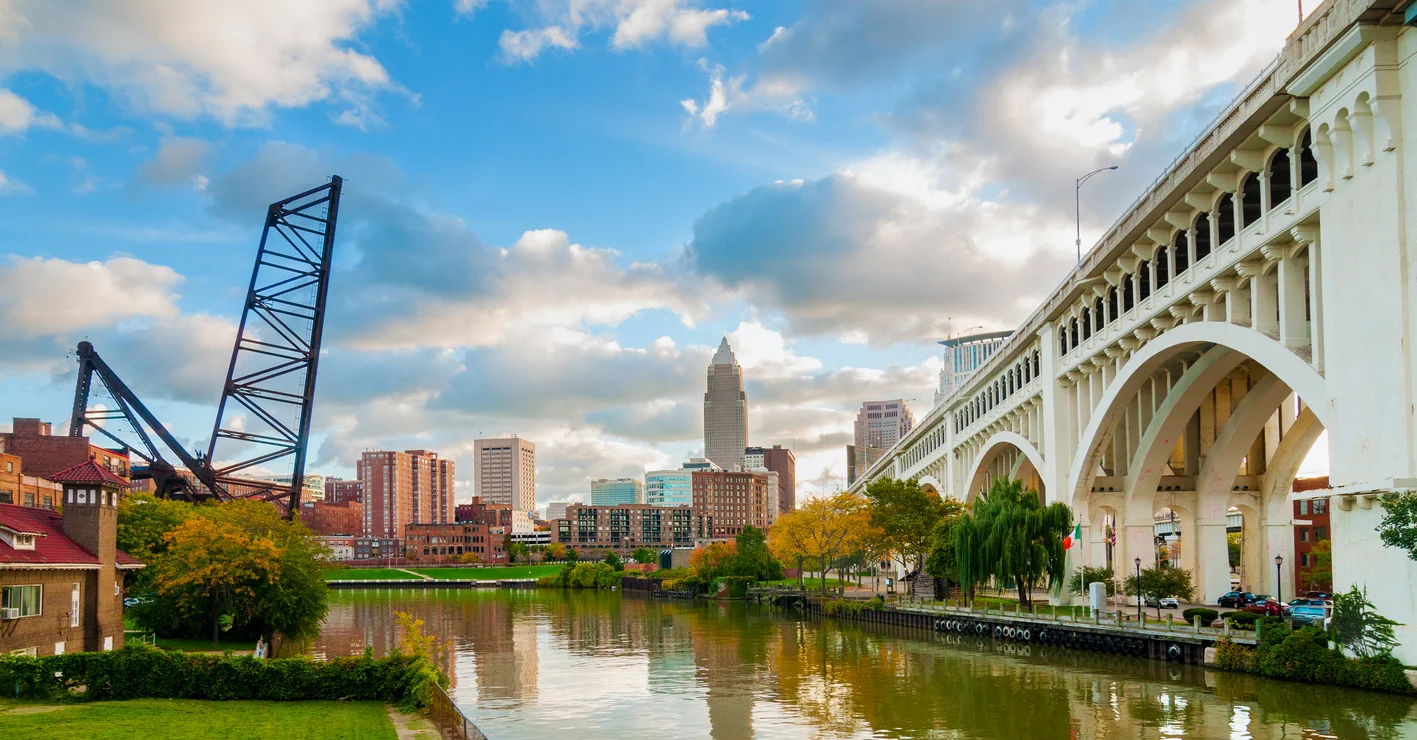
Pending Congressional Approval, Federal Budget Will Cut Important Transportation Grant Program

By Alex Highley, GOPC Project AssociateUnder the Trump administration’s recent budget proposal, a crucial grant program supporting capital investment for transportation projects across Ohio and the country is slated to be abolished. The federal program known as the Transportation Investment Generating Economic Recovery (TIGER) grants are earmarked to be eliminated, unless the House and Senate budget bills reverse the provision doing away with the program. Funding for TIGER, a program that was developed in 2009 as part of the federal Recovery Act, is allocated to state Departments of Transportation (DOT) and local jurisdictions by Congress following a merit-based award process. Should Congress decide to scrap the program, some planned transit, rail, and bike and pedestrian projects in Ohio could fail to produce the funds necessary for completion.

Since 2009, TIGER grantshave funneled over $4 billion to a variety of innovative transportation projects around the country, including transit, rail, port, road, and bike and pedestrian. Since the program’s inception, the annual program budget has declined over time, reducing the number of awarded projects, while applications have ramped up. The US Department of Transportation’s (USDOT) latest round ofTIGER grant awards, known as TIGER VII, are set to deliver $500 million to various projects nationwide. In total, this amount will support 39 capital projects in 33 states. However, award amounts have been slowly declining since the initial TIGER I, which funded 51 separate capital projects in the form of $1.5 billion in award money.

Downtown overhead
Downtown overhead

Akron's downtown promenade was awarded a $5 million TIGER capital grant in 2016. Photo credit: AkronStock 

TIGER grants are immensely important in Ohio, where they offer needed funding assistance to multi-modal projects that would struggle to generate the necessary funding otherwise. For example, in 2015$6.8 million was awarded to Ohio to divide among sparsely-funded public transit agencies in rural areasof the state such as Athens, Wilmington, Chillicothe, Knox, Lancaster, Marion, Logan, and others. Moreover, theOpportunity Corridorproject, which is a path designed for transit, bikes, and pedestrians in northeast Ohio, along with thedowntown promenade in Akron, have enjoyed the fruits of grant awards in recent years. In total,Ohio has received over $79 millionfrom the TIGER program for transportation projects (see the table below for a year-by-year breakdown).

The success of the program is manifested by the substantial local investment it has spurred. USDOT calculates that TIGER’s initial investment has leveraged $1.74 billion in matching funds by state and local actors, including the private and public sectors contributing to the completion of the project. However, due to the program’s widespread appeal, acquiring TIGER grants have become increasingly more difficult. As local transportation projects face a dwindling supply of resources, the TIGER program has become more competitive given the increasing demand. Subsequently, many advocates have called for an expansion of the program to aid local governments in finishing important projects.

Scrapping the program entirely would represent a big blow to public transportation systems in Ohio in particular, given many local systems are insufficiently supported.The Ohio Department of Transportation's (ODOT)2015 Transit Needs Study estimates that Ohio’s public transportation systems suffer from a $192.5 million dollar funding shortfall in combined capital and operations needs. Moreover, the study finds that the state of Ohio spends just 63 cents per capita on public transportation over the course of each year, ranking Ohio 38th in the nation in its investment in this crucial policy area.

Greater Ohio Policy Center (GOPC) believes that Ohio’srecently-passed transportation budget, which includes a $10 million increase in flex funding for public transportation, is a positive step to modernizing the state’s transportation system. However, local systems will continue to struggle to meet the demands of riders, and the possible federal elimination of the TIGER program will increase the financial strain on cash-strapped agencies that are seeking the funds to ensure they can properly invest in their capital systems as well as operate sufficiently.

For more resources on transportation policy affecting Ohio’s cities and regions, please visit GOPC’sTransportation Modernization webpage.

TIGER Grants Total Award Amounts in Ohio

2009: $20 million

2010: $10.5 million

2011: $12.5 million

2012: $16 million

2013: no award

2014: $400,000

2015: $6.8 million

2016: $12.9 million

Grand Total: $79.1 million
Community Development Block Grants Proposed for Elimination

By John Collier, GOPC Intern The Community Development Block Grant (CDBG) is one of the longest running programs of the US Department of Housing and Urban Development. Beginning in 1974, the program has provided communities with a source of flexible funds to aid in affordable housing and anti-poverty programs. The future of the program is unclear, as the Trump Administration, in its 2018 Budget Blueprint, is calling for the elimination of the CDBG program.

The flexibility of the CDBG program sets it apart from other grant programs provided by the federal government. With CDBG grants, state and local governments have a large amount of discretion in how the money is spent, and require less federal oversight.

CDBG funds are allocated in two separate funding streams.  One goes to states and the other directly to cities meeting certain requirements. Seventy percent of CDBG funds are allocated to what is referred to as the CDBG Entitlement Program. This program distributes funds directly to large cities and urban counties. Eligible communities receive CDBG funds determined by a formula based on population, poverty rates, and housing units. Since the funding is based on a formula and depends on a number of factors, CDBG funding can vary from year to year. 

The other 30 percent of CDBG funds are allocated to the State CDBG Program. States award the CDBG funds to smaller units of government for a wide array of purposes. The State CDBG Program allows non-entitlement cities (typically cities with populations fewer than 50,000) to benefit from this CDBG program. In Ohio, CDBG funds are administered by the Office of Community Development at ODSA. The Office of Community Development outlines four areas for CDBG funding in Ohio:

  1. Community Allocation – projects including public facilities, services, housing, and economic development

  2. Neighborhood Revitalization – targeted investment in low and moderate-income neighborhoods

  3. Downtown Revitalization – targeted investment in façade improvements, streetscapes, and public infrastructure

  4. Critical Infrastructure – high priority projects, typically single-component projects such as roads and drainage, which provide a community wide impact

In 2016, Ohio received $137,566,074 from HUD’s CDBG programs, $41,292,727 went to the State Program and $96,173,347 was distributed through the Entitlement Program. Forty-five communities in Ohio were eligible for the Entitlement Program. The breakdown of expenditures of the State Program funds is as follows:

  • 55% for Public Facilities and Improvements

  • 20% for Housing

  • 14% for General Administration/Planning

  • 7.5% for Economic Development

  • 2% for Public Services

According to the State of Ohio’s 2014 Accomplishment Report submitted to HUD, state program funds benefitted an estimated 885,599 individuals through the various projects funded by CDBGs. One of these state projects took place in Preble County, which assisted the Village of Lewisburg in a revitalization of its downtown district. The funds helped repair building facades, install decorative brick pavers, decorative planters, sidewalks, etc. In Miami County, state CDBG funds were utilized in a critical infrastructure project. CDBG funds allowed Bradford Village to replace 1,250 feet of water lines as well as to install 3 fire hydrants. The project benefited the entire village.

While total CDBG disbursement has decreased every year since 2002, it may now be completely eliminated. President Trump’s proposed 2018 Budget requests a $6.2 billion or 13.2 percent decrease in discretionary funding for HUD from 2017 levels and a complete elimination of the CDBG program. The blueprint claims the program “is not well-targeted to the poorest populations and has not demonstrated results” and aims to redistribute the funds to other activities.  The CDBG remains a valuable source of flexible funding for community development, and there is no obvious replacement source for cash-strapped communities.  Federal lawmakers need to carefully consider the merit of the program before making any changes.

For more detailed information on the CDBG program visit the HUD Exchange.


Economic Impact Analysis Reveals Added Value to US Economy of Investing in Water Infrastructure and Warns of Multiplying Costs if Funding Gap is Deferred

By John Collier, GOPC InternThe Value of Water Campaign recently released theEconomic Impact of Investing in Water Infrastructure– a report aimed at quantifying the economic impact water infrastructure has on the US economy. The campaign brings together leading water industry experts to better understand the economic benefits associated with closing the funding gap for water infrastructure spending, as well as the potential costs of failing to do so.

The US is at a tipping point when it comes to its water infrastructure. The infrastructure built in the last century, with a lifespan of 75 to 100 years, is coming to the end of its lifespan. Estimates from the American Society of Civil Engineers suggest the US will need to spend a minimum of $123 billion per year on capital improvements over the next 10 years to maintain a good state of repair. To put the scale of this infrastructure improvement into perspective, the report states that one-third of US water mains will need replaced by 2040. Current funding levels at all levels of government are not sufficient, and leave a sizeable funding gap. The report notes that aggregate capital spending across the local, state, and federal levels is only $41 billion per year, leaving an $82 billion annual funding gap. If current needs are left unmet, the report warns this funding gap will increase to $109 billion per year by the year 2026.

The benefits of meeting the funding gap are bigger than simply avoiding service disruptions, and would ripple to the farthest reaches of the economy. The US stands to gain $220 billion dollars in annual economic activity and would create 1.3 million jobs nationwide over ten years, should the water infrastructure funding gap be closed. Many of these jobs that are involved in the design and construction of improved water infrastructure are well paying and are attainable with a high school diploma. Moreover, indirect effects of investing in construction would create positive indirect effects on the economy, such as the purchase of working supplies in interrelated industries. An added benefit to the investment is the $94 billion businesses would save each year due to no longer needing to fund their own water supplies.

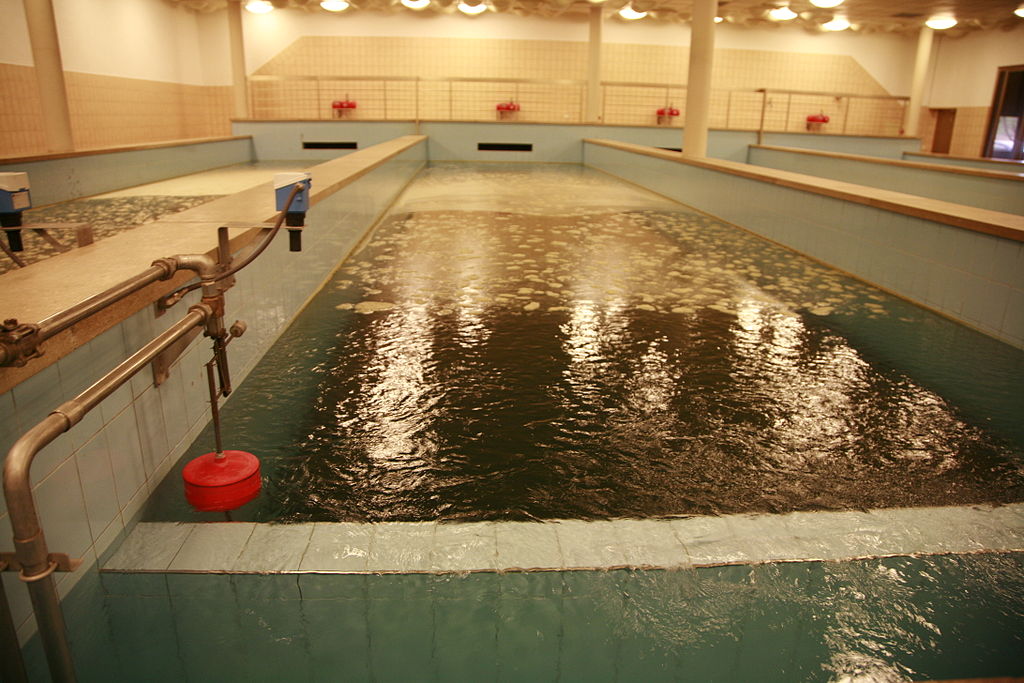
Water Treatment Plant - wikicommons

Water Treatment Plant. Photo credit: Wikicommons

The campaign asserts that as the nation moves to assess and repair its aging infrastructure, there is need for significant federal investment. From 1977 to 2014, federal contributions have fallen from 63 percent of total spending to 9 percent of total capital spending on water infrastructure. Much of the burden has been picked up at the local level – per capita spending by local communities has risen from $45 in 1977 to upwards of $100 in 2014.

Greater Ohio Policy Center (GOPC) recently releasedStrengthening Ohio’s Water Infrastructure, a report exploring the opportunities at the state level to ensure long-term financial stability of Ohio’s water infrastructure. The use of asset-management, regionalization, and private-public partnerships may be the key for the financial stability of Ohio’s water systems and adequately funding capital improvements.  Affordability is becoming more of a strain for some communities as user charges continue to increase in parallel with national trends. 

Modernizing the water system for the 21st century remains one of GOPC’s main policy objectives. GOPC is in the midst of a multi-year project on Ohio’s water and sewer infrastructure – and is currently identifying the best practices from around the nation.

For further resources and reports, please visit GOPC’sSewer and Water Infrastructure Resource Page

President's Budget Blueprint Reduces Overall Federal Support for Water Infrastructure

By Jon Honeck, GOPC Senior Policy FellowIn March 2017, the Trump Administration released itssummary budget blueprintfor Federal Fiscal Year (FFY) 2018, which begins October 1, 2017.  The plan signals the administration’s overall intention to cut non-defense domestic programs in order to free up funds for increased military spending.  There is a long road to travel before any parts of the plan are enacted, and many members of Congress have already gone on record expressing reservations about specific elements of the proposal.  Nonetheless, the blueprint creates a starting point for agency budget plans that will be presented to Congress in the coming months.   

This blog discusses the administration’s proposed changes to how the federal government will support investments in water infrastructure.  The Trump Administration’s budget blueprint would eliminate the USDA Rural Development water and wastewater loan program, the Appalachian Regional Commission (ARC), the Community Development Block Grant (CDBG), and the U.S. Department of Commerce – Economic Development Administration (EDA).   The plan would preserve funding for the U.S. Environmental Protection Agency (USEPA) water and wastewater revolving loan funds, although the agency as a whole would face a 31 percent budget reduction, resulting in the elimination of 3,200 agency staff positions and a 45 percent reduction in categorical grant programs.  One of these categorical grant programs provides states with funding for the oversight of local drinking water systems.  It helps pay for the Ohio EPA to monitor local compliance with protocols for the control of lead and other contaminants. 

The budget proposal should be analyzed in the context of the nation’s critical need to modernize drinking water, wastewater, and stormwater infrastructure.  This issue is a high priority for Greater Ohio Policy Center (GOPC) because of its links to economic development, land use planning, and the potential for financial strain on Ohio families and communities (see our recentWater Infrastructurereports).  According to EPA estimates, Ohio water utilities (typically local governments) will need to make capital investments of $26 billion in drinking water and wastewater infrastructure to meet identified needs over the next 20 years.   User charges have been rising steadily, faster than the rate of general consumer inflation. 

overflow
overflow

                           Photo courtesy of Wikicommons

The federal government plays a major role in financing water infrastructure investments, although the approach has changed significantly over the decades.  With the passage of the federal Clean Water Act in the early 1970s, Congress created a large grant program to assist local governments with the modernization of wastewater treatment plants and related infrastructure.  The federal government paid 75 percent of project costs in the initial program, which was changed to 55 percent in the 1980s.  This was one of largest federal infrastructure programs since the interstate highway program of the 1950s and 1960s. 

In the late 1980s, Congress phased out the wastewater grant program in favor of a revolving loan approach.  A revolving loan for drinking water infrastructure was added in the late 1990s.  Under the current policy, each year the U.S. EPA provides a capitalization grant to state revolving loan funds which lend directly to local governments at subsidized interest rates.  The state must provide a 20 percent match for the grant.  In FFY 2016, the Ohio EPA received a $75.2 million capitalization grant for its Water Pollution Control Loan Fund, and $23.1 million for the Drinking Water Assistance Fund.   Communities that want a market-rate loan with fewer administrative hurdles can approach the Ohio Water Development Authority, which runs a state-supported revolving loan fund.   

The result of this change in federal strategy is that local communities bear the largest responsibility for financing water infrastructure.  Communities that need a grant to complete their capital project must rely on other sources, which are extremely limited and competitive.  At the federal level, these sources include the USDA Rural Development – Water and Wastewater Loan program, the Appalachian Regional Commission (ARC), the Community Development Block Grant, and the Economic Development Administration.  The USDA and ARC programs are targeted at smaller, low income communities in rural counties that need them the most.  In FFY 2016, USDA Rural Development made 17 grants for a total of $14 million to Ohio communities, and an additional 16 loans for $44.6 million.  The ARC, a smaller agency, made 12 water infrastructure grants for a total of $2.7 million in Ohio.  The CDBG provides several million dollars in Ohio each year for water and infrastructure through its Critical Infrastructure Program.  (For more information on the challenges of water infrastructure in Ohio, seepanelist presentationsfrom GOPC’s Investing in Ohio’s Future 2017 Summit and our reportStrengthening Ohio’s Water Infrastructure). 

The Budget Blueprint asserts that the USDA and EDA programs are duplicative of the state revolving funds and other programs, and that the CDBG is “not well-targeted to the poorest populations and has not demonstrated results.” The ARC is part of a long list of small, independent agencies slated for elimination.  The administration’s claims deserve close scrutiny from Congress, however.  The underlying issue is whether the federal government has any responsibility to provide grants, and the importance of grants in sustaining investments by small communities.  For small towns, grant funding can provide the missing piece of capital that makes a project affordable.  In Ohio, state and federal agencies have worked together for decades and often find ways to share responsibility for financing projects in small communities.  An interagency Small Communities Environmental Infrastructure Working Group (SCEIG), meets regularly throughout the year to provide advice to local governments seeking financing, and coordinates technical assistance programs. 

The elimination of these three federal programs would make the Ohio Public Works Commission (OPWC) the only significant remaining source of grant funding for water infrastructure in the Buckeye state.  (The EPA revolving loan funds have a limited number of loans that allow partial principal forgiveness.)  Most OPWC projects are prioritized at the local district level, and must compete with transportation projects.  In the context of rising concerns in Ohio and nationally about the affordability of infrastructure, a “one size fits all” approach to financing may backfire. 

For further resources and reports, please visit GOPC’s Sewer and Water Infrastructure Resource Page

Budget Update No. 4: Transportation Budget in the books; Main Operating inches along

By Jason Warner, GOPC Manager of Government Affairs This is the fourth in a series of articles taking a closer look as specific items contained in the Governor’s proposed budget for FY2018-19, which the legislature must pass by June 30, 2017The third article is available here

The Ohio House of Representatives and Ohio Senate sent the final version of the State Transportation Budget (HB26) to Governor John Kasich on March 29, which he then approved on March 31.  The transportation budget will take effect on July 1 and will fund transportation operations and other transportation-related functions through June 30, 2019.

Highlights of the final budget include an increase in federal flex funding for purposes of replacing Ohio’s aging public transportation fleet. Flexing federal highway dollars reallocates funding Ohio already receives. At present, the state flexes around $23 million per year for public transportation purposes. House Bill 26 increases this amount by $10 million per year, to $33 million annually. This is a significant increase in funding which will help support the purchase of new rural transit vans and full sized buses.

The conference report removed Senate provisions adding $48 million to the Ohio Public Works Commission's Local Transportation Improvement Program (LTIP) and requiring $30 million of the forthcoming Volkswagen Emissions Mitigation Trust Fund to be sent to public transit authorities for rolling stock. Conferees also agreed to allow county commissioners to approve a $5 motor vehicle license (MVL) fee increase by resolution, but specifies that any increase must take effect after 30 days. This will allow local voters an opportunity to subject the increase to a referendum. If a referendum is approved, the increase would only take effect if it is approved by voters.

The removal of the $30 million in funding from the Volkswagen settlement came at the request of the Ohio EPA and Ohio Attorney General Mike DeWine. They indicated to the conference committee there were still issues around the settlement which needed to be worked out and cautioned that allocating money from the settlement was premature. The chair of the Senate Transportation, Commerce and Workforce Committee, Frank LaRose (R-Copley), has indicated that he wants to see the settlement money appropriated for this purpose and will work to do so either through an amendment to the main operating budget (HB49) or through stand-alone legislation. GOPC will work with the senator to ensure that this does happen.

Other highlights from HB26 include:

  • Requires the Registrar of Motor Vehicles, within 9 months after the effective date of the bill, to establish by rule the service fee that is paid to a deputy registrar, a limited authority deputy registrar, or the Registrar, as applicable, for specified services at a rate that is not more than $5.25.  The current rate is $3.75. 
  • Requires the Registrar or Motor Vehicles to conduct a study of the benefits and detriments of lowering the permanent registration fee for commercial trailers and semitrailers and streamlining the registration process. A pilot program will be conducted between January 1, 2018 and December 31, 2019 with the fees being reduced from $30 to $15 for vehicle registrations in Clinton, Franklin, Lucas, Mahoning, Montgomery and Stark counties.
  • Limits the proposal to permit the ODOT director to establish variable speed limits to a pilot program to be limited to all or part of I-670 (Franklin County), all or part of I-275 (Hamilton County) and the portion of I-90 between I-71 and the Pennsylvania border.

At the same time, the Ohio House continues its work on the Main Operating Budget (HB49). This week, the bill resumed hearings in the full House Finance Committee following a month of hearings in five subcommittees and the House Ways and Means Committee. Various interest groups and members of the public shared their views on the budget in multiple hearings during the past week, and will continue sharing their thoughts this week before the legislature goes on recess for the next two weeks to observe Easter. Also last week, the Ohio Senate Finance Committee began holding informal hearings receiving background testimony from state agencies in advance of beginning formal hearings after the House approves their version of the state budget. That is expected to occur sometime in early May.

Visit GOPC’s Transportation Modernization page to learn more about this important issue area


GOPC Assesses Suitability of Replicating Peers’ Funding Tools to Support Affordable Housing in Central Ohio

By Alex Highley, GOPC Project Associate The Affordable Housing Alliance of Central Ohio (AHACO) has released a new report, The Columbus and Franklin County Affordable Housing Challenge: Needs, Resources, and Funding Models, underscoring the difficulties many residents face in obtaining affordable housing in Columbus and the surrounding suburbs. Informed by Greater Ohio Policy Center (GOPC) research, the report then investigates ways that the public sector can aid in increasing the affordable housing supply. GOPC’s systematic study of tools and programs that have been successfully used in cities outside Ohio highlights opportunities for expanding affordable housing in and around Columbus.

With Central Ohio’s population growing at a substantial rate and wages not keeping up with increasing rent prices, affordable housing is harder to come by for renters in the region. Between 2009 and 2014, median rents went up by almost twice the rate of median household incomes. Given that Franklin County poverty rates are growing, including in most of the major suburbs, many new job openings do not pay a “housing wage,” and the stark spatial mismatch between where jobs are located and where people live, AHACO concluded there is a strong need for new affordable housing. AHACO sought GOPC’s expertise to deliver robust research of viable models that could support much of the good work already being done throughout communities in Columbus to improve affordable housing opportunities for residents.

Click Here to Access the Executive Summary and the full Report

Methodologically, GOPC conducted an extensive literature scan and internet search to assess the funding mechanisms that communities around the country employ in order to spur the creation of a rich and diverse set of housing choices. In total, GOPC studied 40 funding mechanisms in 25 communities in detail. GOPC judged the merits of possible replication in Central Ohio by comparing the respective cities’ demographic data, summarizing the cities’ relevant economic conditions that made implementation of the tools possible, and concluding with weighing the advantages and limitations of mirroring the tool in Central Ohio. Examples of successful tools and the cities they are used in are listed below.

  • Seattle, WA - Dedicated Property Tax Revenue – $340 million generated over 20 years
  • Austin, TX - General Obligation Bonds - $120 million generated over 7 years
  • Portland, OR - Tax Increment Financing (TIF) – $107 million generated over 4 years
  • Washington, DC  - General Fund Appropriation – $48 million generated over 1 year
  • San Francisco, CA - Linkage Fees & Impact Fees – $188 million generated over 9 years
  • Denver, CO - Inclusionary Zoning: Developer Set Asides – $7.6 million generated over 13 years
  • Denver, CO - Social Impact Bonds – $8.7 million generated over 1 year

Along with explaining the mechanism of each tool and highlighting the number of affordable housing units produced through the program, GOPC discussed the tools’ applicability to Columbus. In many cases, the tools already exist and are used to some extent, or current law precludes their usage towards affordable housing purposes. For instance, General Obligation bonds issued by a county, township, or municipality can be used for housing construction costs, but may not be used for a rental or operating subsidy in Ohio. The county sales tax offers another opportunity; the current temporary permissive Franklin county sales tax of .25% generates over $58 million per year. If this revenue were to be directed toward affordable housing purposes, then this would represent a sizable amount of revenue available for funding solutions should voters renew the tax in 2018.

To understand how many new units of affordable housing could be created using these tools, GOPC estimated the total costs of various housing projects. For instance, permanent supportive housing costs $165,000 per unit to build and $7,000 per person per year in operation costs. GOPC also reviewed the feasibility of particular tools from a legal standpoint. For example, Franklin County has the authority to devote general funds toward rent subsidies, similar to the Local Rent Subsidy Program used in Washington DC. To conclude the report, GOPC created a chart for the Appendix which organizes each funding source according to the political subdivision (states, cities, counties, etc.) that may implement a program to support affordable housing along with whether that program is currently being used for housing purposes in Franklin County.

Click Here to Access the Executive Summary and the full Report


GOPC’s Recommendation to Boost Public Transit Included in 2018-19 Ohio Senate Transportation Budget

By Jason Warner, GOPC Manager of Government AffairsThis is the third in a series of articles taking a closer look as specific items contained in the Governor’s proposed budget for FY2018-19, which the legislature must pass by June 30, 2017.The second article is available here.

Greater Ohio Policy Center (GOPC) would like to thank the Ohio Senate for approving a transportation budget that would allocate an additional $15 million over two years to public transportation. In alignment with GOPC’s recommendations that Ohio repower its ailing bus fleet, the Senate’s budget would support a new grant program using funds from the Volkswagen Mitigation Trust Fund to support public transit.

In a strong bipartisan effort, the Ohio Senate unanimously approvedAm. Sub. HB 26, the state transportation budget for fiscal years 2018 and 2019 on March 22nd. All 24 Republican members and the 9 Democratic members of the chamber voted to support passage of the budget.Over the course of eight hearings, Senators heard testimony from a number of organizations, including GOPC, who advocated for an increase in funding for public transportation.

As GOPC noted in testimony before the Transportation, Commerce and Workforce Committee last week, Ohio appropriates only 2% of the state transportation budget to public transportation, while peer states spend between 10-20% of their transportation funds on transit-related needs and services. Governor Kasich’s proposed budget recommended spending an additional roughly $33 million annually in federal highway “flex” funds for public transit capital appropriations (purchasing new “rolling stock”, or buses), which was an increase of $10 million per year over the current budget.

GOPC thanks the members of the Ohio Senate for recognizing the need for additional support for public transit in the state and encourages the Ohio House of Representatives to support this Senate-backed provision in the budget.

In testimony, GOPC encouraged the legislature to spend an additional $17 million per year, boosting overall funding in public transportation to $50 million annually. The Senate-approved budget plan to strengthen public transportation using Volkswagen Mitigation Trust Funds would support a grant program that assists local transit agencies in purchasing new buses and transit vans across the state.

Later that same day, the Ohio House, which was the first to pass the transportation budget on March 1, voted to reject the full slate of Senate-approved changes 88-0. The bill now moves to a conference committee which will settle the differences between the two bills. Final passage of the budget bill will occur later this week, as state law requires Governor Kasich to sign the transportation budget by April 1.  

Learn more about GOPC's policy research and advocacy to modernize Ohio's transportation system

Cota on high st
Cota on high st

2018-19 Transportation Budget Passes Ohio House and Advances to Senate

By Jason Warner, GOPC Manager of Government Affairs This is the second in a series of articles taking a closer look as specific items contained in the Governor’s proposed budget for FY2018-19, which the legislature must pass by June 30, 2017. The first article is available here.

It has been a busy couple of weeks at the Ohio Statehouse as work continues on the drafting of the state Transportation Budget for Fiscal Years 2018 and 2019.  The House Finance Committee passed the transportation budget on February 24, while the full House approved the bill on March 1. The Senate Transportation, Commerce and Workforce Committee held its initial hearing on the bill with testimony from ODOT Director Wray and other administration officials a day before, on February 28. Hearings have been ongoing during the week of March 6th as well.

The House-passed budget maintained the as-introduced budget proposal to increase the amount of federal flex-funding dedicated towards public transportation by $10 million annually, up from $23 million currently. A portion of this funding ($10 million per year), will be distributed by formula to transit agencies, while the remaining funds will be competitively awarded through grants to replace the state’s aging fleet of vans and buses with more modern equipment that is more fuel efficient and requires less maintenance. Greater Ohio Policy Center (GOPC) continues to advocate for additional funding for this program, asking the legislature to appropriate a total of $50 million annually (this would require an additional $17 million per year above what is in the current budget proposal).

Visit GOPC's Transportation Modernization page to learn more about this important issue area

Among the other highlights of the House version of the ODOT budget:

  • Maintains exemption from the motor fuel tax (MFT) for aviation fuel, K-1 kerosene and compressed natural gas (CNG);
  • Eliminates the change from collecting the MFT from the point when it is ‘received’ in Ohio to the terminal refinery rack;
  • Increases the service fee paid to a deputy registrar from $3.50 to $5.25 and increases the multi-year registration fee by a similar percentage;
  • Permits a county commission to levy a $5 motor vehicle license fee for transportation purposes. Under current law, cities, townships and counties may establish a combination of local motor vehicle registration taxes totaling up-to $20. This new fee (which is optional for counties) increases the total amount of local motor vehicle registration taxes totaling up-to $25;
  • Requires the Registrar or Motor Vehicles to conduct a study of the benefits and detriments of lowering the permanent registration fee for commercial trailers and semitrailers and streamlining the registration process. A pilot program will be conducted between January 1, 2018 and December 31, 2019 with the fees being reduced from $30 to $15 for vehicle registrations in Clinton, Lucas, Montgomery and Stark counties;
  • Increases the earmark for Transportation Improvement Districts (TID’s) to $4.5 million in each fiscal year. A TID is a special-purpose district created by an Ohio county for the purpose of coordinating and financing road construction projects among local governments and private partnerships in that county. At present, there are 30 TID’s across Ohio;
  • Limits the proposal to permit the ODOT director to establish variable speed limits to a pilot program on highways that are a part of ODOT’s Smart Mobility Initiative, specifically I-670 (Franklin County), I-90 (Cuyahoga County) and U.S. Route 33 (Franklin, Union Counties); pilot program expires December 31, 2018.

GOPC continues to advocate for the increase in federal flex funding for public transportation, as well as advocate for establishment of dedicated funding for public transit, adoption of a statewide active transportation policy, and comprehensive reform of the ODOT budget. This is happening in one-on-one meetings with members of the Ohio Senate, as well as testimony before the Transportation, Commerce and Workforce committee, which is planned to occur next week.

Visit GOPC's Transportation Modernization page to learn more about this important issue area


Congratulations to the Greater Ohio Sustainable Development Award Finalists

Greater Ohio Policy Center congratulates the following individuals and organizations who have been chosen as Finalists for the Greater Ohio Sustainable Development Awards.  All of our Finalists have made outstanding contributions to achieving vibrant and prosperous communities in Ohio.  Award Winners will be announced at the Summit during the Awards ceremony breakfast at 8:30 am on March 8, 2017.  

Private Sector Champion Award Finalists.  
This Award recognizes an entity or individual operating in the private sector who has demonstrated a commitment to and excellence in existing communities and strengthening local economies in Ohio

CareSource is a managed health care organization that is making major investments that are leading the rejuvenation of Downtown Dayton.

ProMedica is a nonprofit health system serving northwest Ohio that will move its headquarters to downtown Toledo in summer 2017, bringing 1,000 jobs and a $60 million investment.

Scott Ziance is a Partner at the Vorys, Sater, Seymour and Pease, LLP, who led the charge to preserve the Ohio Historic Tax Credit in 2015. 


Nonprofit Sector Luminary Award Finalists.
This award recognizes an entity or individual operating in the nonprofit sector that has employed innovative thinking in working with communities to identify and address local needs and opportunities with distinction.

Dayton Children’s Hospital serves as one of the DaVinci Partners that is leading the redevelopment of the Old North Dayton and McCook Field Neighborhoods.

Jeanne Golliher is President and CEO of Cincinnati Development Fund, a nationally recognized Community Development Financial Institution that provides much-needed credit and investment capital in Cincinnati’s underserved neighborhoods. 

Yay Bikes! is a nonprofit organization that advocates for safer conditions for bicyclists in Central Ohio and statewide, including the recently-enacted 3-foot passing law.  YayBikes organizes professional development rides with local officials to give them a “bike’s view” of local roads. 

Public Sector Leader Award Finalists.
This award recognizes a public sector individual or entity exemplifying outstanding leadership and innovation in advancing policies or programs that incentivize and enable community reinvestment and sustainable development in Ohio’s cities and regions.

Rep. Jonathan Dever sponsored House Bill 463, passed by the Ohio General Assembly in 2016, which contains new provisions that will help Ohio’s communities mitigate and prevent blight. 

Douglas A. Garver has served as the Executive Director of the Ohio Housing Finance Agency since 2004.  Under his leadership, OHFA has provided assistance to first-time homebuyers, homeowners, renters, seniors, and others who might not otherwise be able to afford quality housing. 

Darryl Rush, being honored posthumously, served as the City of Cleveland’s Director of Community Development for 13 years. He is remembered for his dynamic leadership and dedication to serving the people of Cleveland. 


Rep. Kirk Schuring has authored dozens of legislative initiatives to improve community development, including the establishment of Joint Economic Development Districts and the recent enacted of House Bill 233, which created Downtown Redevelopment Districts. 

Catalytic Partnership Award Finalists.
This Award recognizes a cross-sector partnership that has had a positive impact on a community or region, and represents a model for creative and effective collaboration.

The Downtown Akron Vision and Redevelopment Plan identified 10 planning priorities to shape Akron’s future.  The Plan was shepherded by the Downtown Akron Partnership and City of Akron with support from the Knight Foundation and GAR Foundation. 

Link Lima/Allen County is an employer-centric workforce development strategy taking on the most daunting workforce challenges of employers in the Greater Lima Region through a private/public partnership among Allen Economic Development Group, OhioMeansJobs-Allen County, and many hundreds of employers.

RNC Host Committee is a multi-sector nonprofit corporation comprised of leaders from across Cleveland who dedicated themselves to ensuring that the 2016 Republican National Convention was a success and highlighted the positive work taking place in the city. 


2018-19 Budget Review: Replacing the Medicare Managed Care Organization (MCO) Tax

By Jason Warner, GOPC Manager of Government Affairs This is the first in a series of articles taking a closer look as specific items contained in the Governor’s proposed budget for FY2018-19, which the legislature must pass by June 30, 2017.

Last year, the Center for Medicare and Medicaid Services (CMS) issued a ruling that stated that after July 1, 2017, Ohio’s sales tax on Medicaid Managed Care Organizations (MCO’s) would no longer be a permissible source for state funds to draw down federal matching dollars for Medicaid. This represents a significant challenge for both the state, but also local governments and transit authorities which rely on sales tax receipts to support a wide range of services.

The Governor’s proposed budget would replace the MCO sales tax with a new Health Insuring Corporation (HIC) assessment which is similar to a plan that was instituted in California and was approved by CMS last year.

While this new assessment will assist the state in continuing to draw down federal Medicaid matching funds, it is not a sales tax. As a result, local governments and transit authorities will not have any local revenue generated as a result of the new HIC assessment.

House Bill 49 proposes a transitional aid fund for local governments and transit authorities to be paid out in a single lump sum in October of 2017. All 88 counties and eight transit authorities will receive a calculated 4th Quarter 2017 replacement aid amount based on what they would have received in revenue for that three month period. In addition, the transit authorities and 80 counties are to receive an amount based on the size of their sales tax revenue the Medicaid tax collections were, and how their overall sales tax collections compare to the state average. The remaining eight counties will not receive a payment from this calculation because the receipts from the tax represented too small a proportion of the overall revenue derived from the sales tax. (Those eight counties are Delaware, Erie, Geauga, Hancock, Holmes, Medina, Union and Warren counties.)

In total, the state will appropriate nearly $207 million to these local government entities as a part of the transition away from the MCO sales tax. However, in testimony to the House Finance Committee, Office of Budget and Management Director Tim Keen stated that the administration did not believe that long-term or permanent replacement of the revenue was in order as the MCO sales tax had only existed since 2010.

The full list of proposed transitional aid amounts can be found here.

Visit GOPC’s Transportation Modernization page to learn more about this important issue area