
Spooky Street Designs Pose a Problem Year Round, Not Just at Halloween
Infrastructure, Transportation
Skeletons, ghosts, and other things that go bump in the night; the month of October is full of scenes that call back to childhood fears and superstitions. Staff at GOPC are afraid of conventional things, like clowns and chainsaw killers, but few things keep the office up at night more than poorly designed streets.
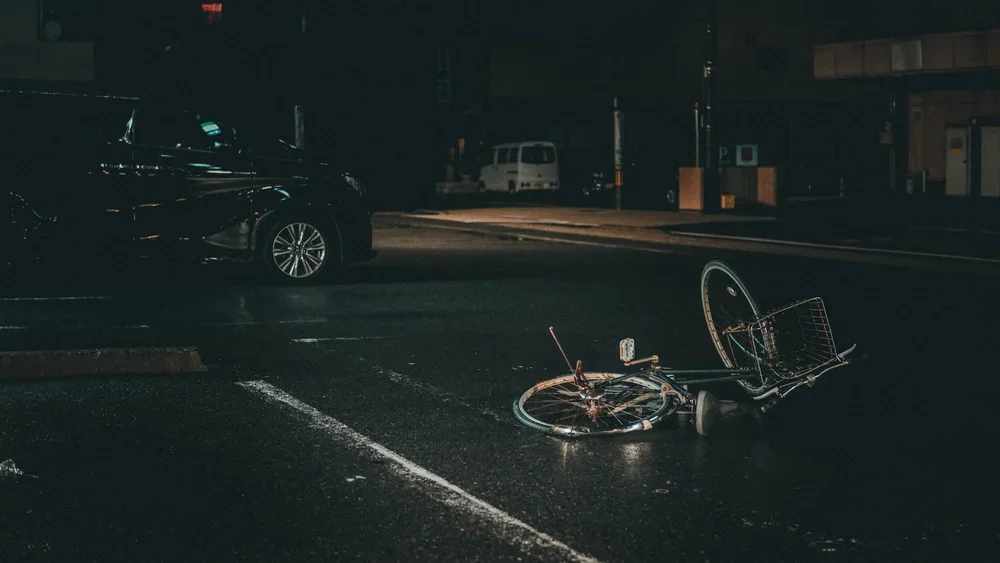
As GOPC has mentioned before, roadways are more dangerous now than ever before for pedestrians and cyclists. In 2018, 131 pedestrians and 22 cyclists were killed across Ohio, and the state ranked as the 26th most dangerous for people walking in a 2019 study by Smart Growth America. With Halloween on the horizon, it’s important to note that on average, children are more than twice as likely to be hit by a car and killed on Halloween than on any other day of the year.
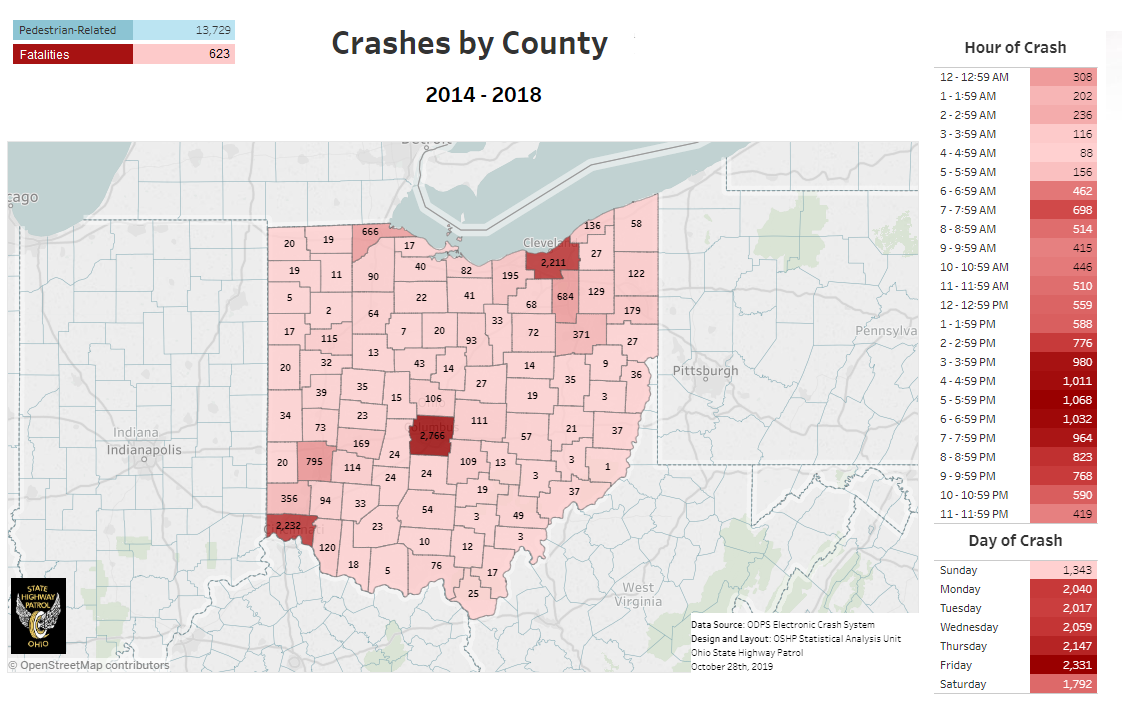
Source: Ohio State Highway Patrol
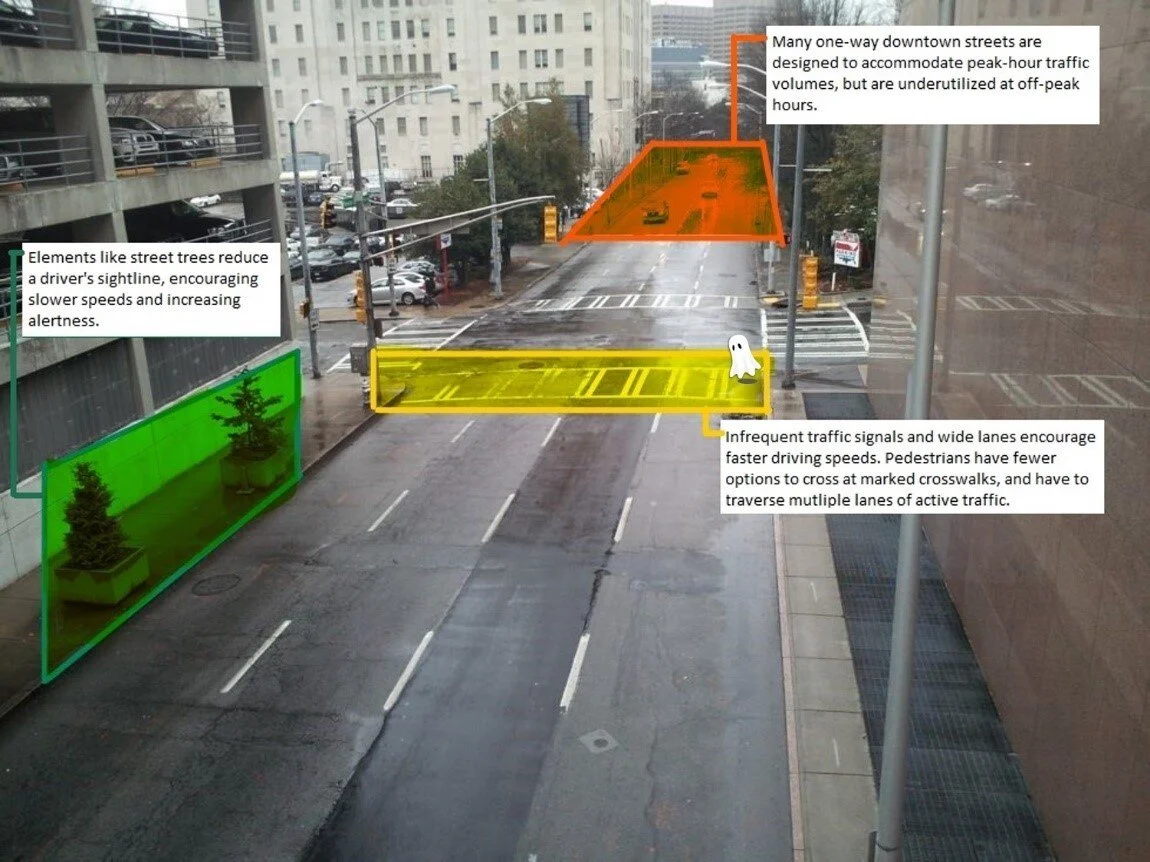
Roadway design is one of many factors that contribute to street safety, including the availability of sidewalks, lighting, and permissible vehicle speeds. Speed plays a critical role in the severity of crashes, and organizations like the National Association of City Transportation Officials note that as a driver’s speed increases, their peripheral vision narrows severely, increasing the likelihood of a crash (see a cool visual on the degree of sight loss here). Several design elements can be utilized to bring the operating speed into line with designated design speeds (which are different from posted speeds).

Source: FHWA Speed Concepts: Informational Guide
Too many streets are designed to either optimize operating speed or reduce driver risk. Both of these design choices can increase vehicle speeds while reducing pedestrian and cyclist safety. Urban streets are meant to invite users on a variety of modes, and encouraging pedestrians to interact with commercial and residential centers is a proven strategy to revitalize downtowns. Yet, promoting walkability along poorly designed roadways, or clustering stores and residences along busy streets, places all users in dangerous situations.
Safe roads protect all roadway users, including drivers. A uniform, statewide active transportation policy would go a long way towards reducing pedestrian fatalities and injuries. Adoption of a statewide active transportation policy has been and remains a priority for GOPC. For staff, nothing is scarier than dangerously designed street.
Examples of Spooky Street Designs the pose dangers to pedestrians, cyclists, transit users, and drivers alike.


#GOPCThread: Spooky Streets and the Threat they Pose to Communities Across Ohio
Transportation, Infrastructure, GOPC Thread
Our latest #GOPCThread is available on Twitter., as we bring back a blog post from last year that focused on pedestrian safety and ways to better design Ohio’s transportation infrastructure. #SpookyStreets pose a threat to communities across Ohio, but with better design, they can safely accommodate all users.
Not on Twitter, the thread is available online , as well as below.
Greater Ohio Policy Center Read on Twitter
Today’s #GOPCThread builds on a theme we wrote about last year in the spirit of #Halloween, #SpookyStreets and the threat they pose in communities across #Ohio

Late last month, @GHSAHQ in partnership with @USDOT announced that October would be designated as the first National Pedestrian Safety Month. This comes as pedestrian deaths have been on the rise throughout the country over the past 10 years. Image credit @yfreemark #GOPCThread

This year has been particularly bad for traffic fatalities. While traffic volumes fell 16% in the first half of 2020, @NHTSA found the fatality rate to be 1.25 per 100mil VMT, up from 1.06 in the same period in 2019 #GOPCThread #SpookyStreets
2019 Fatality Date Show Continued Annual Decline in Traffic Deaths NHTSA
This trend is also playing out in the state of #Ohio. Despite traffic volumes being down, traffic fatalities are up YTD. According to the @OSHP, an increase in vehicle speeding is likely the cause for the deadlier year in traffic #GOPCThread #SpookyStreets

Less traffic, more fatalities: Ohio State Highway Patrol looks at new and old Labor Day problems. (courtesy of 19 News Cleveland) (click image for link).

Speed plays a critical role in the severity of crashes. While less traffic can contribute to higher speeds, we also have to take a look at the design of our roads to understand why speeding is so easy on certain stretches of roadway #GOPCThread #SpookyStreets

Traffic speed results from the interaction between engineering, legal, and driver performance factors, though geometric elements of design play a role in influencing operating speeds #GOPCThread #SpookyStreets

Speed Concepts: Informational Guide (courtesy of Federal Highway Administration) (click image for link).
. @USDOTFHWA defines different speed concepts based on road design and user decisions #GOPCThread #SpookyStreets

Too many streets are designed to either optimize operating speed or reduce driver risk, both of which can impact pedestrian & cyclist safety on the road #GOPCThread #SpookyStreets

Several design elements can be utilized to bring operating speed in line with designated design speed #GOPCThread #SpookyStreets

What design interventions can improve roadway safety? Last year, we blogged about the #SpookyStreets that exist in our communities, pointing out some of the more dangerous elements. Our Senior Research Associate (who is NOT a graphic designer) prepared these images #GOPCThread
Any time a pedestrian has to cross the roadway, their risk of getting hit by a vehicle increases. Clearly marking crosswalks with paint, lights, signs, or even raising the crosswalk itself, create greater visibility for pedestrians #GOPCThread #SpookyStreets
Roadways are designed to promote vehicular visibility to protect the safety of a driver. This sometimes comes at the expense of other road users. Presence of street lighting and facilities, like sidewalks, can increase pedestrian visibility to improve overall safety #GOPCThread
One-way streets were a popular intervention to improve traffic flow at peak hours into and out of downtown districts. The wide lanes and long blocks facilitate the movement of cars, but encourage speeding at off-peak hours, which endangers pedestrians and cyclists #GOPCThread
A short video by the World Resources Institute explains these and other people-centered changes that can improve road safety and reduce pedestrian-vehicle collisions #GOPCThread #SpookyStreets
There is an added significance to designating October as Pedestrian Safety Awareness Month. A review of traffic fatality data shows that Halloween night is, on average, 43% more deadly for pedestrians than any other autumn night #GOPCThread #SpookyStreets

The most terrifying part of Halloween is our deadly streets (courtesy of Curbed) (click image for link)
The increase in the number of people walking on Halloween shows how poorly many of the existing roadways are designed for the safety of people walking #GOPCThread #SpookyStreets

Prioritizing driver safety has deadly consequences, evident in pedestrian fatality trends in the past decade #GOPCThread #SpookyStreets https://bit.ly/2TfRcYI

Dangerous By Design 2019 | Smart Grown America (click image for link).
Speed contributes to overall roadway safety, but the rise in speeding this yr. occurs within the context of increasing fatality rates for pedestrians & cyclists. You can read about this concerning trend in a new book Right of Way by @schmangee #GOPCThread

(click image for link)
. @schmangee notes that there are a wide variety of small solutions that can address our big pedestrian safety problems, like redesigning roads to reduce vehicular lanes, lowering speed limits, & changing traffic lights to better accommodate people walking #GOPCThread

Safe roads protect all roadway users, including drivers. A uniform, statewide active transportation policy, which we hope to see sometime in the near future, will go a long way towards reducing pedestrian fatalities and injuries in the state #GOPCThread

Walk.Bike.Ohio Policy Plan | Ohio Department of Transportation (click image for link)
From all of us at Greater Ohio, have a happy and above all, a safe, #Halloween #GOPCThread #SpookyStreets
Tagged: #GOPCThread, Transportation options, bike/ped, Spooky Streets
#GOPCThread: Spooky Streets II | Revisiting the Challenges They Create To Ohio's Communities
Our latest #GOPCThread is available on Twitter., as we revisit our annual post that focuses on pedestrian safety and ways to better design Ohio’s transportation infrastructure. #SpookyStreets pose a threat to communities across Ohio, but with better design, they can safely accommodate all users.
Not on Twitter, the thread is available online , as well as below.
Greater Ohio Policy Center Read on Twitter
As October draws to a close, it’s once again time for GOPC’s annual look into the scariest, creepiest, most sinister thing around: the alarming rise in roadway fatalities. Prepare yourselves, if you dare, for #SpookyStreets
Even as vehicle miles driven dropped by 13% in 2020, preliminary estimates by @NCSsafety indicate that the rate of death on the roads spiked 24% over the previous 12mo period.
Motor Vehicle Deaths in 2020 Estimated to be Highest in 13 Years, Despite Dramatic Drops in Miles Driven | National Safety Council Click Image for Link
What’s worse: the trend seems to have continued into 2021. @NSCsafety estimates total motor-vehicle deaths for the first 6mo of 2021 were 21,450, up 16% from 2020 and up 17% from 2019. While mileage rebounded from 2020 lows, VMT lags nearly 6% behind 2019 levels #GOPCThread

Preliminary Semiannual Estimates | National Safety Council Click Image for Link
While lower, @NHTSAgov estimates for roadway deaths still show a 10.5% increase between Jan-March 2021 compared to the same months last year. @mbolotnikova looked at this issue extensively in a recent article for @voxdotcom #GOPCThread
America’s Car Crash Epidemic | Vox Click Image for Link
What do things look like in #Ohio? Bad. Things look pretty bad. A study by Ohio State researchers looked just at Franklin County and found traffic volumes declined by +60% between Feb-May 2020 but fatal auto crashes more than doubled #GOPCThread
Deadly And Serious Auto Crashes In Franklin County More Than Doubled In Early Days Of Pandemic | WOSU Public Media Click Image for Link
Looking at pedestrians and bicyclists, @ODOT_Statewide reports that 14 bicyclists and 114 pedestrians have been killed since Oct. 14, compared to 11 cyclists and 121 pedestrian deaths at this time last year #GOPCThread

The past two years fit into a decade-long pattern: the number of pedestrian fatalities continues to climb year after year, with fatalities up 45% from 2010 to 2019 according to @SmartGrowthUSA ‘s biannual Dangerous by Design report

Dangerous By Design 2021 | Smart Growth America Click Image for Link
These alarming numbers remain in the background as we head into the #Halloween weekend, which has historically been an unusually deadly day for pedestrians, especially children #GOPCThread

So what gives? How can roadway deaths keep rising even when fewer vehicles occupy the roadways? Could it be the roads themselves?!? #SpookyStreets #GOPCThread
Many of the leading experts agree, faster vehicle speeds make for more dangerous roadways. With less congestion on the roads last year, drivers were able to speed through the streets #GOPCThread
Speed isn’t just a function of traffic; the interaction between engineering, legal, and driver performance factors influence operating speeds. Unfortunately, too many streets are designed to optimize operating speed or reduce driver risk, both of which impact safety #GOPCThread
And in case you needed another reminder that excess speeds have deadly consequences for pedestrians, here’s a handy graphic from @NHTSAgov originally shared by our friends at @TMACOG #GOPCThread
So what elements of roadway design impact roadway safety? Our Project Manager (who is NOT a graphic designer) is back to show off some #SpookyStreets
Roadway design often centers driver visibility by pushing setbacks and removing ‘distractions’ from the sightline. Creating a false sense of security, this encourages faster driving, to the detriment of individuals on the road margins #SpookyStreets #GOPCThread

Road maintenance and construction are an unavoidable part of civilized living. What IS avoidable is having construction activity encroach into pedestrian spaces, which forces unnecessary interactions between cars and people #SpookyStreets #GOPCThread

Any time a pedestrian has to cross the roadway, their risk of getting hit by a vehicle increases. Clearly marking crosswalks with paint, lights, signs, or even raising the crosswalk itself, create greater visibility for pedestrians #SpookyStreets #GOPCThread

We can’t ignore the equity impacts of dangerously designed roads. Researchers frequently see Black and American Indian individuals, seniors, and pedestrians in low-income neighborhoods disproportionately killed at higher rates #SpookyStreets #GOPCThread @SmartGrowthUSA

What will fix this issue? Probably not outdated ‘safety campaigns’ that stress changing pedestrian behavior and reducing distractions as the solution to bad design #SpookyStreets #GOPCThread

.@StrongTowns covered the impact of a lot of these design elements and more in a recent video #SpookyStreets #GOPCThread
As bleak as it all is, some communities are creating improvements. @CityofAthensOH and @ohiou received requests to improve safety and congestion issues at a crosswalk in the vicinity of Grover Center and Porter Hall. The redesign improves ped safety #SpookyStreets #GOPCThread


.@ohiou worked in even more improvements into the Richland Ave redesign by separating pedestrians from vehicle traffic by elevating the roadway and creating a wide, well-lit passageway underneath it for pedestrians #SpookyStreets #GOPCThread

Richland Avenue Pedestrian Crossing Project | Ohio University Click Image for Link
Active transportation plans can go a long way towards assessing a community’s landscape, but all safety projects can expand their scope to keep pedestrians in mind. Look at what @cityofdayton is planning to improve safety for all road users on N Main St
Dayton wants North Main Street road diet, change ‘dead man’s curve’ | Dayton Daily News Click Image for Link
Finally, @ODOTStatewide released that state’s 1st active transportation plan last year. #WalkBikeOhio defines short-term activities to provide resources & leadership to make walking and biking in #OH safe, convenient, and accessible.
Catch our previous #GOPCThread on the plan here
Will communities ever be able to conquer their #SpookyStreets? Things look good as more communities get serious about reducing death rates. The first step is to accept that roadway deaths are not inevitable #GOPCThread
As always, GOPC wishes everyone a happy, and above all safe, #Halloween as you walk, bike, or fly your way into spooky fun #GOPCThread
Tagged: #GOPCThread, Transportation, Active Transportation, Spooky Streets
Spooky Streets III: Are Our Roadways Getting Any Safer?
Transportation, Infrastructure, GOPC Thread
Spooky season is upon us, and this year we are reaching back into the archives to re-share some of the more staggering statistics we have unearthed as a part of our “Spooky Streets” series.
Our Spooky Streets series began back in 2020, when we shared our first Twitter thread on the topic. We revisited the topic again last year, this time with examples of upgrades that have been implemented on dangerous roadways.
Why this emphasis on pedestrian safety and roadway design at Halloween? After all, isn’t poisoned or tampered candy a bigger risk? According to an analysis in the Washington Post, 54 kids were killed by cars on Halloween between 2004 and 2018, making it by far the deadliest day of the year. No other day of the year saw more than 30 deaths across those 15 years, and most saw significantly fewer. While instances of tampered Halloween candy do happen, they are exceedingly rare and often do not result in harm to children.
Earlier this year, we shared the results of an analysis by the Governors Highway Safety Association (GHSA) which showed a 23.44% increase in pedestrian fatalities resulting from being struck and killed by motorists in Ohio in just the first half of 2021. The same report shows that pedestrian fatalities have increased by 24% since the beginning of the COVID-19 pandemic.
That increase places Ohio 8th among the 50 states and the District of Columbia in terms of the number of fatalities which occurred in that time period.

The increase in fatalities for the first six months of 2021 follows the trend that began in 2020, which saw a spike in pedestrian fatalities after two previous years of decline, according to preliminary figures released last fall by the NHTSA. That data showed that Ohio saw a 24.19% increase in fatalities year over year, with an increase of 30 pedestrians killed on Ohio’s roadways that year.
Over the past decade, fatal pedestrian crashes have increased by 60%, with 10/88 counties accounting for 65% of these fatalities. More than 80% of pedestrian fatal crashes occur in urban settings, with a heavy concentration of crashes occurring mid-block (i.e. in the center of the road).

A recent Ohio Department of Transportation (ODOT) pilot program, the Pedestrian Safety Improvement Program (PSIP), established the goal to rapidly implement low and medium-cost countermeasures along arterial and collector roadways designed to reduce the risk to pedestrians of being involved in minor to serious crashes. The pilot program utilized $10 million in funding at eligible priority locations in 8 cities. The goal was to implement proven low-to-medium cost ped safety countermeasures such as curb ramps, raised crosswalks, and signs.
Once cities agreed to participate, each was asked to prioritize locations along streets & assign specific countermeasures to each location. ODOT provided technical assistance via task order consultants and safety program staff for planning and design work.
PSIP has proven to be a remarkable success, with hundreds of projects implemented across the state.
In that same vein, programs like Walk.Bike.Ohio, the statewide bike and pedestrian plan, along with the release of the Multimodal Design Guide and new funding available through the ODOT Highway Safety Office, demonstrate that efforts are underway to make our streets much less spooky.
On behalf of all of us ghouls here at GOPC, have a happy and safe Halloween as you walk, bike, or fly about having a spooky good time!

Tagged: #GOPCThread, Transportation options, bike/ped, Spooky Streets