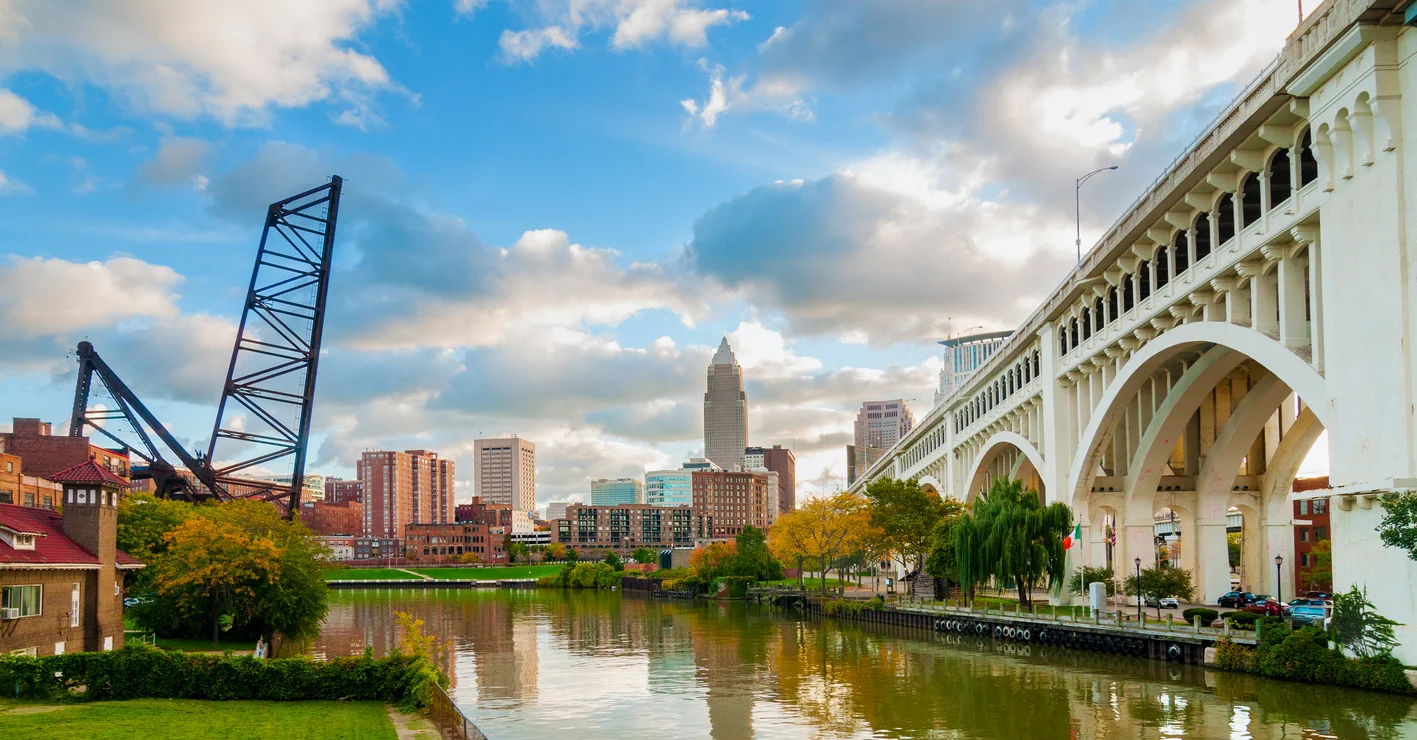
Growing Public Transportation Use in Ohio

By John Gardocki, Greater Ohio Intern The American Public Transportation Administration recently announced that the Central Ohio Transit Authority (COTA) had the top increase in ridership nationally for large bus systems from 2010 to 2011.  In 2011, there were 18.8 million total bus trips, an increase of 10.1 percent from 2010.  The City of Cleveland also saw 12.3 percent heavy rail ridership increase within the last year. Nationally, public transportation increased 2.3 percent, the second highest ridership increase since 1957. 

COTA has already seen a 6.1 percent increase in January 2012 ridership from 2011 data.  Some argue that the increased ridership is due to the increase in gas prices and increased consumer-based technology to help with understanding public transportation. 

COTA’s TXT 4 NXT BUS enables users in the Short North and University District to find the bus pick-up time by texting a number which is quick and convenient.  COTA is offering commuters on a budget an effective way to get to work, experience Columbus, and help encourage sustainability.  Increasing the ridership is important for public transportation growth in Columbus.  Multiple public transportation projects have been declined because of recent economic downturns; it is good to see the public taking the opportunity to acknowledge public transportation is good.

Greater Ohio Moderates Columbus Metro Club Forum on Regionalism

Yesterday Greater Ohio’s Senior Director of Governmental Affairs, Gene Krebs moderated a Columbus Metropolitan Club Forum, “Grow Smart, Grow Regional: Practical Examples of Collaboration.”  There has been much talk at the state and local level of the possibilities and pitfalls of a more regional approach to government services and government itself.  Sometimes however, it is not always clear what “regionalism” looks and feels like in reality.  This Forum explored “on-the-ground” perspectives from local business, local government, and education leaders of what regionalism and collaboration means in Central Ohio.

The expert panelists included: Bart Anderson, executive director of the Educational Service Center of Central Ohio, Michael Hartley, VP of Government Affairs at the Columbus Chamber of Commerce, and Ginny Barney, partner at the Collective Genius and former city manager of Upper Arlington, a first suburb of Columbus. 

All three panelists discussed numerous “back office” efforts underway in the region which are streamlining operations.  Some examples offered were the sharing of computer tech support among a number of school districts, small villages contracting municipal services from neighboring villages (instead of hiring their own staff and equipment), and managing payroll and other fiscal operations within a centralized location. 

All panelists spoke to the importance of having an attractive region that makes businesses and potential employees move to the area, and all pointed the role regionalism would play in lowering costs, but increasing service quality. 

Ginny Barney, along with Bart Anderson and Michael Hartley, warned that central Ohio still has tough conversations and adjustments ahead as we “retrofit” our educational systems and local governments to an upgraded version that more closely aligns with today’s realities.  All three were optimistic that Central Ohio’s current regionalism efforts were creating a foundation which would keep our region strong in the future.

This Forum was the first in a yearlong series that will shine a spotlight on current efforts in Ohio and beyond that are creating sustainable communities through collaborative, region-focused, relationships.  The next Forum is under development, but will be announced soon.

Mansfield Properties Conference

Last week, Greater Ohio was in Mansfield, Ohio, participating in the 2nd Properties Conference, hosted by Downtown Mansfield, Inc. and Preservation Ohio.  The purpose of the half-day conference was to learn of the severity of the vacant and abandoned properties crisis in the area and to begin identifying solutions that will help head-off the next round of problem properties that are expected to hit the market in the next 6-18 months. Greater Ohio joined the Cleveland Federal Reserve and Preservation Ohio in discussing state wide initiatives underway that could help cities like Mansfield. Over 50 people attended, from 6 counties, and the topic of a county land bank came up frequently as one important tool for stabilizing neighborhoods.  Jim Rokakis of the Thriving Communities Institute keynoted the event and discussed ways a county land bank could assist the city of Mansfield and other cities in Richland County in stemming the effects of vacant and abandoned properties. 

One of the most fascinating components of the Conference was a Tour of Unique Properties in Downtown Mansfield.  The walking tour took participants into an old car dealership that had been renovated to be used as office space, the 2nd floor of a historic building in Mansfield’s Carrousel District that is just ripe for condos or a beautiful restaurant. 

The most amazing property on the tour was the 11th and 12th floors of Mansfield’s tallest skyscraper—the Chase Building.  Originally, the 11th floor served as the executive office suite (it includes a kitchen and library) and the 12th floor as a modest ballroom with funky light fixtures from the 1960s.  These two floors are being remodeled to become a penthouse condo.  The Properties Conference tour was a preview to an event in May that Preservation Ohio and Downtown Mansfield, Inc. will be holding in Mansfield’s central business district: “Forbidden City Tour;” a tour that will give a “unique look at several properties that have not been seen by the general public in decades!”  What an innovative idea to tour closed up buildings and visualize the potential they have for the 21st Century!

Greater Ohio had a great time learning about efforts underway in North Central Ohio and wishes Richland County the best of luck as it continues to work towards a county land bank.

Forum on Governmental Collaboration at Columbus Metropolitan Club

On Wednesday, March 14th, the Columbus Metropolitan Club will be hosting a lunchtime forum that will explore regionalism efforts currently underway in central Ohio.  Showcasing “on-the-ground” examples of government collaboration, “Grow Smart, Grow Regional: Practical Examples of Collaboration” is part of a year-long series that will highlight efforts in Ohio and beyond that are creating sustainable communities through regionalism and governmental collaboration.  Offering a range of perspectives on collaboration, shared services and purchasing, mergers, and consolidation, the panelists include Bart Anderson, Superintendent, Educational Service Center of Central Ohio; Ginny Barney, Senior Partner, The Collective Genius and former city manager of Upper Arlington; and Michael Hartley, Vice President, Government Relations, Columbus Chamber. Chester Jourdan of the Mid-Ohio Regional Planning Commission will be moderating. 

Greater Ohio has provided advice for this panel to the Columbus Metropolitan Club and is excited for the opportunities this and future panels will offer in sparking a dialogue among Central Ohioans on governmental innovations underway and transformative changes yet to come.

To attend this exciting event, tickets can be purchased online at the Metro Club’s website or by phone 614-464-3220.  The event will be Wednesday, March 14th from 12-1.15 at the Athletic Club of Columbus, 136 E. Broad Street.

Mortgage Services Settlement Strong First Step to Rebuilding Ohio Communities

Attorney General Mike DeWine joined 48 other State Attorneys General in announcing a settlement of $25 billion with the nation's five largest mortgage lenders and servicers over foreclosure abuses, fraud and unacceptable mortgage practices, such as  robo-signing.  DeWine estimates $335 million will come to Ohio. Greater Ohio Policy Center applauds the Attorney General’s decision to develop a $75 million matching-grant program for abandoned and vacant property demolition.  This will be a significant tool in the face of Ohio’s estimated 100,000+ blighted and problem properties.

Demolition is a critical first step, but Ohio’s cities, towns and villages must be armed with techniques and strategies that will generate redevelopment opportunities, create healthy properties, and rebuild our neighborhoods.

On April 4th and 5th, Greater Ohio will be holding Ohio Properties Redevelopment Institute: Transforming Problem Properties into Opportunity,  This two-day interactive workshop will offer hands-on techniques and strategies for addressing vacant and abandoned property development challenges and generating redevelopment opportunities.

Featuring local practitioners, financial institutions, and state and national redevelopment experts, the sessions will include the following. (The full agenda is here.)

  • property acquisition tools
  • land banks
  • neighborhood stabilization tactics
  • revitalization strategies
  • property information systems 
  • urban redevelopment successes

This Institute will also seek input from workshop participants into policy reforms that will align policies with local community development needs, and arm local leaders with new tools for redevelopment.

With Ohio’s cities and towns at a crisis point, the Institute’s goals—training and education, coalition-building and policy advancement—are vital to productively reshape Ohio’s communities.

This Institute is part of larger multi-year Initiative Greater Ohio is leading—Healthy Properties, Rebuilding Communities—that is designed to combat vacant and abandoned properties and foster community redevelopment.

For more information on the Healthy Properties Initiative or to register for the Ohio Properties Redevelopment Institute, please visit our website.

GO Discusses the Future of ODOT on Local Radio Show

Today Greater Ohio appeared on All Sides with Ann Fisher, a current events radio show broadcasted in central Ohio. Joining Gene Krebs, Senior Director of Government Affairs and Policy was Chester Jourdan from the Mid-Ohio Regional Planning Commission and Jack Marchbanks, member of the Ohio Transportation Review Advisory Council to discuss the future of funding for Ohio’s Department of Transportation. 

Click the image below or this link for the 50 minute conversation on why ODOT is broke and where do we go from here.


Future Funding for the Clean Ohio Fund Confirmed

Greater Ohio was heartened to learn on Tuesday, January 23, 2012, that the Clean Ohio Revitalization Fund will continue to be funded, even as the Department of Development is reorganized into JobsOhio and the Development Services Agency.  The Clean Ohio Revitalization Fund is an extremely important state program that helps cities and neighborhoods reclaim properties that have become unusable due to heavy contaminants and other dangerous chemicals associated with old manufacturing plants, old gas stations, and other hazardous building materials like asbestos.  To date, the Clean Ohio Fund has leveraged $10.00 of investment per grant dollar and has helped remediate sites that have gone onto be new warehouses, apartment buildings, and light industrial sites.  Check out this interactive map to find projects near you and summary of successful projects.

The Clean Ohio Fund is among the first in the nation and has been held up as an ideal model for other states.

We applaud the continuation of this indispensable program which has helped Ohio safely build upon its past and prepare itself for a prosperous future.

Transit in Ohio: A look at ODOT

By Gene Krebs Greater Ohio Policy Center has been pointing out that Ohio Department of Transportation has a profound budget imbalance since October of 2005, with concern as to how it will impact the ability of Ohio to keep and attract jobs.  We commend Director Wray for his admission that ODOT has a profound funding problem.  Admitting you have a problem is the first step to solving the problem.  The current funding structure is simply not sustainable, and we need to have a discussion about how to move people and goods in the most cost effective and safe manner, and that might not always mean highways, sometimes it might mean transit, multimodal, rail, bike paths or even sidewalks.  Cars and trucks are not always the answer to every transportation question.  There could be lower cost answers in each unique situation.

Greater Ohio suggests that ODOT and the General Assembly form a task force, similar to the one we suggested in the 2011 ODOT budget, to examine the fiscal future of ODOT and all transportation in Ohio, and to make a recommendation by December 1, 2012.  This report, along with the pending performance audit report of ODOT that Greater Ohio proposed, could form the foundation of a new future for transportation in Ohio, and one that could form the basis of job creation and true GDP growth for decades.


Across the Spectrum Video Now Available

By popular demand, we have made available video excerpts on the Greater Ohio YouTube Channel of the Across the Spectrum Conference from December 8, 2011.  If you were unable to join us (or want to relive the Conference!) head over to the Across the Spectrum “playlist” where you will find parts of the panels moderated by Greater Ohio: “21st Century Government: Consolidation and Smart Growth” and “State & Local Taxes & Ohio’s Future Prosperity.” More excerpts to come in the following weeks!

Greater Ohio 2011 Year in Review

2011 was a busy year for the state of Ohio with a newly seated Governor and General Assembly, the kick-off of HUD Sustainable Communities Grants in Northeast Ohio, Cincinnati and Columbus, and a range of local responses to a changing budgetary climate.  Greater Ohio remained in the thick of it all, as our “best of” list from the past 12 months shows.  In 2012, make sure to follow us on our blog, Facebook or Twitter as we roll out new original research on “shrinking cities,” weigh-in on regional economic development legislation, give presentations to local communities, debate current events on local political shows, and undertake a range of other activities.

Modeling Collaboration.  2011 has been a divisive year for Ohio and the nation with partisanship increasingly dictating the political landscape.  Among Greater Ohio’s greatest achievements in 2011 was collaborating with the Buckeye Institute and the Center for Community Solutions on two major policy initiatives. 

Influencing State Policy.  The collaborative spirit that we fostered with the Buckeye Institute and Center for Community Solutions also carried us through contentious battles at the Statehouse. We held over two dozen meetings with administrative and agency officials, and testified over 20 times this year to the General Assembly on a range of bills, including the 2012-13 Budget, agricultural zoning, the estate tax, and more. 

  • Based on our testimony, the General Assembly designated ODOT to be among the first four agencies to receive a Performance Audit (HB2/SB4).  Such an audit is imperative because ODOT is facing fiscal collapse (see page 36).  This audit will provide critical information that can help the agency run more efficiently and will give a better assessment of its funding and how that funding is being used.  GO will leverage this audit to urge for funding for multi-modal transit options. 
  • We have long advocated for the reform of local governance structures.  In addition to our testimonies and meetings, the Columbus Dispatch quoted our comments on the need for mechanics that will help manage Ohio’s high number of governments.  We also published a Letter to the Editor in the Dispatch that applauded recent shared servicing underway in Franklin County and Columbus.
  • The state established the Local Government Innovation Fund, a $45 million Fund that will award loans and grants to local communities for efficiency, collaboration, merger, and shared services projects.  This program is a modification of one of our policy recommendations and derives from language we have been advocating for for several years.  Additionally, GO’s Senior Director of Government Affairs was named to the Local Government Innovation Council, which is overseeing this program.  The LGIC will be an important force in shaping how local governments adjust to funding reductions from the state.

Researching for Sustainable Growth.  Greater Ohio is greatly respected for the data-driven research that undergirds our policy recommendations. 

  • After the 2012-13 State Budget was released, we disseminated our State Budget Response and Local Government Restructuring Toolkit in which we approved of the first steps established by the Budget but raised concerns that it didn’t go far enough in supporting cities as they transitioned to a more modern governance structure. 
  • We updated and released our Sales Tax Study, a research project first that analyzes rates of sales tax capture per county.  The research indicates that we now shop, work and live regionally, but that our tax structure continues to operate as though it is the 19th century, by county.  We have outlined these findings in legislative testimony and in public education presentations. 

Advancing the Dialogue in Ohio and Beyond on Urban Core Revitalization.  Much of Greater Ohio’s work is focused on educating stakeholders within the state, nation, and world of Ohio’s strengths and challenges.  We do this through a number of collaborative relationships and by giving presentations around the state once a week, on average

  • We convened a summit, “Building Prosperity in Akron,” with co-hosts the Greater Akron Chamber, the City of Akron, Summit County, and the University of Akron.  The day’s multiple presentations framed for the 200 attendees new approaches that will help prepare the city and county for the next economy and ensure a strong Akron future.
  •  We served as a panelist and organizer for the American Assembly meeting in Detroit on “Defining a Future for America’s Cities Experiencing Severe Population Loss,” sponsored by Columbia University.  Because Ohio has a number of “legacy cities,” we were able to learn much from and greatly contribute to the production of policy approaches that will assist cities in stabilizing, “right sizing,” and finding new ways to rebuild their economies and engage local stakeholders.
  • We began our second year of partnership with the German Marshall Fund, participating in workshops in Cleveland and Youngstown on targeted neighborhood investment and economic development in legacy cities.  We also co-led a 9-day study tour to Germany’s Ruhr region and Barcelona, Spain to understand regional economic development strategies.
  • Greater Ohio partnered with the DC-based think tank, Center for Community Progress, on our “Building American Cities” project, which is researching and collecting best practices and policies for “cities in transition” Already, we have hosted two workshops in conjunction with this project and have several more planned for 2012. 

By the Numbers

Over 20 meetings with administrative and agency officials, and 20+ legislative testimonies.

12 appearances as a pundit on current events television shows around the state.

2 radio show appearances.

50+ panels and presentations we’ve participated on or led.

1 letter to the editor of the Columbus Dispatch on shared service agreements in Franklin County.

143 newspaper articles and blogs quoting Greater Ohio or covering our work, and additional 20+ articles covering our tax expenditure work and conference with the Buckeye Institute and the Center for Community Solutions.

1 high school intern, 1 undergraduate intern, 1 legal assistant intern.

1,016 Twitter followers. 

266 Facebook “likes”.

4 different ways Greater Ohio staffers regularly commuted to the office:  walking, biking, busing, and driving.