
Halloween brings plenty of make-believe scares. Ohio’s dangerous streets pose a real threat year-round.
Our annual Spooky Streets, a Halloween tradition since 2019, looks at the numbers—and the changes that can help people get home safely.

A national improvement: The Governors Highway Safety Association (GHSA) projects 6,732 pedestrian deaths in 2025, down 7% from 2024. But that still exceeds the pre-pandemic total. Fewer deaths are welcome. Thousands of preventable deaths remain unacceptable.
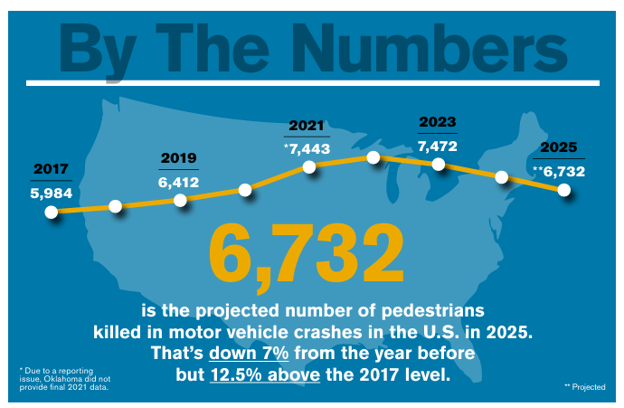
Image via GHSA.
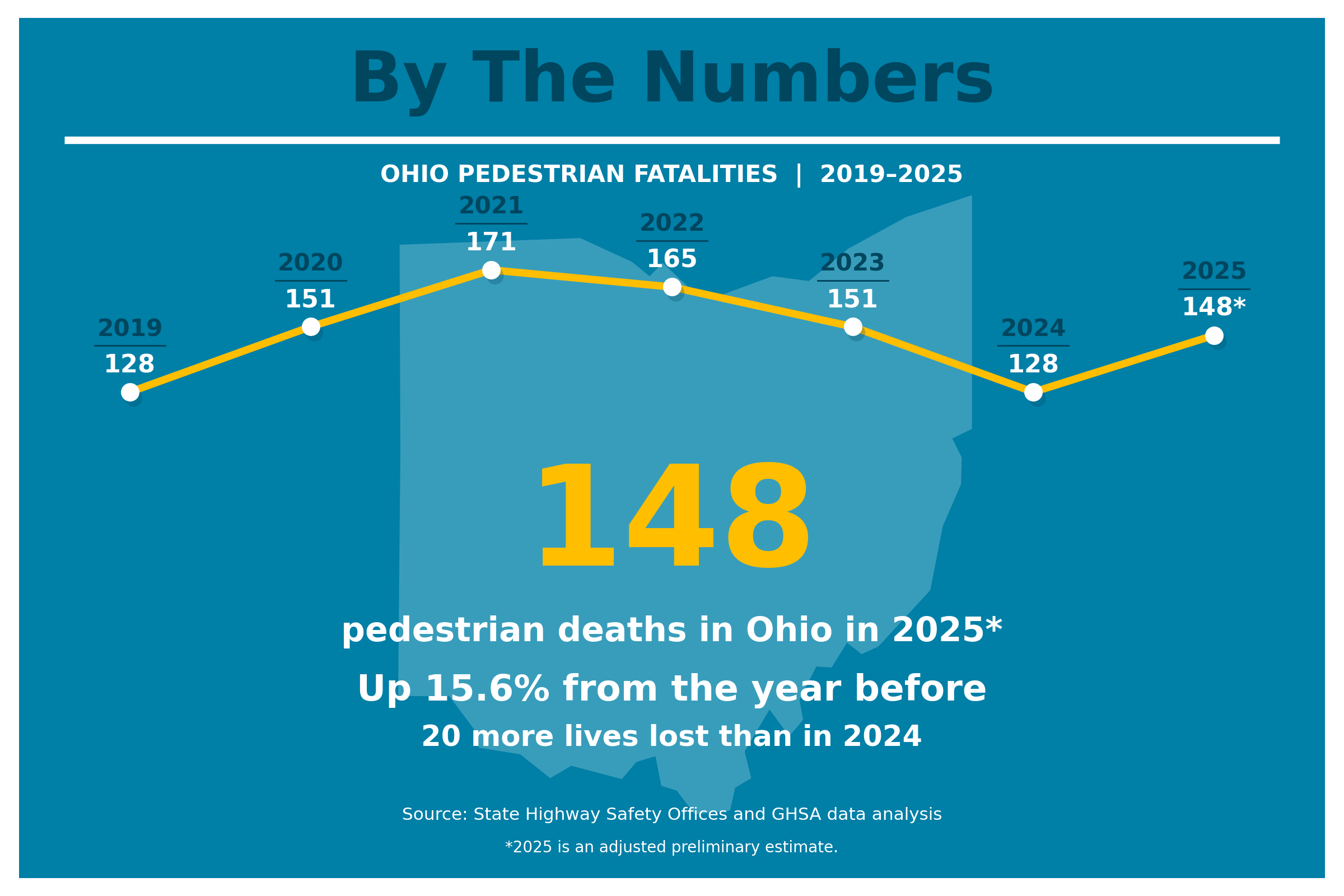
Ohio moved in the opposite direction during the same period. GHSA’s adjusted preliminary estimate rose from 128 pedestrian deaths in 2024 to 148 in 2025—an increase of 15.6%. Twenty more lives lost compared to the previous year.
Cyclists face a different national trend. The National Highway Traffic Safety Administration (NHTSA) estimates 1,148 pedal cyclist deaths in 2025, up 4%, even as overall traffic deaths declined. Progress must reach everyone using our roads.
The longer view is troubling, too. Smart Growth America counted 754 pedestrian deaths in Ohio during 2020–2024, compared with 643 during 2015–2019. That’s roughly 17% more lives lost.
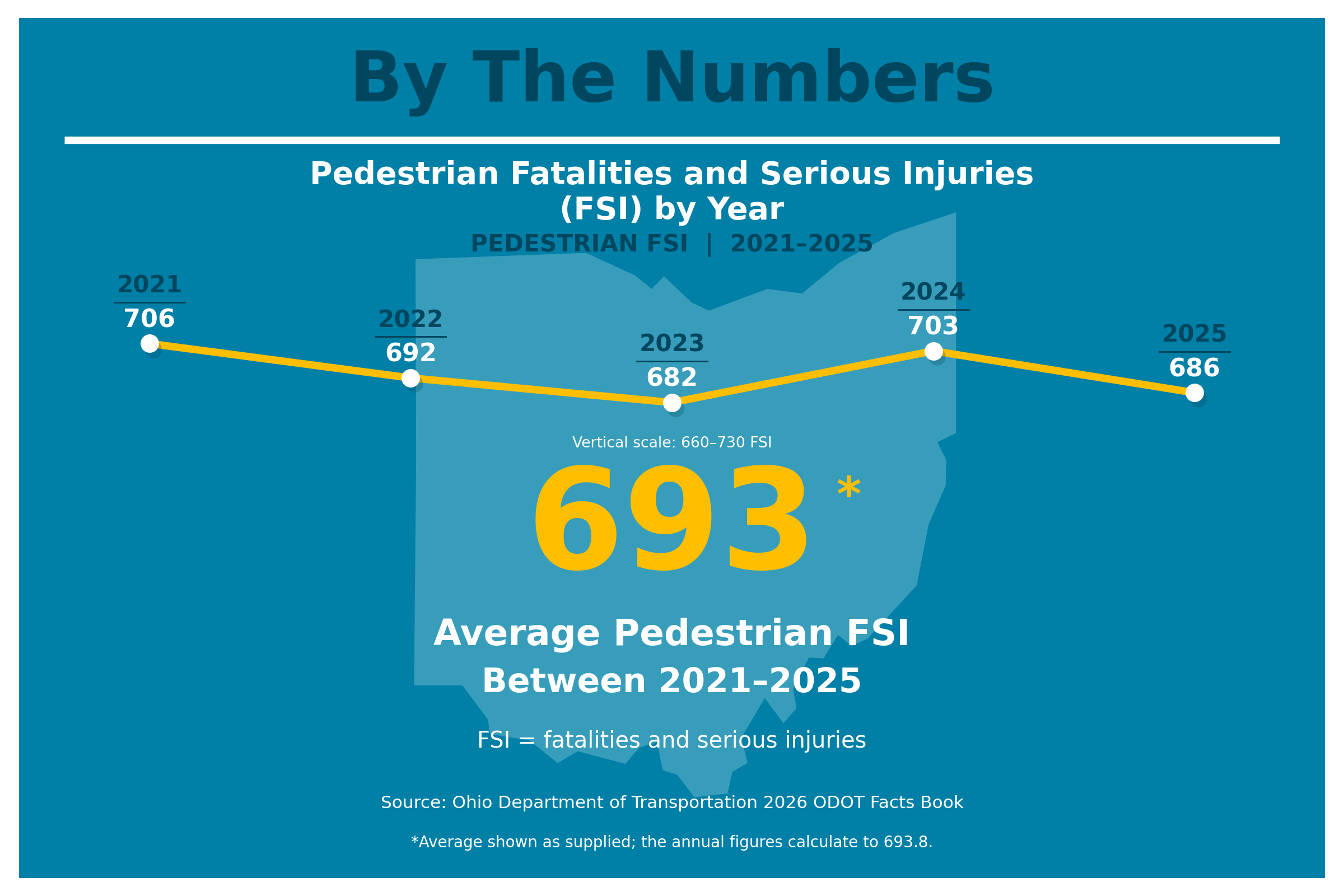
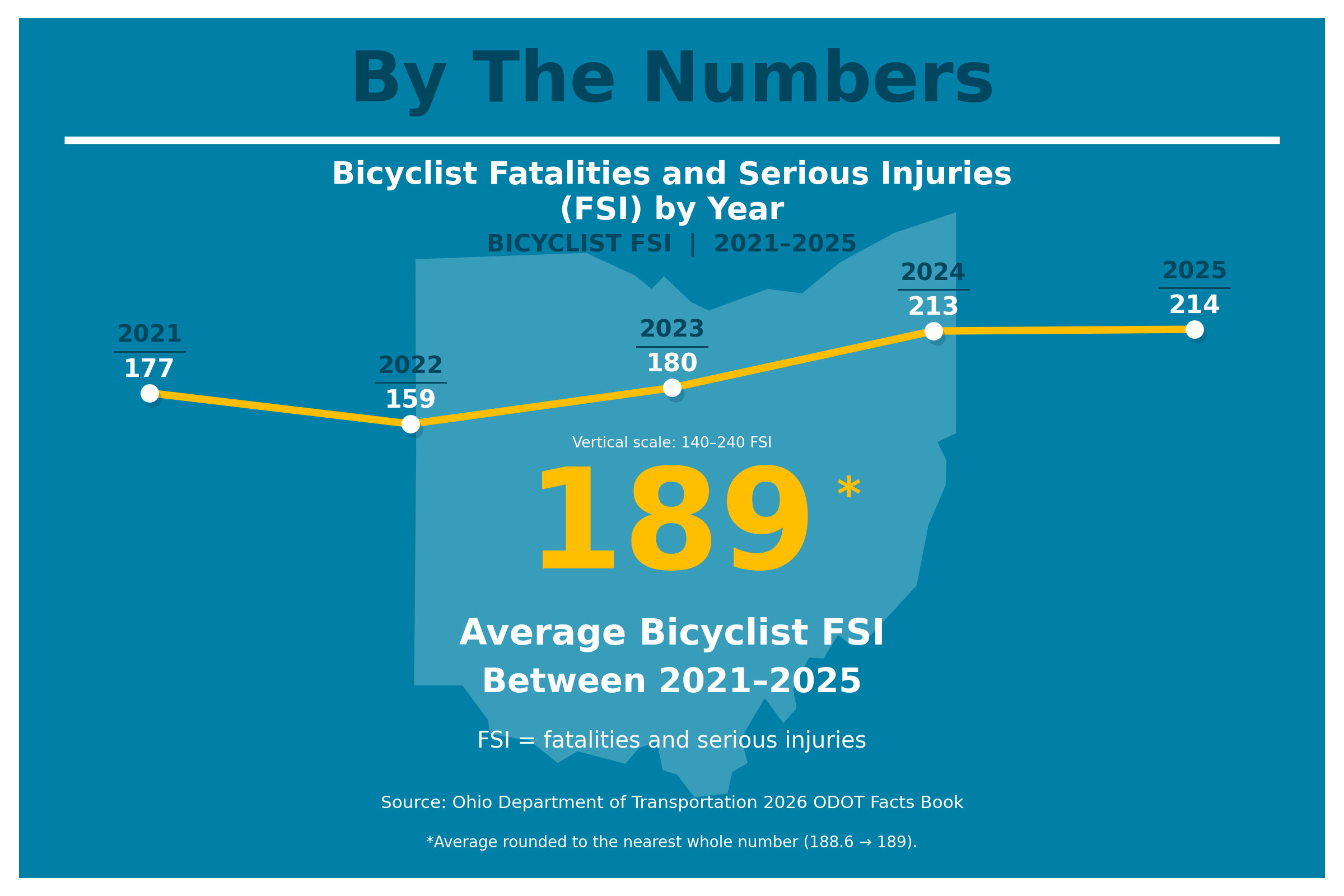
This aligns with data provided by the Ohio Department of Transportation documenting Fatalities and Serious Injury Crashes involving pedestrians and bicyclists between 2021 and 2025
Darkness exposes dangerous designs. GHSA reports that 76.5% of U.S. pedestrian deaths with known lighting conditions occurred after dark in 2024. In 62.2% of pedestrian deaths, no sidewalk was noted.
In Ohio, pedestrian and cyclist crashes peak during the afternoon commute and evening hours, accounting for 53% of fatal and serious injury crashes according to the Ohio Department of Transportation.
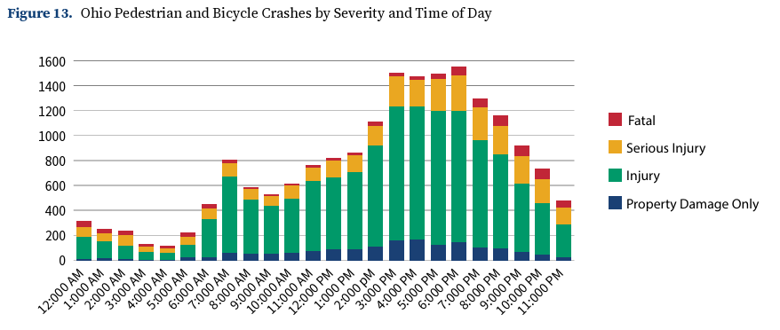
Image via Ohio Department of Transportation
Where should Ohio focus? Arterial roads account for just 8% of roadway mileage, but 55% of fatal and serious-injury pedestrian crashes and 47% of severe bicycle crashes, according to ODOT. These everyday streets need attention.
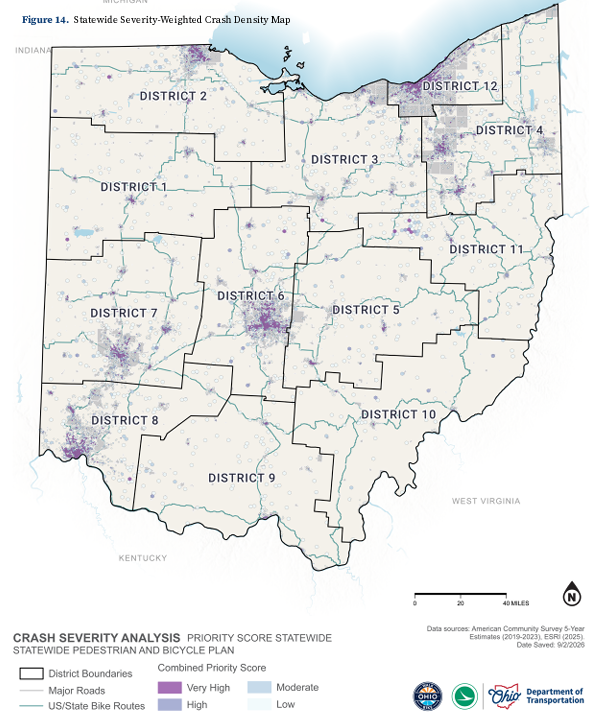
Image via Ohio Department of Transportation
The concentration of severe crashes in Ohio’s more urban areas is matter of greater population numbers. These areas also have wide, fast moving streets.
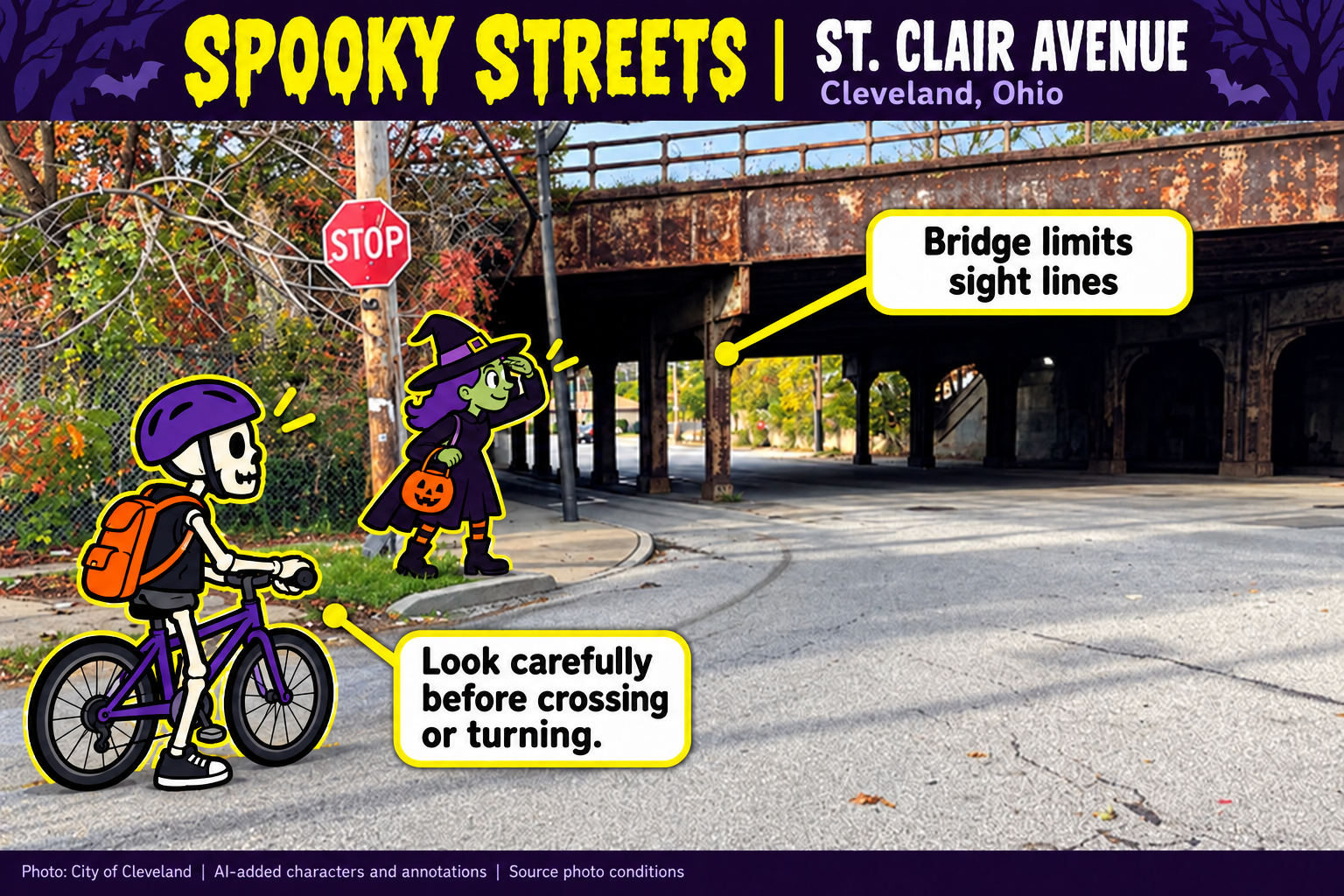
Cleveland’s St. Clair Avenue shows the stakes: at least 14 people killed and 79 seriously injured between E. 55th and E. 156th during 2020–2024. Those totals include all road users.
A safer St. Clair is being designed. ODOT awarded $5 million through its Target Speed pilot. Plans include fewer vehicle lanes, safer crossings, separated bike lanes and bus boarding islands.
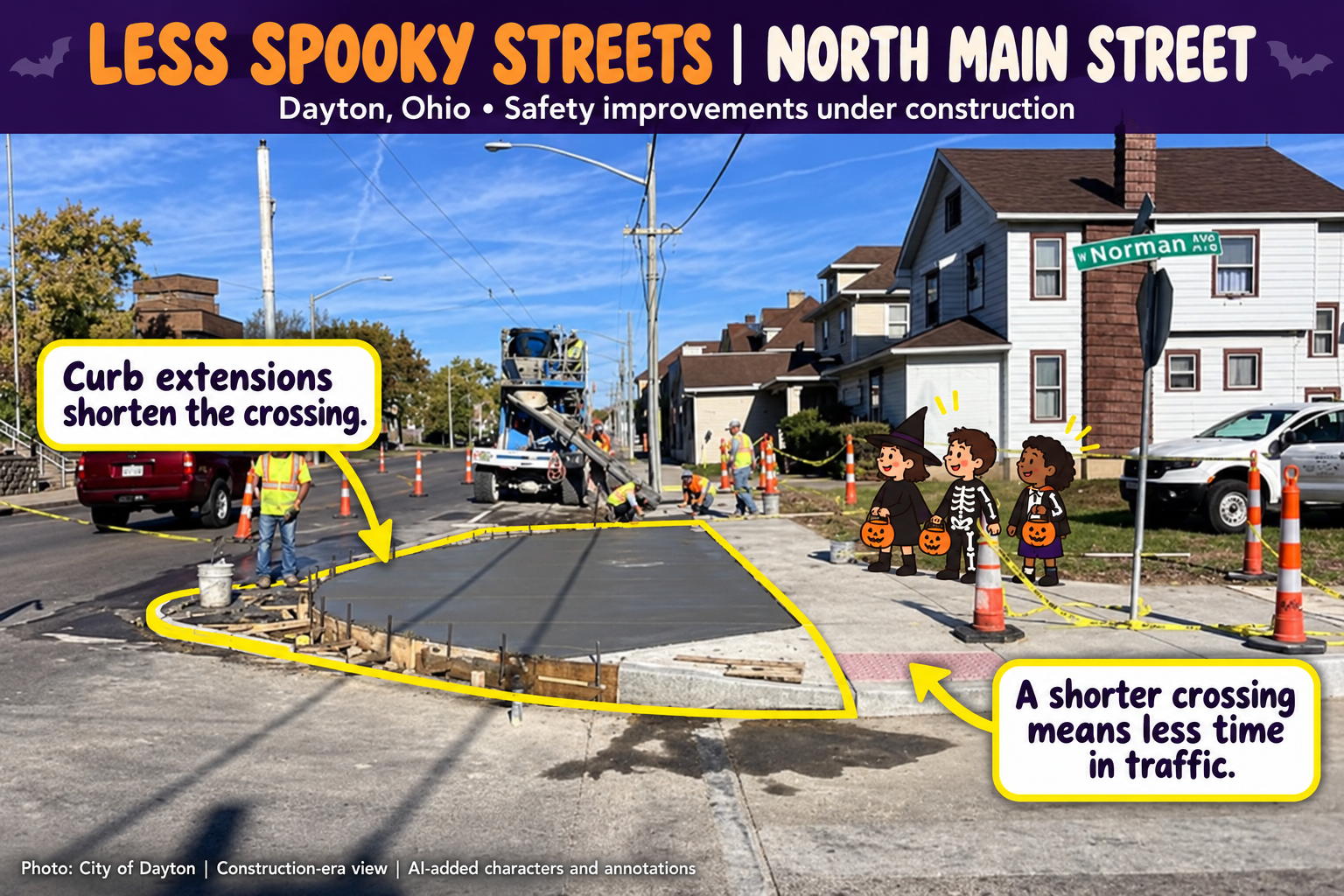
On Dayton’s North Main Street corridor, pedestrians accounted for 5 of 7 deaths in a 2015–2017 study. The city/ODOT project includes a road diet, shorter crossings and sidewalk repairs.
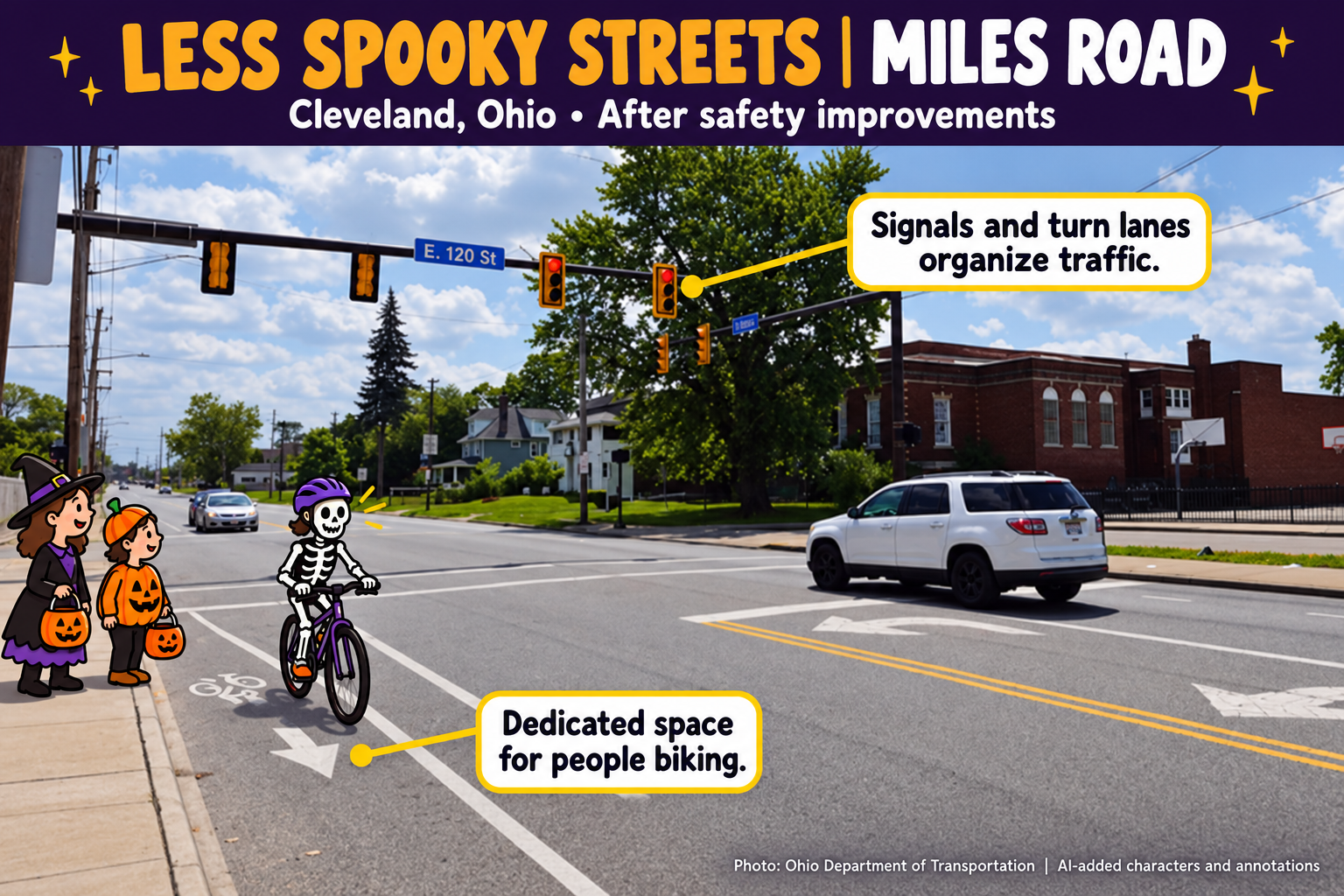
Better design can deliver results. After Cleveland’s Miles Road received a road diet, bike lanes and pedestrian improvements, ODOT found rear-end crashes fell 52% and sideswipe/passing crashes fell 63%.
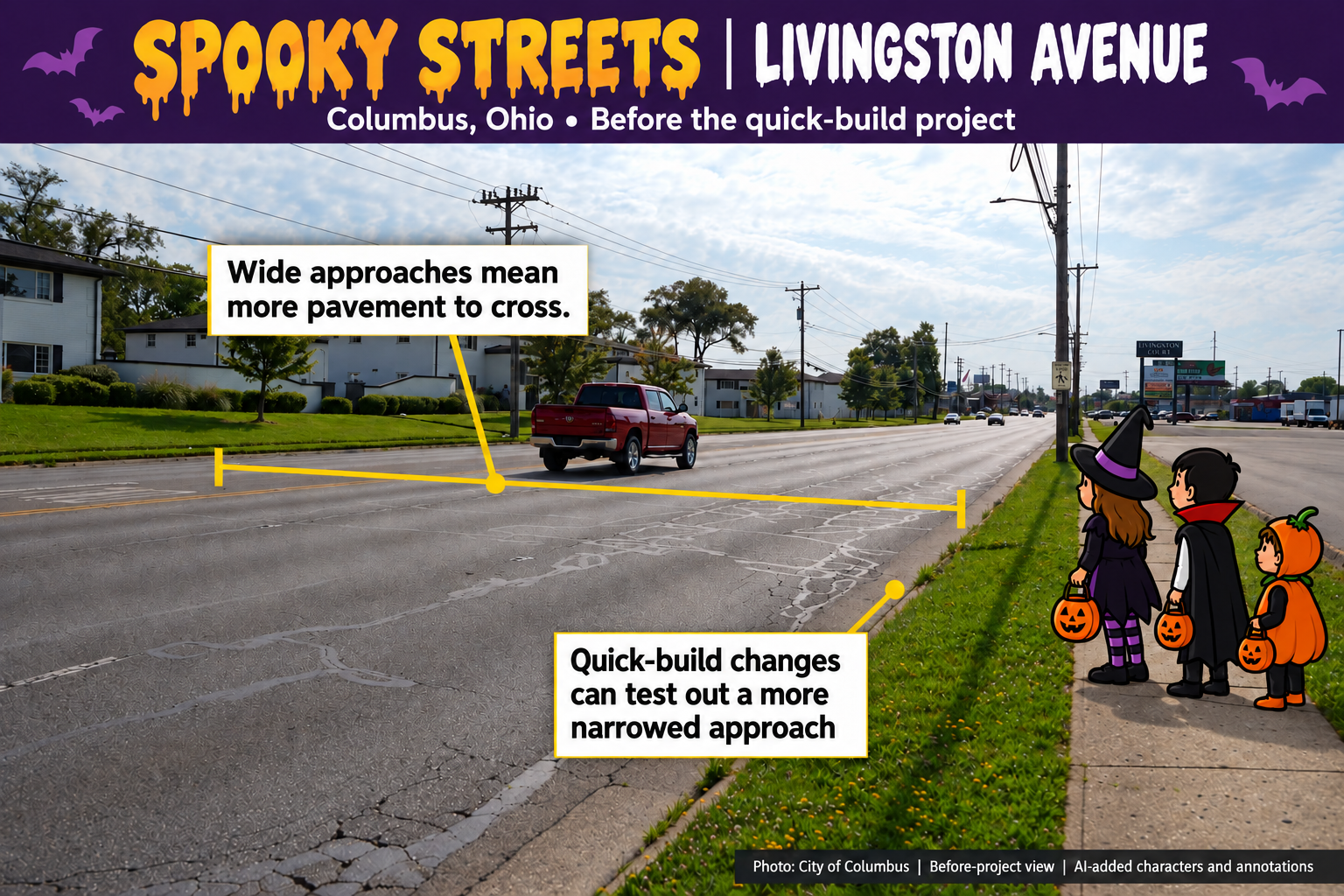
Columbus is testing a faster response at Livingston and Courtright. An ODOT study found 46% of crashes caused injury. Temporary barriers narrow the approach while the city evaluates the results.
West Broad Street remains part of the story. LinkUS plans sidewalks and bike facilities alongside its BRT investment. The September 2026 update placed design at 90%—with construction still ahead.
More crossing improvements are planned: ODOT funding will help Cleveland upgrade 18 locations in 2027. The work includes treatments such as pedestrian beacons, refuge islands and shorter crossings.
Ohio can make Spooky Streets safer: close sidewalk gaps, provide safe crossings, separate people from fast traffic and design streets for safer speeds. Target investment where severe crashes concentrate—and measure the results.
From all of us at GOPC, have a happy and safe Halloween!
GOPC utilized ChatGPT to help to process data and generate some images used in this thread.