Land Banks

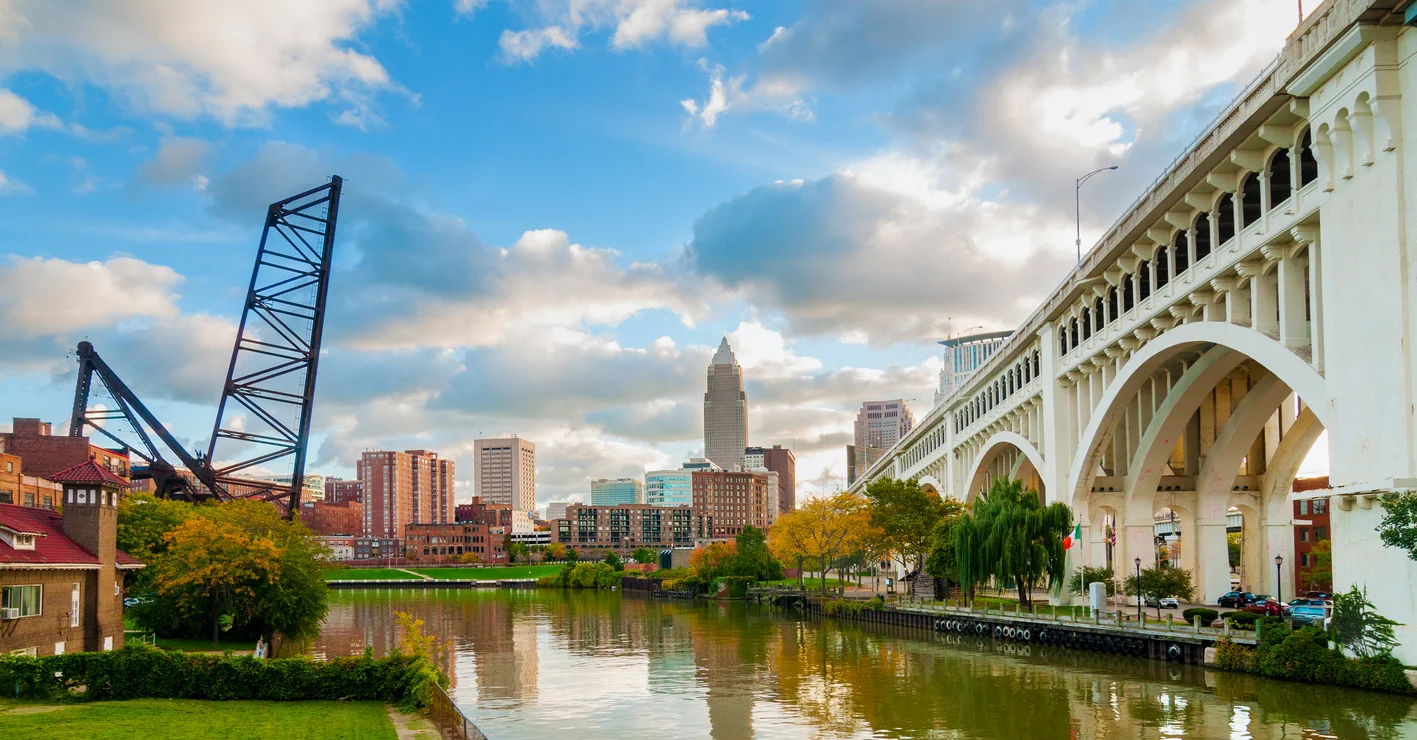
Greater Ohio is interested in promoting land banks as a way to address vacant and abandoned properties and revitalize communities. While we were pleased with the passage of House Bill 353 in the 127th General Assembly that allows Cuyahoga County to form a county land bank with new powers, we recognize that changes are needed to the existing statute to ensure that counties of all sizes can use land banks to their fullest potential.

Over the past year, we have met with numerous stakeholders throughout the state to get a better understanding of those possible changes.  Some of the ideas we have heard include allowing multi-county participation, ensuring that there is sufficient authority for our rural counties to participate and adding provisions to address a situation in which the county treasurer is not interested in pursuing a land bank.

If you have other suggestions for us to consider or would like to share your success with your existing local land bank we would welcome your input.

Alternative Energy still the alternative

Alternative energy seems to be a topic that is especially shaped by fluctuations in oil prices and by the ebb and flow of the mainstream media’s coverage. While many have claimed that alternative energy will be the innovation that sets the course for our future, it remains a subject that is urgent only when our wallets or pocketbooks are disproportionately thinned by energy costs. Indeed, alternative energy is, as its name implies, still but an alternative to fossil fuels.

However, since fossil fuels are a finite resource and a major source of pollution many argue that the privileged position of oil as the world’s source of energy will inevitably come to an end. Given this line of reasoning, alternative energy may represent an emerging market ripe for investment. In the context of Ohio, this last point brings up an important question: does alternative energy constitute an industrial sector that has the potential to transform Ohio’s economic woes? If so, to what extent should the state encourage and incentivize the development of an alternative energy sector? What are your thoughts on alternative energy as a long-term sustainable investment for the State of Ohio?

How do we define “quality” in relation to place?

Since the new millennium, numerous urban and social theorists have increasingly noted the important role that place assumes in our daily lives and our society as a whole. As a result, issues of “place identity” and “quality of place” have recently become frequent topics in the media, and this has led to a greater overall awareness the fact that place matters. This theme is continually echoed and reinforced by the regular conducting and reporting of “most” and “best” city lists (i.e. “most livable city” or “best city for young professionals”).

These lists are representative of our increased interest in the conditions and attributes of the places where we choose to live, work and play. However, in reality, the quality of a city, or some other place, is not expressed to its users as a quantifiable equation or ranking, as these lists may suggest. Yet, we are all able to easily distinguish places of high quality from more mundane places. Why is this? In other words, how would you describe the conditions (physical, social, economic, etc.) that define a place of high quality? At Greater Ohio, we are interested in promoting state policies that encourage both the maintenance and creation of places of the highest quality and would like to know what you think constitutes places of high quality.

Targeting Resources

With the severity of the fiscal challenges being felt at the state and local level, Greater Ohio sees this as an opportune time for the State to better target scarce resources and strategically invest in our communities.  We want your feedback. Where have you seen that done well at the state or local level in your community?  This is an opportunity to share your best practice examples and allow you to learn from your peers in other areas of the state.

Restoring Prosperity Partnership Network

Greater Ohio is unveiling its new Restoring Prosperity Partnership Network.

Greater Ohio has heard the need for better and increased forms of communications. Our intention is to use the Restoring Prosperity Partnership Network in new, innovative ways to keep a more constant flow of communication going. We are currently investigating which methods of communication will work best. If you have any ideas or suggestions on this topic, please email Katherine or leave a comment here on the blog.

To join the Restoring Prosperity Partnership Network, please email our Outreach Coordinator, Katherine Buckingham, at kbuckingham[AT]greaterohio[DOT]org

The Metro Monitor- Tracking Recession and Recovery

A recent Brookings article by Rebecca Wilder, Brookings on regional economic performance, offers people the ability to track the recession and recovery (likely a year after the recession ends) across America's 100 largest metropolitan areas using the MetroMonitor. Here are some of their findings to date:

A few metropolitan areas are beginning to showing signs of economic recovery, although none has completely recovered. McAllen is the only metropolitan area that saw growth in both employment and output during the first quarter of 2009. Employment also rose in New Haven and Baton Rouge, while output also increased in Seattle, Austin, Virginia Beach, Washington, Richmond, San Jose, and Riverside. Still, none of these metro areas has yet returned to its pre-recession levels of employment or output.

The article continues to discuss distinct "belts" across the country and concentrations of different industries.

Read the full article here

Great Lakes Metros and the New Opportunity Summit

For all of you who have a vested interest in the Great Lakes area, which bascially pertains to all Ohioans, an interesting Summit is set to occur in Buffalo, NY tomorrow to discuss new opportunities to create Great Lake Metros. The Great Lakes Metros and the New Opportunity Summit:Remaking Policy and Practice in a Time of Transformation, will discuss best practices in the implementation of the Obama stimulus, the prospects of regional planning and metropolitan governance, and the development of a sustainable and equitable economy in Great Lakes metro regions. There will be over 50 panelists from 10 major cities in the Great Lakes Area and it should prove to be an engaging experience. The discussion around creating metro areas that work together is an important one and Ohio needs to make sure they are involved in what is happening. We live in a regional economy and until Ohioans recognize this and cities, counties and townships need to work together if we want to grow the economy.

Press Release - Greater Ohio Expands Smart Growth Expertise With Several Key Hires

Contact:  Dawn Larzelere

dlarzelere@greaterohio.org

614.258-6200 x22

Columbus, Ohio (June 16, 2009) – Greater Ohio, the state’s “smart growth” organization, is pleased to announce several key hires to expand its policy expertise and meet new opportunities.

Dawn Larzelere, a veteran policy professional with experience working in various roles for three Ohio governors, has been named Policy Director.  She brings to Greater Ohio her capacity for policy development and lobbying in federal and state government, and strategic relationship-building across the state and country.  Prior to joining Greater Ohio, she was the Legislative Director for the Ohio Housing Finance Agency, and has also served as the Executive Assistant for Business and Industry for Governor Bob Taft and Manager of the Governor’s Regional Economic Development Offices. Dawn graduated from Bowling Green State University with a Bachelor’s Degree in Journalism.

Katherine Buckingham has been promoted from Research Associate to Outreach Coordinator.  Katherine replaces Ann Seller, who successfully spearheaded Greater Ohio’s outreach work to reach out to and revitalize Ohio communities.  Ann is leaving Greater Ohio to attend law school at the University of Virginia.  Katherine graduated from Oberlin College, where she received a Bachelor’s Degree in Politics with an International Studies Concentration.  She also gained local Ohio experience through an internship with Hamilton County Commissioner Todd Portune.

Zachary Crafton has been hired as a Research Associate.  Zachary received his Bachelor’s Degree in Geography, with a dual emphasis on urban and environmental issues, from Ohio University and his Master’s Degree in Geography from the University of Toronto, with a focus on urban geographic issues.

“These new hires bring diverse and multi-faceted strengths and backgrounds to the Greater Ohio team, and uphold our continued commitment to remain non-partisan,” stated Gene Krebs, Co-Director.

“The experience and education of these three staff members enhance our team and strategically position Greater Ohio to take full advantage of unprecedented opportunities for advancing the Restoring Prosperity to Ohio Initiative and state reform policies,” said Lavea Brachman, Co-Director.