
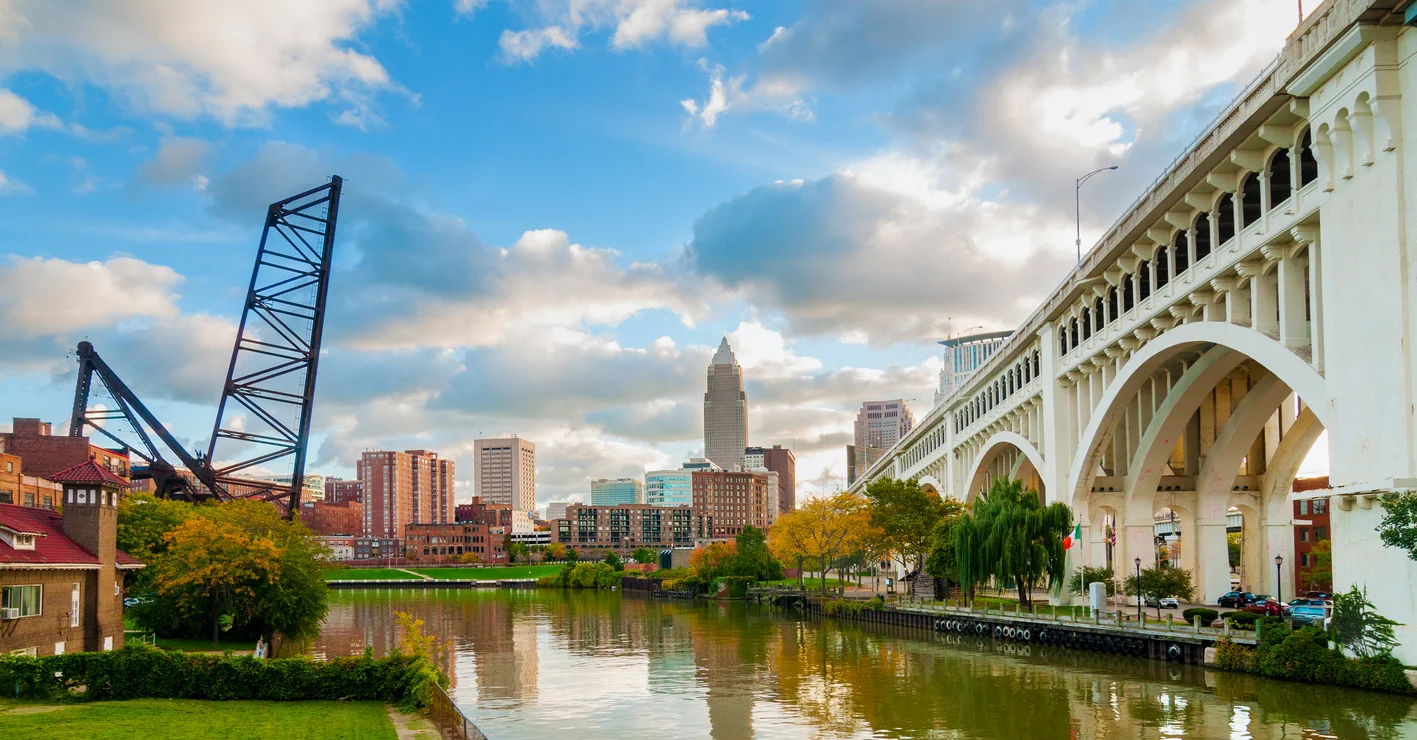
Check out this the article in The Examiner titled Bedroom community blues: foreclosure crisis creating suburban slums. Chris Leinberger, a developer and scholar from the Brookings Institution, is quoted in the article. Greater Ohio has worked with Chris in the past and found his recommendations to be creative, innovative and in tune with Greater Ohio’s policy agenda.
Land Bank Legislation Jointly Introduced in the General Assembly
For Immediate Release: Wednesday, October 21, 2009 MA#12-2009
For Additional Information Contact: Amanda Ford at 614-258-6200 ext. 33 or aford@greaterohio.org
Land Bank Legislation Jointly Introduced in the General Assembly
Bi-partisan bills will expand land bank statute to 28 additional counties
COLUMBUS –With the support of key officials and numerous stakeholders throughout Ohio, State Senators Mark Wagoner (R-Toledo) and Teresa Fedor (D-Toledo) and Representatives Peter Ujvagi (D-Toledo) and Roland Winburn (D-Dayton) introduced Senate Bill (SB) 188 and House Bill (HB) 313 respectively that would lower the population threshold to allow more counties to organize a county land bank, providing a powerful tool for local governments to use in addressing the aftermath of the foreclosure pandemic that has swept the state and the growing number of vacant and abandoned properties.
The current land bank statute only applies to Cuyahoga County but this legislation focuses on providing counties of populations greater than 100,000 and those between 78,000 and 81,000 the option of organizing a County Land Reutilization Corporation (CLRC), or county land bank. The bill would also increase the number of members that can sit on the CLRC from the current statutory requirement of five to nine, allowing for more local control and flexibility in designing a board that meets each county’s needs.
“Land banks provide an important tool for local governments to use in addressing the growing number of vacant and abandoned properties,” said Lavea Brachman, Co-Director, Greater Ohio & Non-resident Senior Fellow, Brookings Institution. “Greater Ohio has been pressing for changes to the land bank statute to allow more counties to strategically acquire properties, develop creative ways to use those properties, reduce blight, increase property values, support community goals and improve the quality of life for residents.”
The introduction of this bill is especially timely as Ohio continues to weather fallout from the foreclosure crisis. New data released last week by RealtyTrac Inc. shows that one out of every 171 housing units in Ohio is in foreclosure.
The bill also implements one of the key recommendations in a previously released Brookings/Greater Ohio report proposing a series of state policy action items to address Ohio’s foreclosure and vacant and abandoned properties crisis. In addition, when Greater Ohio and the Brookings Institution unveiled the draft Restoring Prosperity to Ohio policy agenda last fall before a crowd of 1,000 Ohio leaders, land bank reform was highlighted as a critically needed tool.
###
How traffic jams help the environment?
A recent article from the Wall Street Journal got us talking in the office this week, and we thought we would share with you. How Traffic Jams Help the Environment talks about the upsides to traffic jams as it can turn frustrated drivers to different modes like transit, walking, biking and carpooling. Part of our agenda encourages the state to develop holistic transportation projects that are designed around transit, mixed-use neighborhoods and economic development. The General Assembly has responded and introduced bi-partisan legislation (House Bill 166 and Senate Bill 121) in both chambers that would create regional Transportation Innovation Authorities (TIAs) to encourage the investment of public and private resources in the planning and implementation of innovative transportation projects that would enhance the efficiency of Ohio’s transportation system. Unlike current funding mechanisms, TIAs would be unique in that they encourage multi-county participation. We are also encouraging the state to take these regional TIAs a step further and direct development of a “Complete Streets” pilot program where new and/or upgraded roadways would be designed to enable safe, attractive, and comfortable access for all users, including pedestrians, bicyclists, motorists and public transit users. Complete Streets legislation is being considered at the federal level but Ohio could be at the forefront of this issue by acting first. To view the article, go to: http://bit.ly/6xENw
Policy Bridge Releases Report to Address Investing in Cleveland Neighborhoods
Policy Bridge, a Greater Ohio Partner, released a report titled Rebuilding Blocks: Efforts to Revive Cleveland Must Start by Treating What Ails Neighborhoods that addresses the tough choices cities must make when choosing which neighborhoods to invest in. Greater Ohio is supportive of the recommendations provided in the report and it demonstrates another example of Cleveland turning the corner with new prosperity practices. Here is a quick blurb from the report…
Many Cleveland neighborhoods have fallen victim to a virulent consumptive disease. The national, and even international, media and politicians have largely misdiagnosed the illness, seeing the outward symptoms of blocks pockmarked by empty, decaying houses and pronouncing Cleveland a tragic victim – one of many – of the foreclosure crisis. In reality, the acute housing crisis has been an opportunistic infection that has ravaged an already weakened host. Less visible than the subprime scars, the more longterm symptoms of low educational attainment, high joblessness and pervasive poverty have left too many of Cleveland’s neighborhoods with a bleak outlook for recovery, or even survival, without radical, rational intervention.
To see the full report go to: http://bit.ly/3d7IGf
A European vision for Raliegh, NC!
Check out this story! Raleigh planner Dan Douglas has several creative ways to make North Carolina's capital city a major competitor against every city in the world. His focus: economic development, innovation and quality of life. Dan Douglas' European vision for our capital city Raleigh, meet Madrid. And Barcelona. And Freiburg. Source: The Independent Weekly, October 7, 2009
For the complete story go to http://bit.ly/Wf1UV
Raleigh planner Dan Douglas has some bold proposals for the city, including nine new public squares, green roofs, and a new Grand Central Station-style transit hub.
Douglas, formerly a planner with the city, is now working a private firm. He's proposing an independent development corporation be formed to purchase unused land in Raleigh and transform the city. Some of Douglas' ideas for Raleigh include:
"Nine new public squares, including two that would double as green roofs on top of parking decks. Buildings generally would be limited to six to seven stories except in the heart of downtown. "That way you get three six-story buildings instead of one 18-story building and two empty lots," Douglas says.
One of the two green-roofed decks would support a new, multi-level "grand central station" for city and regional buses, Triangle Transit's planned commuter-rail line, and a future Amtrak high-speed line."
Greater Ohio Call To Action
Land bank reform is a step closer to reality Greater Ohio Policy Center has been working with stakeholders throughout Ohio to advocate for expanding Ohio’s county land bank statute that currently only applies to Cuyahoga County. We are pleased to tell you that State Representatives Peter Ujvagi (D-Toledo) and Roland Winburn (D-Trotwood) and State Senator Mark Wagoner (R-Toledo) are preparing to jointly introduce legislation that would allow for the formation of County Land Reutilization Corporations (CLRCs) or land banks in any Ohio county with a minimum population of 100,000 residents. This change will give another 25 counties access to these important land bank tools. The proposed legislation would also amend the composition of a CLRC board of directors from five members to a maximum of nine members to allow communities’ to design a board that best meets their individual needs.
We encourage you to contact your local State Representatives and Senators this week and urge them to co-sponsor this important legislation to help our communities move forward in the wake of the foreclosure crisis.
If you have any questions please contact us at 614-258-6200.
First Suburbs Consortium Met in Columbus!
The First Suburbs Consortium met in Columbus on Wednesday, October 7 for their Legislative Workshop. The workshop featured various speakers including a Presentation to the Legislators on “What are Ohio’s First Suburbs?”, a Legislators Panel on “What is on the Horizon and Its Impact on First Suburbs?” and a Discussion with ODOT and ODOD. First suburbs are communities that generally lie within the interstate beltway. They tend to be older and within the first ring of suburbs that surround the city. While they may vary in terms of economic background, they all share certain interests and commonalities. These communities are very concerned over the fiscal squeeze Ohio is experiencing due to state budget concerns. The Local Government Fund was mentioned as potentially “being in danger” of being diverted in the next budget, so First Suburbs were encouraged to start building the case now for the importance of maintaining it.
Greater Ohio’s Co-Director Gene Krebs also gave a presentation and touched on items that we are working on that impact suburbs. Number one is fix-it-first:
ODOT Analysis of Fiscal Impacts of Maintaining State Routes in Cities: The state needs to target money in a manner that rewards the most bang for the buck and the analysis by ODOT should cast light on the impact. Since these roads get the most traffic, targeting state money to the roads that get the most wear and tear makes sense, and the money freed up can be used for police and transit in the cities. The cities most impacted are smaller cities (not the three Cs),the second tier in population and the county seats in smaller counties. The study is due December 15, 2009.
*The New Metropolis* Premiers in Ohio!
A two part Documentary about the challenges and opportunities facing Americas First Suburbs will air on local public television stations throughout Ohio. The first episode is called A Crack in the Pavement, Rebuilding America’s First Suburbs. The second episode is called The New Neighbors, How one town created a vibrant, integrated suburb. The Documentary will air on the following dates in these locations: Columbus: Friday, October 9 at 7pm (Episodes 1 & 2 will air consecutively)
Cincinnati and Dayton: Episode 1 will air Sunday, November 8 at 6 pm and episode 2 will air Sunday, November 15 at 6 pm
The New Metropolis is a documentary series that explores the rise, fall and possible rebirth of America’s older “first” suburbs.” Produced by award-winning filmmaker Andrea Torrice, The New Metropolis is the first public examination devoted to the issues facing many suburban towns. Considered embodiments of the American dream, the first suburbs blossomed after World War II, bolstered by economic prosperity and government support. Now, many struggle with the same challenges as urban centers: growing poverty, white flight, crumbling infrastructure, abandonment, and the continual lure of newer communities farther from cities.
Narrated by actor Peter Coyote, the first episode, “A Crack in the Pavement,” follows the stories of two public officials from Ohio and their challenges in repairing aging infrastructure and keeping residents and business from leaving — often for newer suburban communities farther from the urban core. The second episode, “The New Neighbors,” profiles two ordinary people, one black and one white, who made racial integration the centerpiece of revitalizing Pennsauken, a Greater Philadelphia suburb. It is narrated by actress Ruby Dee.
For more information about the series, detailed press packet, community screenings, watch parties and other events, visit www.thenewmetropolis.com or call Torrice Productions at (513) 751–7050.
Media Release: Greater Ohio Supports Ohio’s Application for Passenger Rail Funding
For Immediate Release: Thursday, October 1, 2009
For Additional Information Contact:
Amanda Ford at 614-258-6200 ext. 33 or aford@greaterohio.org
Greater Ohio Supports Ohio’s Application for Passenger Rail Funding
Governor Ted Strickland will submit to the U.S. Department of Transportation a complete application for funding of the 3C Corridor “Quick Start” passenger rail system this week.
We at Greater Ohio, the state’s nonprofit smart growth organization, applaud the Governor for taking steps necessary to capitalize on this unique opportunity offered by the American Recovery and Reinvestment Act to jump-start development of convenient and affordable rail service between core cities within our state. This is real progress and marks a milestone in the effort to bring our state’s transportation system up to a world-class level.
The proposed passenger rail system in Ohio would provide long-overdue transportation choices to business professionals, vacationers, college students, long-distance commuters and others; choices that will reduce our dependence on oil and emissions.
“It is time we start thinking about moving people, and not just cars,” said Gene Krebs, Co-Director, Greater Ohio. “Our economy is increasingly tied to our mobility. Developing passenger rail service in Ohio will give us a better transportation option while reducing pollution and congestion, and creating jobs and spurring new economic development.”
Greater Ohio believes it will lead to cost savings to the citizens by moving cars off the road and lessening the need for spending on highway construction and maintenance. One example, Ohio is currently considering making costly upgrades to the I-70/ I-71 split in downtown Columbus to ease congestion. Moving a modest number of cars off that stretch of highway could lead to substantial savings in the long term.
Greater Ohio proudly supports the state of Ohio’s efforts to create a fiscally sustainable transportation system through passenger rail.
###
Restoring Prosperity to Cleveland Policy Platform
Greater Ohio along with support from PolicyBridge are developing a policy platform for the City of Cleveland, building on input from participants at the June Restoring Prosperity to Cleveland Mini-Summit and additional feedback we have since received. This “Cleveland Policy Platform” is still in its initial draft stage, and we are asking for your feedback and comments in order to make these recommendations as effective as possible. Please take a moment to review our specific recommendations and share your comments. We greatly appreciate your input and insight. In addition to the Cleveland Policy Platform, Greater Ohio will be developing several other city-specific policy platforms. However, the Cleveland platform will be the first unveiled and will serve as a model for other cities, which makes your early involvement essential to creating a more prosperous future for Ohio’s cities. This Policy Platform advances a series of state level recommendations to create a “competitive communities” strategy that places revitalization of Cleveland and other Ohio cities at the center of regional economic redevelopment strategies, and revitalization of the state as a whole. Many of the Platform recommendations are illustrated by Cleveland practices and/or projects that align with these policies and that could be enhanced in Cleveland and/or replicated in other parts of the state with appropriate state action. The Platform’s premise rests on the need to take stock of and build on the Cleveland metropolitan region’s -- and Ohio’s -- many existing assets to determine how they drive their broader regional and the rest of the state’s economy.
These assets are best promoted when they leverage the four drivers of prosperity: innovation, workforce, quality and sustainable places, and infrastructure. This Platform, then, divides its recommendations into those four prosperity driver areas, and a fifth area, governance reform. We urge state policy leaders to adopt an integrated approach to revitalization with policies and practices that simultaneously leverage all four prosperity drivers and advance regional collaboration.
Please read our specific recommendations in each of these five areas and share your comments: